

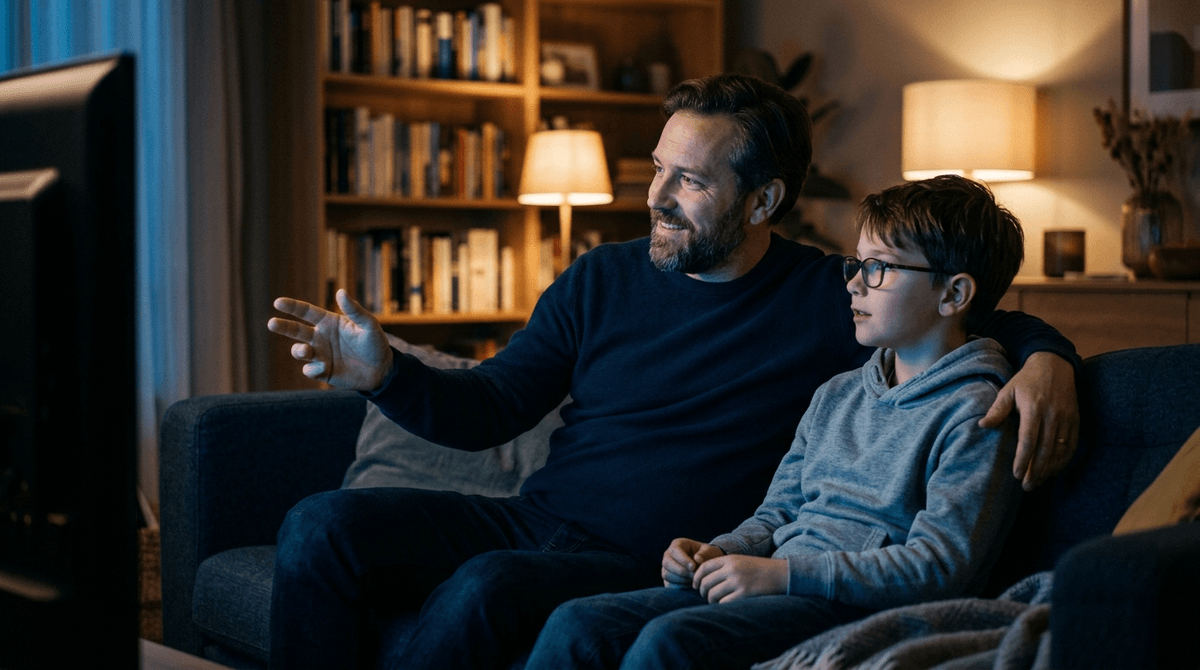
TL;DR: Movie violence is unavoidable in 2026, but it’s not just about the "blood and guts"—it's about how kids process the impact. Start by distinguishing "cartoon physics" from "real-world consequences," use the "Pause and Pivot" method for intense scenes, and focus on media literacy over flat-out bans.
Quick Links for Navigating Content:
- Best "Safe" Action for Kids: The Wild Robot | The Incredibles | Spider-Man: Into the Spider-Verse
- The "Wait Until They're Older" List: Deadpool & Wolverine | The Hunger Games | Stranger Things
- Deep Dives: How to use parental controls on Netflix | Understanding the PG-13 rating in 2026
We’ve all been there. You’re settling in for a "family-friendly" Marvel marathon, and suddenly a character is getting pulverized in a way that feels way more "John Wick" than "Captain America." You look over at your eight-year-old, whose eyes are the size of dinner plates, and you realize the "movie magic" just hit a little too hard.
In a world where Skibidi Toilet features singing heads in toilets getting "flushed" (de-alived) and Roblox games like Combat Warriors are just a click away, movie violence can feel like just another drop in the digital bucket. But movies are different. They have high production value, emotional scores, and characters our kids actually care about. When violence happens on the big screen, it carries weight.
Here’s how to navigate those intense scenes without being the "no-fun" parent, while ensuring your kid isn't just absorbing "brain rot" action without a filter.
Back in the day, movie violence was often campy or clearly fake. Today, CGI makes everything look visceral. Even in Star Wars, the stakes feel higher because the visuals are so immersive.
Kids today are also dealing with a "blurring" of content. They see a clip of a violent movie on TikTok out of context, or they see their favorite YouTuber reacting to a horror movie trailer. By the time they actually sit down to watch a film, they might have already seen the "best" (read: most violent) parts. This desensitization is real, and it makes our job as the "context providers" even more important.
See the impact of media violence on toddlers and preschoolers
Violence isn't a monolith. A slapstick fall in Tom & Jerry is lightyears away from the psychological dread in A Quiet Place.
Ages 4-7: Fantasy vs. Reality
At this age, the biggest risk is imitation. If they see Power Rangers kicking, they’re going to kick the sofa (or their sibling).
- The Goal: Explain that movie violence is a "dance" or "stunt."
- What to watch: Stick to "slapstick" where characters bounce back immediately.
- Recommended: The Super Mario Bros. Movie is great because the "violence" is very game-like and non-threatening.
Ages 8-12: The "Cool" Factor and Consequences
This is the "Ohio" phase of life—everything is weird, everything is a meme, and they want to watch what the big kids are watching. They’re starting to gravitate toward Fortnite and PG-13 action.
- The Goal: Focus on why the violence is happening and what the aftermath looks like. Does the hero feel bad about it? Is there a "better way" they could have solved the problem?
- What to watch: Stylized action where the "good guys" have a clear moral code.
- Recommended: Spider-Man: Across the Spider-Verse handles intense conflict with incredible heart.
Ages 13+: Ethics and Realism
Teens can handle the gore, but they need help processing the ethics. Movies like The Hunger Games use violence to make a point about society, while others just use it for shock value.
- The Goal: Critical thinking. Is this movie glorifying violence, or is it showing the tragedy of it?
- What to watch: Movies that provoke discussion.
- Recommended: Dune: Part Two is intense and violent, but it’s a masterclass in discussing power and war.
If you sit them down for a "Lecture on Media Consumption," they will tune you out faster than a 30-second unskippable ad. Instead, try these low-pressure tactics:
1. The "How'd They Do That?" Angle
Talk about the craft. "Whoa, that explosion looked real. Do you think that was CGI or a practical stunt?" This pulls them out of the emotional intensity and into the "observer" seat. It builds media literacy skills.
2. The "Emotional Check-In"
If a scene is particularly brutal, you don't have to turn the TV off. Just ask, "That was pretty intense, you doing okay?" If they say "Yeah, it’s just a movie," they’re likely fine. If they’re quiet or hiding behind a pillow, it’s time to pause and pivot.
3. Address the "Desensitization"
If your kid thinks a brutal scene is "funny" or "mid," don't panic. It doesn't mean they’re a sociopath; it means they’ve seen a lot of YouTube shorts where violence is played for laughs. Use that as a bridge: "It’s wild how movies make that look like a joke, but in real life, that would be a hospital trip, right?"
Check out our guide on how YouTube Shorts affects attention spans
This is a perfect example of "meaningful" violence. There are moments of peril and animal-kingdom realism (predator vs. prey), but it’s handled with such grace that it teaches empathy rather than just providing a thrill. It's a "must-watch" for families.
Look, I love a good superhero team-up as much as the next person, but let’s be real: this movie is not for your ten-year-old, no matter how many Deadpool toys are at Target. The violence is "splatter-core"—it’s played for laughs, but it’s incredibly graphic. If your kid isn't ready for R-rated cynicism, skip it.
Still the gold standard for family action. It has "real" stakes—characters are actually in danger—but the violence is focused on teamwork and protecting others. It’s a great "starter" action movie for the 6-9 age range.
For the older crowd (14+), this is a great one to watch together. The violence is disturbing because it's meant to be. It opens the door to talk about entertainment as a weapon and how we, as an audience, can become complicit in what we watch.
Not all violence is created equal. Here are a few things to watch out for that are often more damaging than a simple fistfight:
- Sexualized Violence: This is a hard "no" for most intentional parents. It adds a layer of trauma that kids simply aren't equipped to process.
- Animal Cruelty: For many kids, seeing a dog get hurt is 10x more upsetting than seeing a human character get shot. Check Does the Dog Die? if you’re unsure.
- Self-Harm or Suicidal Ideation: Movies like 13 Reasons Why (though a show, the principle applies) can be "contagious" for vulnerable teens.
We can't bubble-wrap our kids' screens. Eventually, they’re going to see something that makes them (and us) uncomfortable. The goal isn't to prevent them from ever seeing a "punch" on screen; it's to make sure that when they do, they have the tools to say, "That’s not how the world works," or "That character made a really poor choice."
Be the "Screenwise" parent who watches with them. Your presence is the best filter there is.
- Audit your watchlist: Take a look at what's in your "Continue Watching" queue. Is it time to tighten up those Netflix profiles?
- Have the "Stunt" talk: Next time an action scene comes on, mention how cool the stunt coordinators are. It’s a tiny shift that changes how they see the "violence."
- Check the Wise Score: Before hitting play on that new trending movie, check its Screenwise rating to see what other intentional parents are saying about the intensity levels.