

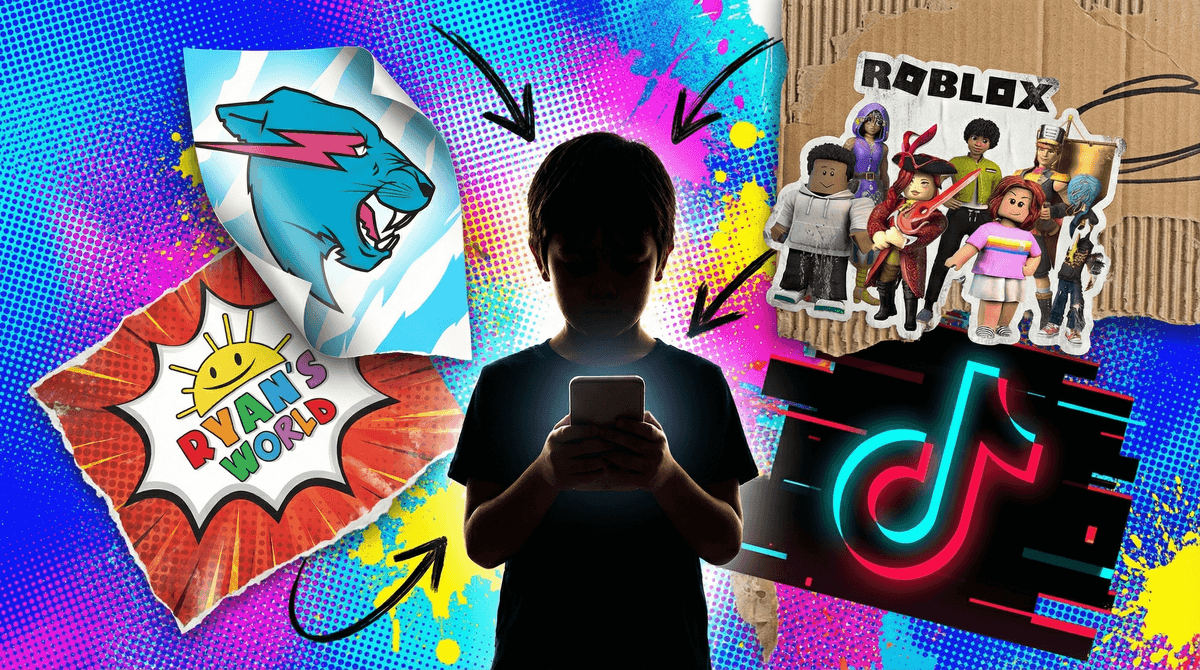
Here's something wild: your kid might be working for a marketing department right now, and they don't even know it. Actually, they probably wouldn't care if they did know, because the whole thing is wrapped up in what feels like fun, community, and creativity.
Kid-driven marketing is when companies get children to promote products to other children — usually through content creation, sharing, or just enthusiastic word-of-mouth. We're talking about unboxing videos, Roblox game recommendations, BeReal posts featuring specific brands, and kids begging you for the exact gaming headset their favorite streamer uses.
The genius of it? It doesn't feel like advertising. It feels like sharing something cool with friends.
Unboxing Culture
Remember when opening a toy was just... opening a toy? Now it's content. YouTube and TikTok are flooded with kids (and adults) dramatically revealing products while cameras roll. Ryan's World turned unboxing into an empire — we're talking billions of views and a toy line at Target.
The psychology is straightforward: watching someone else's excitement triggers our own desire. Kids see another kid losing their mind over a new LEGO set or the latest gaming peripheral, and suddenly they need it too. The parasocial relationship makes it feel like a friend's recommendation, not an ad.
In-Game Advertising
Roblox is basically a masterclass in getting kids to market for you. Kids create games featuring specific brands, wear branded virtual clothing, and evangelize their favorite experiences to friends. When your child is begging to buy Robux for a branded item, that's real money going to real companies — often with your kid doing the marketing legwork.
Fortnite does this brilliantly with licensed skins. Kids don't just want the Spider-Man skin because they like Spider-Man. They want it because their squad has it, because streamers use it, because it signals you're current and connected.
Influencer Worship
The influencer economy has created a new career aspiration: content creator. According to recent surveys, "YouTuber" consistently ranks as a top career choice for kids. This isn't just about watching content — it's about participating in a culture where creating content (often featuring products) is the dream.
When MrBeast launches Feastables, kids don't see a celebrity cash grab. They see their favorite creator making something cool, and they want to support him. The line between authentic enthusiasm and marketing blurs completely.
The "Haul" Video Phenomenon
Haul videos — where creators show off everything they bought — are essentially shopping lists disguised as entertainment. Your middle schooler watches someone their age show off a Target haul, and suddenly those specific items feel essential. It's peer pressure at scale, algorithmically optimized.
Kids' brains are literally still developing the parts that handle critical thinking about persuasion and advertising. They're also navigating social hierarchies where having the "right" stuff matters intensely.
Add in that most of this marketing doesn't look like marketing — it's their favorite creator being "authentic," their friend sharing something cool, a game that's "free to play" — and you've got a perfect storm.
The social component is huge too. When everyone at school is talking about a specific game, app, or product, your child isn't just responding to marketing. They're responding to social survival instincts. Learn more about FOMO and kids.
Disclosure Is Inconsistent
Legally, sponsored content should be disclosed. In practice? It's a mess. Sometimes you get a quick "thanks to [brand] for sponsoring this video" that flashes by. Sometimes you get nothing. Kids often can't distinguish between genuine enthusiasm and paid promotion.
Your Kid Might Be Creating Ads
If your child has a YouTube channel, TikTok account, or creates Roblox games, they might be incorporating brands without realizing they're creating marketing content. This isn't necessarily bad, but it's worth discussing.
The Data Collection Angle
When kids engage with branded content, games, or apps, they're generating valuable data about preferences, habits, and influence patterns. Companies know exactly which products your child engages with and for how long. This data has real value.
It's Not All Evil
Real talk: some of this is just modern community-building. Kids sharing what they love isn't automatically manipulation. The problem is when they can't recognize the difference between organic enthusiasm and manufactured desire.
Age 6-9: Basic Media Literacy
Start simple: "Sometimes people in videos are paid to talk about toys. Just like commercials on TV." Point it out when you see it together. Make it a game: "Do you think they really love that toy, or do you think the company gave it to them?"
Age 10-13: Critical Thinking
Get more sophisticated: "Why do you think your favorite YouTuber is using that specific headset? Do you think they chose it, or do you think the company sent it to them?" Discuss how influencers make money. Talk about the difference between liking something and needing something.
Age 14+: Economic Literacy
Go full analysis: "Let's look at how much money MrBeast makes from his chocolate brand. What does that tell you about his video content?" Discuss the creator economy, parasocial relationships, and how algorithms amplify sponsored content.
For all ages, try this: before any purchase request, ask "Where did you first see/hear about this?" The answer is often revealing.
Set Up Speed Bumps
Create a waiting period for non-essential purchases. "Add it to your birthday list and we'll see if you still want it in a month." This helps separate genuine desire from manufactured urgency.
Watch Together
Sit with your kid while they watch their favorite creators. Ask questions. Point out sponsorships. Make it a conversation, not a lecture. "Huh, interesting that they're using that exact energy drink in every video now."
Teach Budget Literacy
If your child wants to buy virtual currency or branded items, help them track spending. Understanding how Robux converts to real money is genuinely educational.
Create > Consume
Encourage creation that isn't about products. Make videos about nature, coding projects, art. Help them see that content creation doesn't have to be about stuff.
Model Critical Consumption
Talk about your own purchasing decisions. "I saw an ad for this, but I'm going to research it first." Show them that adults also have to navigate marketing.
Your kid is growing up in an economy where the line between consumer and marketer has dissolved. They're not just targets of advertising — they're potential distributors of it.
This isn't about banning all branded content or pretending we can opt out of consumer culture entirely. It's about building the critical thinking skills to recognize when they're being sold to, even when it's wrapped in entertainment and delivered by someone they trust.
The goal isn't to make them cynical. It's to make them conscious. They can still enjoy unboxing videos and influencer content — but with awareness that what they're watching is often a very sophisticated form of advertising, whether or not anyone involved realizes it.
And honestly? These conversations are some of the most important media literacy work you can do. Because this skill — recognizing persuasion, understanding economic incentives, thinking critically about why they want what they want — will serve them far beyond childhood.
Start the conversations now. They're easier than you think, and way more important than we often realize.