

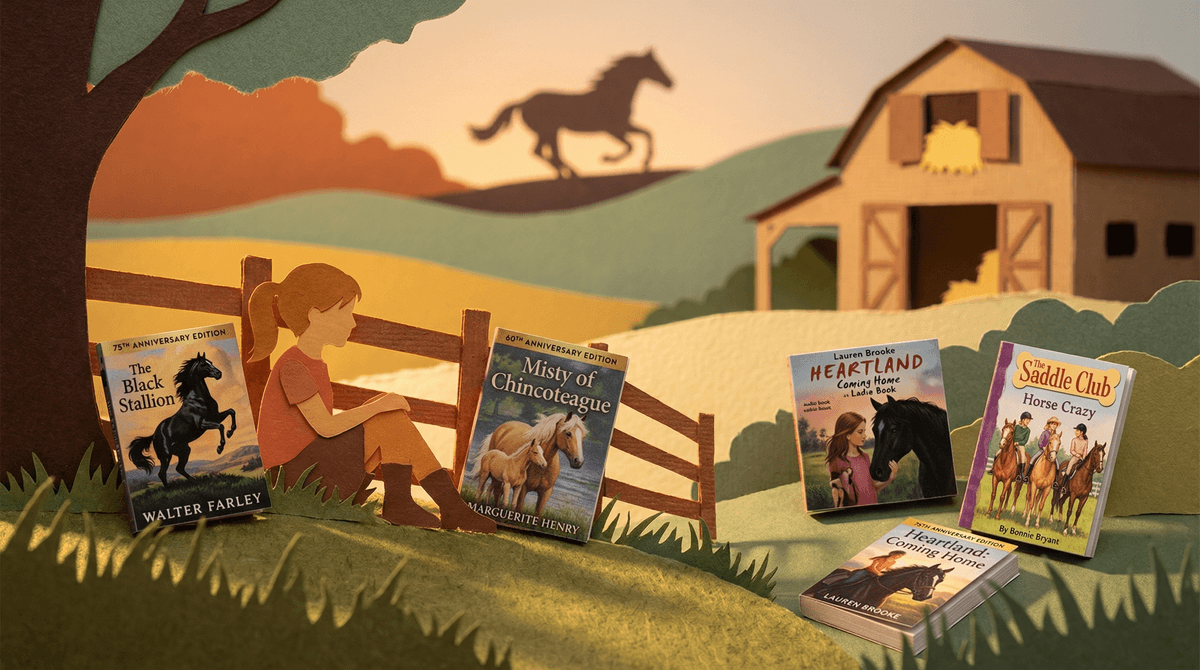
Horse books for kids are exactly what they sound like—stories centered around horses, riding, and the deep bonds between kids and these incredible animals. We're talking everything from classic chapter books like Misty of Chincoteague to contemporary series like Pony Pals and Heartland. Some are realistic fiction about competitive riding or life on a ranch, others veer into fantasy territory with magical horses or time-traveling adventures.
The genre has been around forever—your parents probably read The Black Stallion or National Velvet. And guess what? Kids today are still absolutely devouring these stories, even if they've never been within ten feet of an actual horse.
Let's be real: horse books have a particular hold on a certain demographic of kids, predominantly girls ages 7-13. There's actually some fascinating psychology behind this.
Power and partnership. Horses are big, powerful animals that require respect and skill to work with. For kids who often feel powerless in their own lives (hello, being told what to do 24/7), the fantasy of partnering with such a magnificent creature is intoxicating. It's not about domination—it's about mutual trust and communication.
Responsibility without the real-world stakes. Through these stories, kids can explore what it means to be fully responsible for another living being. They learn about feeding schedules, mucking stalls, recognizing illness, and making tough decisions—all from the safety of their reading nook.
Emotional depth. Horse books don't shy away from big feelings. Loss, fear, courage, friendship betrayal, family conflict—these stories go there. The horse often becomes a safe emotional anchor for characters (and readers) working through complex stuff.
Achievement and mastery. Many horse books follow characters learning to ride, train, or compete. That progression from novice to skilled resonates with kids who are themselves constantly trying to master new things, whether it's multiplication tables or Minecraft building techniques.
Here's the thing about horse books: they're generally really good for kids. Like, genuinely beneficial in ways that a lot of other entertainment isn't.
They build empathy. Understanding a horse's body language, moods, and needs requires serious emotional intelligence. Kids reading these books are constantly practicing perspective-taking—what does the horse need? How is it feeling? Why is it acting this way?
They encourage responsibility. Even if your kid will never own a horse (let's be honest about those economics), they're absorbing lessons about commitment, routine, and putting another creature's needs above your own convenience.
They're gateway books to sustained reading. Horse-obsessed kids will plow through series after series, building reading stamina and confidence. A kid who reads all 15 Saddle Club books is developing serious literacy skills without even realizing it.
They often feature strong, capable protagonists. Many horse books center girls who are competent, brave, and making their own decisions. They're solving problems, advocating for animals, and standing up to adults when needed.
The Potential Downsides (Because We Keep It Real)
The obsession can get intense. Some kids go DEEP into horse culture—and I mean deep. If your child has never ridden but is begging for jodhpurs and a riding helmet, you know what I'm talking about. This isn't necessarily bad, but it can feel disconnected from their actual life.
Unrealistic expectations. Many horse books gloss over the actual cost and labor involved in horse ownership. If your kid is lobbying hard for a horse, have a real conversation about what that actually entails .
.
Some books are dated. Older classics sometimes have problematic elements—outdated training methods, lack of diversity, or questionable family dynamics. Doesn't mean you can't read them, but maybe have conversations alongside.
Ages 5-7: Picture books and early readers
- Pony Scouts series by Catherine Hapka
- I Want a Horse! by Bethany Barton (hilarious and realistic)
- Simple stories about visiting farms or dreaming about horses
Ages 7-10: Chapter books and series
- Pony Pals by Jeanne Betancourt
- Marguerite Henry's classics like Misty and King of the Wind
- The Saddle Club series
- These typically deal with friendship, basic horse care, and small-scale adventures
Ages 10-13: More complex narratives
- Heartland series by Lauren Brooke (fair warning: tissues needed)
- The Black Stallion series by Walter Farley
- War Horse by Michael Morpurgo (historical fiction, quite heavy)
- These tackle loss, trauma, competition pressure, and more mature themes
Ages 13+: Young adult territory
- The Scorpio Races by Maggie Stiefvater (fantasy elements, romance)
- Competitive riding memoirs and non-fiction
- Historical fiction with horses as central elements
Horse books are one of those rare things that parents can feel genuinely good about their kids consuming. They're building reading skills, emotional intelligence, and an appreciation for responsibility and hard work. They're also just really engaging stories that keep kids reading—which in our current digital landscape is worth celebrating.
Your kid doesn't need to actually ride horses to benefit from these books. The lessons about empathy, perseverance, and partnership translate far beyond the barn. And who knows? Maybe that obsession with fictional horses leads to volunteering at a therapeutic riding center, or just a lifelong love of animals and reading.
If your child is deep in the horse book phase, lean into it. Visit a local stable for a lesson or tour. Watch Spirit Untamed or the Heartland TV series. Ask them what they're learning about horse behavior. Use their passion as a bridge to deeper conversations about responsibility, empathy, and what it means to care for something beyond yourself.
And if they start begging for a real horse? Well, that's what library cards are for.
- Start a series: Pick an age-appropriate horse book series and see if it sticks
- Connect books to real life: Visit a local farm, stable, or petting zoo
- Explore related media: Check out horse-themed shows and movies that align with the books they love
- Join the conversation: Ask your kid what they're learning about horses and why they love these stories—you might be surprised by their insights