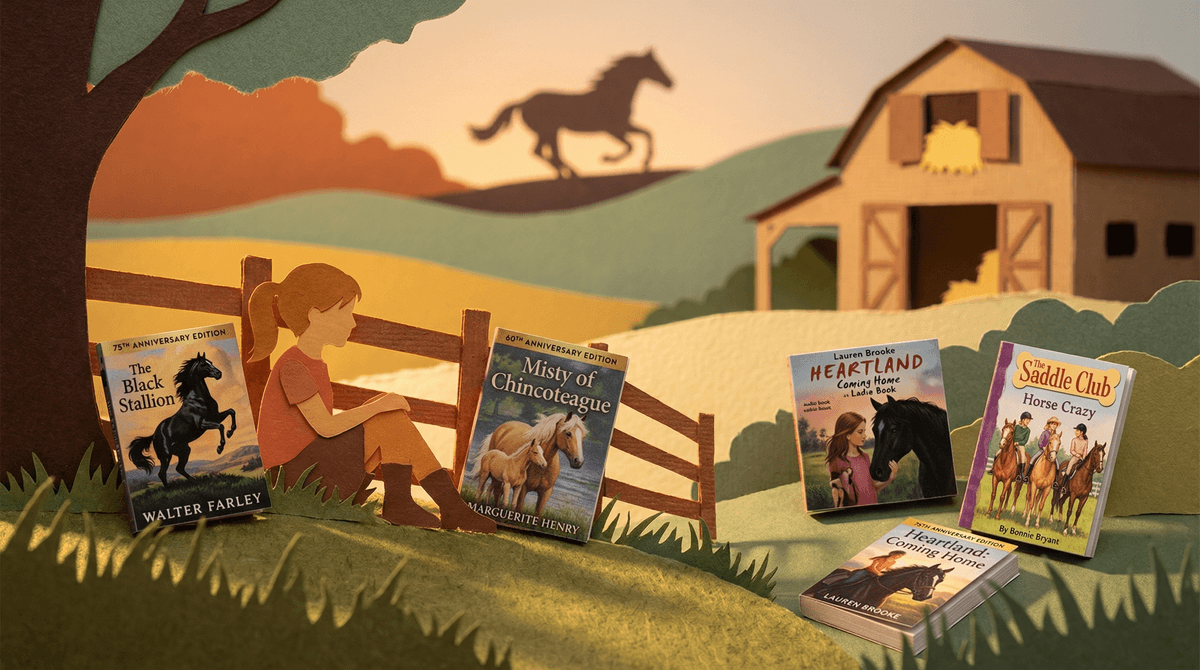
If your kid is currently vibrating with excitement every time they see a pony in a field, you know the drill. You need content that matches that intensity. The Saddle Club by Anya Nicole isn't trying to reinvent the wheel; it’s a specific flavor of 90s nostalgia that still works because the "horse girl" phase is eternal. While the world has changed, the internal politics of a riding stable remain remarkably consistent.
The "Club" Meta
In the mid-90s, every middle-grade series was obsessed with the idea of girls forming a semi-professional organization to solve local problems. If it wasn't babysitting or solving mysteries, it was horses. The Pine Hollow Stables setting serves as the girls' headquarters, and the dynamic between Carole, Stevie, and Lisa mirrors the classic "trio" archetype.
What makes this work better than some of its contemporaries is the friction. When Lisa Atwood joins the group in the first book, Horse Crazy, she isn't immediately embraced. She’s the "smart kid" who is technically proficient at school but a total novice in the saddle. That specific tension—the expert-level best friends having to make room for a "newbie"—is a great way to talk about social gatekeeping. It’s a recurring theme in many horse books for kids where the animal is the bridge that helps different personalities connect.
Real Equestrian Stakes
Anya Nicole leans heavily into the actual mechanics of riding. This isn't a series where the horses are magical or talk; they are large, expensive, flighty animals that require a lot of work. The books don't shy away from the less glamorous parts of the hobby. There is a lot of talk about grooming, tacking up, and the physical discipline required to not fall off.
For a kid who is actually taking lessons, this is gold. It validates the hard work they’re doing at the local barn. For a kid who just likes the idea of horses, it’s an education. The adults in the series, like the instructors at Pine Hollow, are portrayed as competent and authoritative. They provide the kind of oversight that feels earned rather than intrusive, which is a rare balance in middle-grade fiction.
The Pacing Reality Check
If your reader is coming off a diet of Wings of Fire or fast-paced graphic novels, they might hit a wall here. These stories move at a 1996 pace. There are no world-ending stakes or supernatural twists. The "big" drama might be a misunderstanding about a horse show or a minor injury. It’s low-stakes reading in the best way possible.
The prose is functional and clear, making it an excellent choice for kids who are moving out of early readers and into "real" books. Because there are nearly 100 entries in the series, it provides a massive safety net. If a kid falls in love with the first five books, you have their reading material sorted for the next year. Just be prepared for the inevitable request for riding lessons once they finish the first arc.