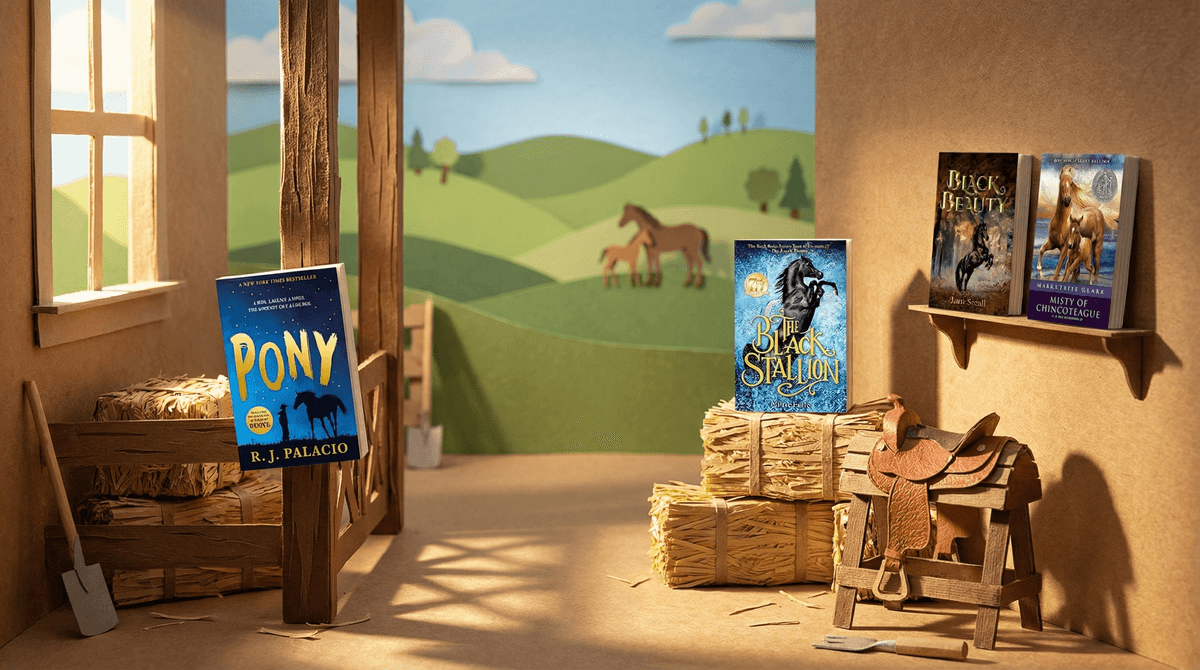
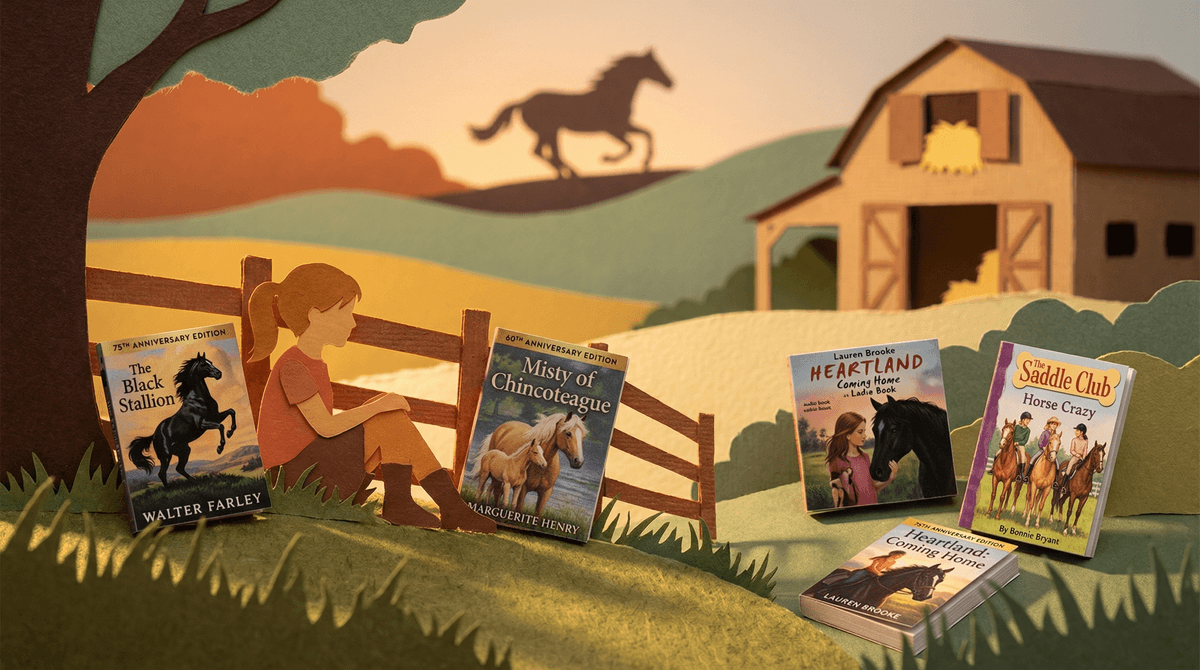
More Robinson Crusoe than My Little Pony
If you go into this expecting a cozy story about brushing manes and winning blue ribbons at the local fair, you’re looking at the wrong book. The first half of The Black Stallion is a gritty survival story. Walter Farley spends a significant amount of time on a deserted island where the stakes are life and death, not just "will the horse like me?"
This is where the book actually wins over kids who think they don't like animal stories. The shipwreck is intense, and the process of Alec winning the Black’s trust while they both starve on a beach is arguably the best part of the novel. It’s primal. It’s about two wild creatures finding a way to coexist when everything else is gone. If your kid liked the survival vibes of Hatchet or Island of the Blue Dolphins, this is a surprisingly easy pivot, even if they’ve never expressed interest in horse books for kids.
Navigating the 1941 friction
We have to talk about the prose. While the Amazon reviews are sitting at a glowing 4.8, those are often written by nostalgic adults or parents of very specific "horse kids." To a kid raised on the snappy, dialogue-heavy style of Diary of a Wimpy Kid or even Harry Potter, Walter Farley’s writing can feel dense.
He spends a lot of time describing the landscape and the internal mechanics of Alec’s thoughts. There are no "fast-travel" moments here. You feel every day on that island. For some readers, that immersion is the magic. For others, it’s a reason to put the book down by chapter four. If you’re dealing with a reluctant reader, I’d suggest starting this as a read-aloud. Once they get past the initial setup and the duo is actually on the island, the momentum usually picks up enough for them to take over.
The 20-book rabbit hole
If this book clicks, be prepared for your bookshelf to be colonised. This is Book 1 of 20. The "Black Stallion" series is a massive commitment, and Farley eventually takes the story in some wild directions (including some later entries that get surprisingly weird).
The benefit of a series this long is the "reading level" bridge it provides. It starts as a classic adventure and evolves into a deeper exploration of the racing world and animal psychology. It’s one of the best equestrian books for kids precisely because it doesn't treat the horse like a bicycle with hair; the Black remains a dangerous, unpredictable, and powerful animal throughout the series. That respect for the animal's wildness is what keeps it from feeling like a generic "girl and her pony" trope, making it just as appealing to boys who want a high-stakes adventure.