

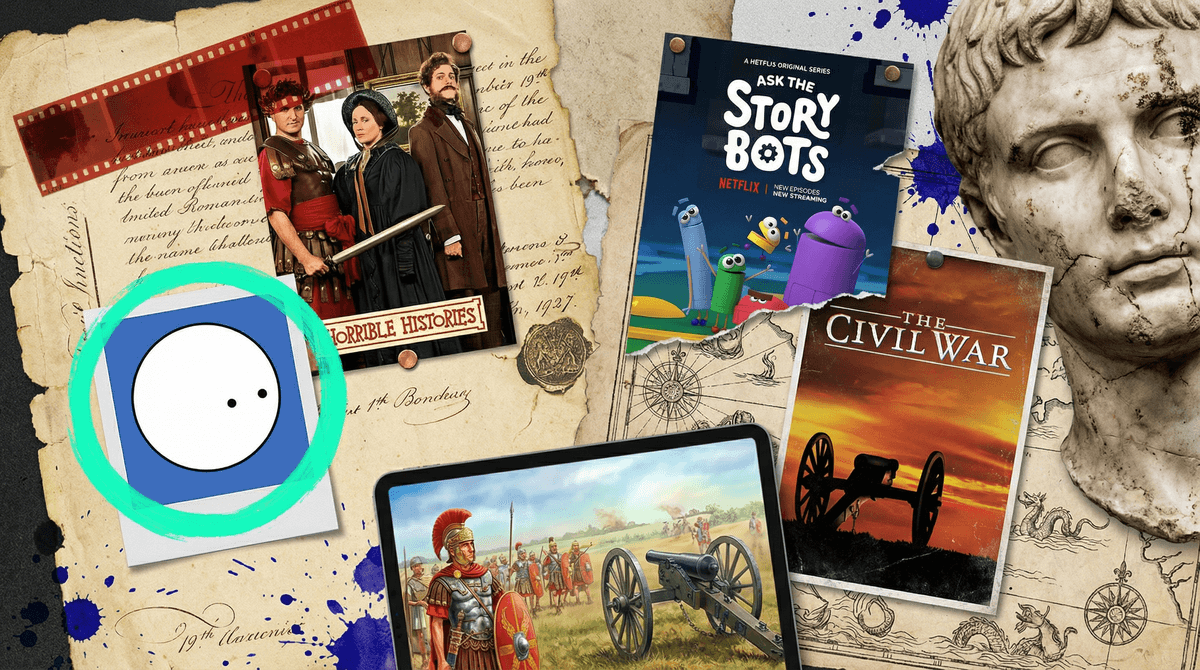
History documentaries are non-fiction films or series that explore historical events, figures, and periods through a combination of archival footage, expert interviews, dramatic reenactments, and narration. They range from Ken Burns' 14-hour deep dives into the Civil War to 20-minute YouTube explainers about ancient Rome to Netflix docudramas that make the past feel like a thriller.
The good news? We're living in a golden age of historical content for kids. The bad news? Not all of it is created equal, and what works for a curious 7-year-old is very different from what will engage a skeptical 13-year-old.
Here's the thing about history documentaries: they can either spark a lifelong love of learning or make your kid think history is the most boring subject on earth. The stakes are real.
Done well, historical content helps kids:
- Understand cause and effect across time
- Develop critical thinking about sources and bias
- Build empathy by seeing how people lived in different contexts
- Connect current events to historical patterns
- Actually remember stuff (because stories stick better than textbook facts)
Done poorly? You get 45 minutes of monotone narration over sepia photos while your kid zones out and decides history is "not their thing."
The key is matching the format, pacing, and complexity to your kid's age and interests. A 6-year-old doesn't need a nuanced exploration of World War I's geopolitical tensions—they need to know that people used to ride horses to work and that's wild.
Ages 4-7: Make It Visual and Personal
At this age, "history" means "the past was different and interesting." They're not ready for timelines or complex causation—they want to know what kids ate for breakfast in ancient Egypt.
What works:
- Short episodes (under 20 minutes)
- Lots of visuals, minimal talking heads
- Focus on daily life, not wars or politics
- Clear good guys and bad guys (nuance comes later)
Try these:
- Liberty's Kids - Animated series about the American Revolution through kids' eyes
- StoryBots Time Travel episodes - Fun, digestible historical moments
- Horrible Histories (the early seasons) - Silly songs and sketches about gross historical facts
Ages 8-11: Go Deeper on Specific Topics
This is the sweet spot for history content. Kids this age are developing real curiosity, can handle more complexity, and love specific deep dives (dinosaurs, ancient Egypt, medieval knights, you know the drill).
What works:
- 30-45 minute episodes
- Mix of education and entertainment
- Reenactments and visual effects
- Focus on specific events or figures rather than broad sweeps
Try these:
- The Who Was? Show - Based on the popular book series, profiles historical figures
- Magic School Bus Rides Again (time travel episodes) - Science and history combined
- National Geographic Kids YouTube channel - Short, engaging historical content
- Crash Course Kids - Some episodes cover historical topics accessibly
Pro tip: At this age, lean into their obsessions. If they're into ancient Rome, go all-in on Roman content. Don't worry about "covering" all of history—passion beats breadth every time.
Ages 12-14: Introduce Complexity and Perspective
Middle schoolers can start handling the messy reality that history isn't simple. They're ready for multiple perspectives, moral ambiguity, and understanding that "the good guys" weren't always that good.
What works:
- Full-length documentaries (60-90 minutes)
- Multiple perspectives and primary sources
- Discussion of bias and how history is constructed
- Connections to current events
Try these:
- Crash Course World History - John Green makes history engaging and nuanced
- The Vietnam War by Ken Burns (selected episodes with context)
- 13th - Powerful documentary about race and the prison system (mature themes, watch together)
- Selected episodes of Explained on Netflix that cover historical topics
Important: At this age, watch together and talk afterward. They're developing their worldview, and historical content can bring up big questions about justice, power, and human nature.
Ages 15+: Go Full Adult Content
High schoolers can handle pretty much any historical documentary, though you'll want to preview for graphic content (war footage, Holocaust imagery, etc.).
What works:
- Award-winning feature documentaries
- Investigative historical journalism
- Complex narratives with ambiguous conclusions
- Content that challenges assumptions
Try these:
- Ken Burns documentaries (The Civil War, Baseball, Jazz)
- They Shall Not Grow Old - WWI footage restored and colorized
- Won't You Be My Neighbor? - About Fred Rogers, surprisingly moving
- The Act of Killing - Challenging documentary about Indonesian genocide (heavy stuff, but important)
The "Boring" Problem Is Usually a Mismatch Problem
If your kid says history documentaries are boring, they're probably right—about the specific content you tried. A 9-year-old who finds a two-hour documentary about the New Deal boring isn't anti-history, they're just not ready for policy discussions.
The fix: Start with topics they already care about. Love soccer? Try a documentary about the history of the World Cup. Into fashion? There's content about the history of clothing. Obsessed with dogs? The history of dog breeding is fascinating.
Beware the "Educational" Label
Not all content marketed as educational history is actually good. Some red flags:
- Oversimplification - Reducing complex events to simple narratives
- Hagiography - Making historical figures into perfect heroes
- American exceptionalism - Presenting U.S. history without acknowledging harm
- Lack of diverse perspectives - Only telling one side's story
Learn more about evaluating educational content quality
The Reenactment Question
Historical reenactments can be great or cringe, and kids pick up on this instantly. The best documentaries use reenactments sparingly and make it clear what's speculation vs. documented fact. The worst ones have actors in bad wigs dramatically whispering about events nobody witnessed.
YouTube Is Actually Amazing for History
Seriously. There are incredible history educators on YouTube making content that's more engaging than most TV documentaries:
- Oversimplified - Funny, accessible history explainers
- Extra Credits (Extra History series) - Animated deep dives
- Weird History - Exactly what it sounds like
- History Matters - Short, animated answers to historical questions
The catch? YouTube's algorithm will absolutely try to serve up conspiracy theories and pseudohistory alongside the good stuff. Subscribe to specific channels rather than letting autoplay take the wheel.
Make It Interactive
History documentaries work better when they're not passive. Try:
- Pause and predict - "What do you think happened next?"
- Spot the bias - "Whose perspective are we getting? Whose story isn't being told?"
- Connect to now - "How is this similar to something happening today?"
- Follow-up projects - If they loved it, go deeper with books, games, or even historical board games
History documentaries are only educational gold if they actually get watched and spark curiosity. A "boring" documentary teaches your kid that history is boring. An engaging one—even if it's not the most comprehensive or academic—can launch a lifelong interest.
Start with your kid's interests, not what you think they "should" learn. Match the format and complexity to their age. Watch together when you can. And remember: the goal isn't to turn them into history majors, it's to help them understand that the past is full of real people who made real choices, and that's pretty fascinating.
Not sure where to start? Try this:
- Ask what they're curious about - Seriously, just ask. You might be surprised.
- Start with a 20-minute YouTube video - Low commitment, easy to pivot if it doesn't land
- Check out educational YouTube channels for age-appropriate history content
- Watch together and talk afterward - The conversation is often more valuable than the content itself
And if they still say it's boring? Try again in six months with a different topic. Sometimes the issue is timing, not the kid.