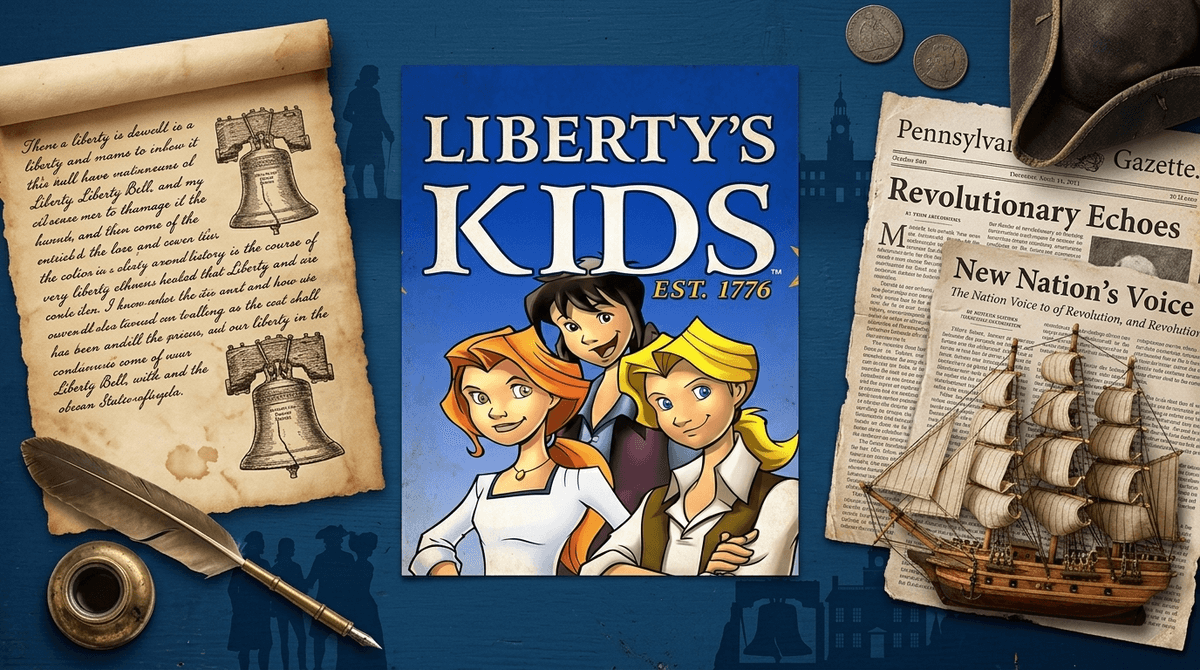
Liberty's Kids occupies a specific niche in the parental brain: it’s the show you put on when you want to feel productive about screen time. It’s the ultimate "substitute teacher" media, but that reputation undersells what the show actually does well. Unlike a lot of history TV for families, it doesn't just list dates. It frames the entire Revolution through the eyes of three kid reporters—an American lad, an English girl, and a French boy—working for Benjamin Franklin.
This setup is the show's secret weapon. By giving the "English lady" a seat at the table, the show avoids the trap of making every British person a cartoon villain. You get to see the conflict as a messy, complicated civil war rather than a simple underdog story. If your kid is starting to ask about biographies vs. historical fiction, this is a prime example of how to blend real figures like Franklin and Thomas Paine with fictional leads to make the "boring" parts of history feel like a breaking news story.
Navigating the "Boredom" Factor
Let’s be real: your kid is probably going to complain about the visuals. In 2002, this was peak educational animation; today, it looks clunky. The movement is stiff and the color palette is often muted. If they’re coming off a diet of high-octane modern animation, Liberty's Kids will feel like it’s moving in slow motion.
The best way to handle this isn't to defend the graphics, but to lean into the drama. The show doesn't shy away from the high stakes of the era. We're talking about episodes that deal with the actual risks of the time—death, shooting, and even mentions of hanging. It treats the Revolution as a dangerous, uncertain event rather than a foregone conclusion. If your kid liked the Who Was? book series or the more intense moments of Hamilton, they have the context to appreciate the tension here.
Strategic Viewing
Don't just dump the whole series on them and hope for the best. This is a "supplemental" show in the truest sense. It’s most effective when you're watching the episode about Thomas Paine's Common Sense right as they’re learning about it in school. Because it's free on YouTube and various Amazon channels, you can treat it like a video encyclopedia.
If you find they’re genuinely struggling with the pace, try watching it in chunks. The show is episodic enough that you don't need a marathon to get the point. It’s one of the few history documentaries (or docu-dramas) that actually respects a kid's intelligence enough to explain why people were fighting, not just how. Just keep the remote nearby for the first few episodes until they get hooked on the "reporter" gimmick—once they care about whether the kids get the scoop, the dated animation matters a lot less.