

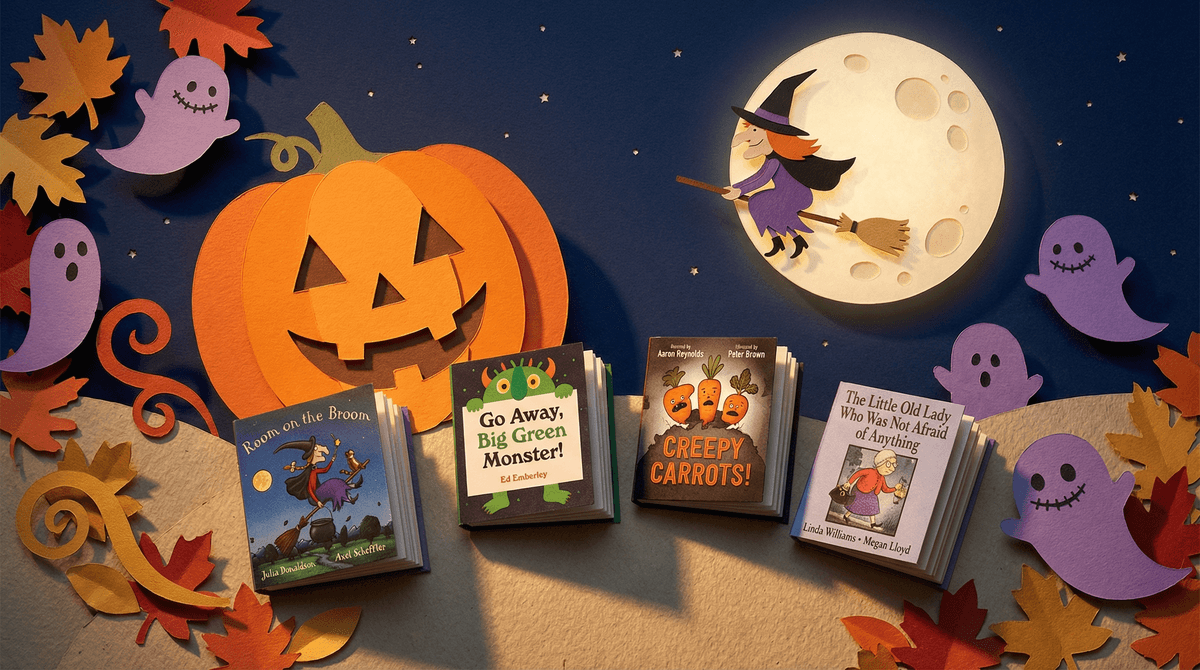
Look, Halloween books are having a moment. We're talking about everything from board books with friendly ghosts to middle-grade novels about kids solving supernatural mysteries. The sweet spot? Books that deliver just enough spooky atmosphere to feel festive without triggering actual bedtime anxiety.
These aren't your childhood Scary Stories to Tell in the Dark with those nightmare-fuel illustrations (though honestly, those are still around and we'll get to that). Modern Halloween books for kids run the gamut from silly pumpkin stories for toddlers to legitimately atmospheric mysteries for tweens who think they're ready for Stephen King (they're not).
The challenge parents face every October: finding books that match the Halloween vibe without accidentally introducing your 6-year-old to existential dread or giving your 9-year-old material for three weeks of "but I'm scared" at bedtime.
Kids are drawn to Halloween books for the same reason they love Halloween itself—it's a sanctioned opportunity to explore the concept of fear in a controlled environment. It's like emotional training wheels for bigger scary stuff they'll encounter later.
The appeal breaks down by age:
-
Ages 3-5: They love the repetition, the silly monsters, and books where the "scary" thing turns out to be friendly. Think Room on the Broom vibes.
-
Ages 6-8: This is peak "I want to be scared but not TOO scared" territory. They're drawn to mysteries they can solve, monsters with weaknesses, and stories where kids are the heroes.
-
Ages 9-12: They want genuine chills. They're ready for atmospheric tension, jump scares on the page, and stories that don't necessarily tie everything up with a neat bow. But they're also still kids who might need reassurance at bedtime.
Let's break this down by what actually works, not just what the book cover says.
Ages 3-5: Friendly Spooky
At this age, you want books where the "scary" elements are clearly pretend and usually resolve into something sweet or silly.
Safe bets:
- The Little Old Lady Who Was Not Afraid of Anything - Repetitive, silly, with a happy ending
- Go Away, Big Green Monster! - Interactive and empowering (the kid literally makes the monster disappear)
- Five Little Pumpkins - Classic counting book, zero actual scares
What to avoid: Anything with realistic-looking witches or monsters, books where bad things happen to characters (even temporarily), or stories with dark/shadowy illustrations that could fuel bedtime fears.
Ages 6-8: Mystery and Mild Chills
This age can handle stories with actual plot tension, as long as there's clear resolution and the scary stuff isn't too visceral.
Solid choices:
- Creepy Carrots! - Atmospheric and funny, great illustrations
- The Graveyard Book by Neil Gaiman - Yes, really. The illustrated edition works for strong readers in this age group. The main character is raised by ghosts but they're protective and kind.
- Scary Stories for Young Foxes - Genuinely spooky but age-appropriate, with themes about bravery
Watch out for: Books marketed as "scary" that are actually just mean-spirited, anything with realistic violence, or stories where the resolution doesn't provide emotional closure.
Ages 9-12: Real Chills Welcome
This crew is ready for legitimate horror-lite. They can handle ambiguity, atmospheric dread, and stories that trust them to be brave.
Strong recommendations:
- Small Spaces by Katherine Arden - Genuinely creepy middle-grade horror that doesn't pull punches but isn't gratuitous
- Coraline by Neil Gaiman - The book is actually scarier than the movie, FYI
- Scary Stories to Tell in the Dark - Look, your kid is going to find this anyway. Better to read it together than have them sneak it at a sleepover. Some kids in this age range can handle it, some can't. You know your kid.
Real talk: Some kids in this age range are ready for genuinely scary content, and some aren't. The difference isn't maturity—it's temperament. If your 11-year-old still gets anxious about scary content, that's completely normal. Don't push it.
The "not too scary" promise on book covers is meaningless. Every kid's threshold is different. Your neighbor's 7-year-old might devour books that would give your 9-year-old nightmares, and that's fine.
Preview the books yourself. I know, I know—you're busy. But spending 10 minutes flipping through a Halloween book before bedtime reading can save you 45 minutes of "I'm scared" negotiations later.
The illustrations matter more than you think. Especially for younger kids, the visual tone sets the fear level more than the actual story. A silly text with dark, shadowy illustrations can be scarier than a spooky story with bright, cartoonish pictures.
Timing matters. Reading a genuinely spooky book right before bed hits different than reading it in the afternoon. If you've got a kid who's sensitive to scary content, read the spookier stuff earlier in the day.
Use it as a conversation starter. Halloween books are actually great opportunities to talk about fear, bravery, and how we handle things that make us uncomfortable. The scary stuff in books is practice for handling scary feelings in real life.
Halloween books for kids are a spectrum, not a binary. The goal isn't finding books that are "scary enough" or "not too scary"—it's finding books that match your specific kid's comfort level and curiosity about spooky stuff.
Green flags in Halloween books:
- Clear resolution where good prevails or fears are conquered
- Age-appropriate themes (no graphic violence or genuine psychological horror for elementary kids)
- Illustrations that match the tone you're comfortable with
- Stories that empower kids rather than just scaring them
Red flags:
- Books that seem designed to traumatize rather than entertain
- Stories where the "scary" stuff is actually just cruelty
- Content that's significantly more intense than the age recommendation suggests
- Anything that gives YOU the creeps (trust your gut)
Your kid's teacher reading Room on the Broom in class doesn't mean your toddler is ready for it at bedtime. Your friend's kid loving Coraline at 8 doesn't mean yours will. You know your kid better than any age recommendation on a book cover.
And if you pick wrong and end up with a kid who's genuinely scared? It's not a parenting failure. It's data. Now you know where their line is, and you can adjust. That's literally the whole job.
Next Steps:
- Hit up your library and preview a few options before committing
- Check out our guide to age-appropriate scary content for more context
- Start with books on the gentler end of the spectrum and work your way up based on your kid's reactions
- Remember that "not ready for scary stuff yet" is a completely valid place for a kid to be, regardless of age