

Gaming Trends Parents Should Know in 2026
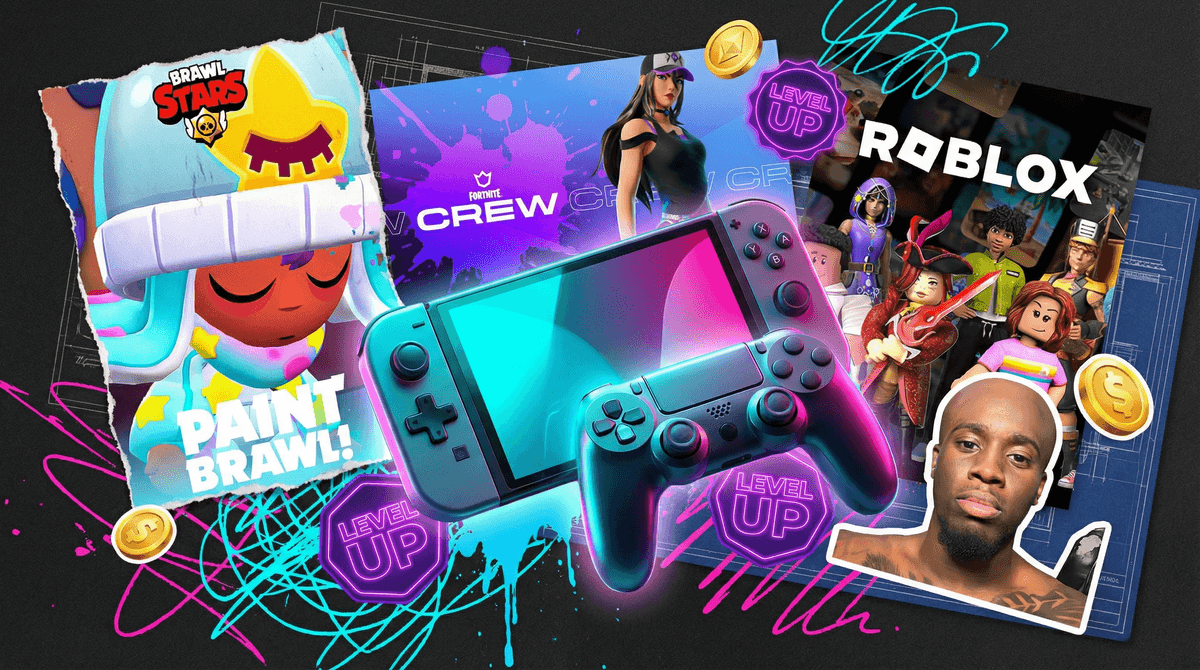
Look, I get it. You thought you had a handle on gaming when your kid was happily building houses in Minecraft. Now they're talking about "grinding battle passes," watching someone named "Kai Cenat" scream at a camera for 8 hours, and asking for V-Bucks like it's a basic human right.
The gaming landscape has shifted massively in the past few years, and it's not just about what kids are playing—it's about how they're playing, who they're playing with, and yeah, how much money is quietly leaving your bank account.
Here's what's actually happening in gaming right now, and what you need to know.
Remember when you bought a game and that was... it? Yeah, those days are basically over for the games your kids actually want to play.
Battle passes are now the dominant monetization model in gaming. Here's how they work: Kids play Fortnite, Roblox, Brawl Stars, or dozens of other games, and every few months there's a new "season" with a battle pass they can buy (usually $10-20). The pass unlocks challenges and rewards—skins, emotes, currency—but only if they play enough to "complete" it before the season ends.
This creates a few problems:
- FOMO is built into the design. Miss this season? Those items are gone forever.
- It turns gaming into a job. Kids feel pressure to log in daily to complete challenges and "not waste" the pass they bought.
- It adds up fast. Four battle passes a year across two games? That's $80-160 annually, not counting the other microtransactions.
The psychological design here is sophisticated. These systems are specifically engineered to create urgency and habitual play . Your 10-year-old isn't weak-willed—they're up against teams of behavioral psychologists.
Here's something that took me way too long to understand: For kids today, games like Fortnite, Roblox, and Among Us aren't just games. They're where kids hang out.
When your kid says "I'm playing Fortnite with Jake," they might be doing challenges together, sure. But they might also just be sitting in the lobby talking about school, or jumping around in Creative mode building stuff, or watching someone else play while they chat.
This is the modern equivalent of hanging out at the mall or riding bikes around the neighborhood. The gameplay is sometimes secondary to the social experience.
Why this matters: When you say "turn off the game," you're not just interrupting entertainment—you're ending a social hangout. That doesn't mean unlimited game time, but it does mean we need to think about gaming time differently than we did solo gaming in the past. Understanding this shift can help you set better boundaries.
Your kid probably spends as much time watching other people play games as they do playing themselves. And honestly? Sometimes more.
Gaming content on YouTube and Twitch is massive. We're talking about kids watching MrBeast do Minecraft challenges, or streamers like Kai Cenat, IShowSpeed, or smaller creators play everything from Roblox to horror games.
The content ranges from genuinely creative and entertaining to... well, people screaming at their monitors for hours. Some creators are great role models. Others normalize toxic behavior, excessive spending, or gambling-adjacent mechanics (loot box openings, gacha pulls, "mystery box" videos).
What to watch for:
- Gambling content disguised as gaming. CS:GO case openings, FIFA pack openings, gacha game pulls—this is gambling content marketed to kids.
- Parasocial relationships. Kids feeling like they "know" streamers and defending them intensely when you question their content.
- The desire to become a streamer. Not inherently bad! But it needs realistic conversations about odds, effort, and backup plans.
Ages 8-12 are particularly susceptible to influencer culture. They don't yet have the critical thinking skills to separate entertainment from manipulation.
If your kid plays Genshin Impact, Honkai: Star Rail, or any of dozens of mobile games, they're playing a gacha game.
Gacha mechanics work like this: You spend in-game currency (bought with real money) to "pull" for random characters or items. The rates are terrible—often 0.6% chance to get the thing you want. Kids can spend hundreds of dollars chasing a single character.
This is gambling. Full stop. It uses the same psychological mechanisms as slot machines: variable reward schedules, near-misses, the "just one more pull" mentality.
These games are often beautifully made with compelling stories and gameplay. That's what makes them so dangerous. The quality masks the predatory monetization underneath.
If your kid plays gacha games:
- Understand they will feel intense pressure to spend money
- Set up parental controls on app stores immediately
- Have honest conversations about gambling mechanics and why these games are designed this way
- Consider whether these games align with your family's values at all
Kids can now play the same game together whether they're on Xbox, PlayStation, Nintendo Switch, PC, or mobile. This is called cross-platform play, and it's become standard in most popular multiplayer games.
Why this matters for parents:
- Your kid's friends don't all need the same console anymore (this is actually great)
- But it also means gaming is more accessible and ubiquitous than ever
- You can't use "your friends don't have that console" as a reason to avoid a game anymore
It also means voice chat is everywhere. Kids are talking to friends (and strangers) across platforms, often through the game itself or through Discord. See how voice chat works in your kid's games is essential.
Okay, some good news: There's a massive trend toward cozy, low-stress games that are genuinely delightful.
Games like Stardew Valley, Animal Crossing, Spiritfarer, and A Short Hike focus on creativity, exploration, and calm gameplay. No battle passes, no loot boxes, no screaming streamers.
These games are popular with kids and adults alike, and they're a fantastic alternative to the hypercompetitive, monetization-heavy games dominating the market.
If your kid is drawn to high-intensity games, that's fine—but introducing cozy games as a balance can be really valuable. Check out this guide to cozy games for kids for recommendations.
Gaming in 2026 is more social, more monetized, and more psychologically sophisticated than ever before. The games your kids play are designed by teams of experts to maximize engagement and spending.
But gaming also offers genuine benefits: problem-solving, teamwork, creativity, and social connection. The key is approaching it with open eyes.
Your next steps:
- Actually learn what your kid is playing. Not just the name—sit down and watch them play for 20 minutes. Ask questions.
- Set up parental controls on every device and store. Require approval for purchases. Here's how to do it.
- Talk about the money. Kids need to understand that V-Bucks, Robux, and Primogems are real money, and that games are designed to make them want to spend.
- Balance social gaming with other social activities. Gaming with friends is valid social time, but it shouldn't be the only social time.
- Find games that align with your values. They exist! You just have to look past the heavily marketed ones.
Gaming isn't going anywhere. Our job isn't to eliminate it—it's to help kids navigate it thoughtfully, understand the systems designed to manipulate them, and find the genuine joy and connection gaming can offer without getting exploited in the process.
You've got this.