

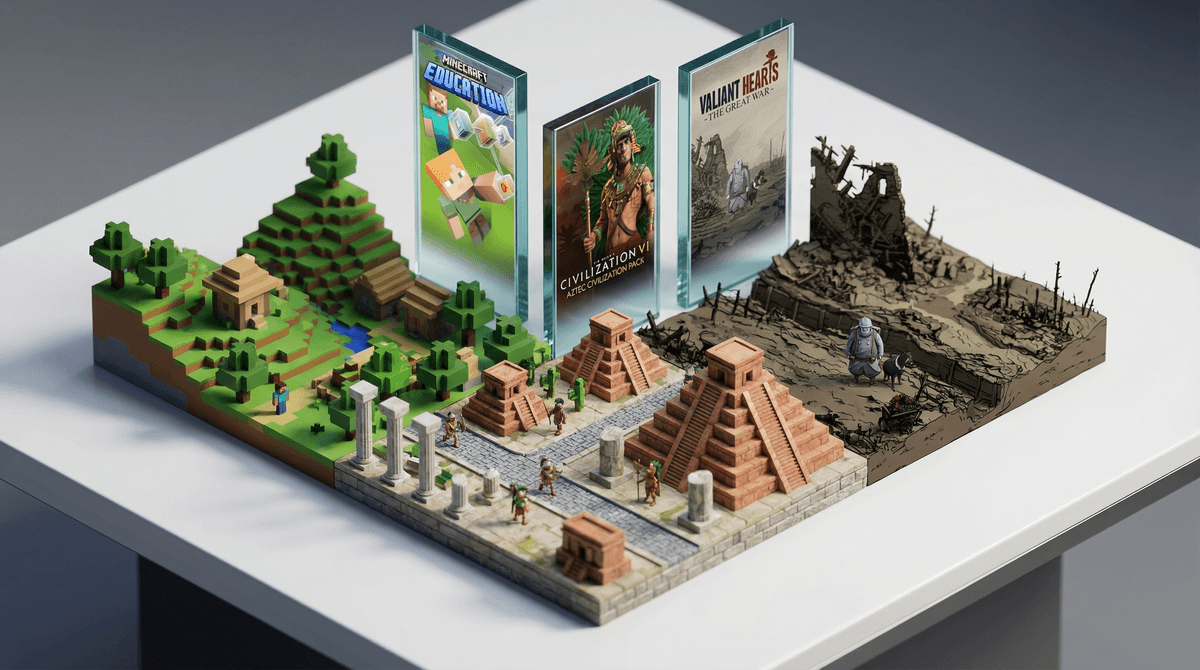
Look, we've all been there. Your kid needs to study the American Revolution, and you're wondering if there's any way to make it stick beyond flashcards and groaning. Enter history games—a category that ranges from "actually educational" to "well, at least they're thinking about the past while shooting things."
History games span everything from straight-up educational titles designed for classrooms to big-budget games where historical accuracy is more of a vibe than a commitment. Think Assassin's Creed (parkour through Renaissance Italy while stabbing people—historically inspired, not historically accurate) versus Civilization VI (build empires, learn about actual historical leaders and their policies) versus something like Oregon Trail (the classic that taught a generation about dysentery).
The question isn't whether games can teach history—they absolutely can. The question is which ones actually do it well, and how do we help kids understand the difference between "inspired by history" and "this is what actually happened."
Here's the thing: history class can feel like memorizing dates and dead people. History games let you make decisions, see consequences, and inhabit a time period in a way that textbooks just can't match.
When your kid plays Valiant Hearts, they're not just learning about WWI—they're experiencing the emotional weight of it through storytelling. When they're managing resources in Age of Empires, they're thinking about why civilizations made certain economic and military choices.
Games create context and emotional connection. That's powerful. Kids remember the time they accidentally caused a famine in their medieval kingdom way more than they remember a paragraph about agricultural policy.
Plus, let's be honest—some of these games are just genuinely fun. Crusader Kings III is wildly complex and teaches about medieval European politics, succession, and warfare. But it's also entertaining enough that teens will play for hours without realizing they're learning.
Here's where we need to get real: not all history games are created equal, and some are straight-up teaching wrong information or highly problematic perspectives.
Games like Civilization are fantastic for understanding broad concepts—technological progression, diplomacy, resource management. But they also present a very Eurocentric, "great man" view of history and gamify colonization in ways that... yeah, we should talk about.
Assassin's Creed games are gorgeous and immersive, with incredible attention to architectural and cultural detail. They even include "Discovery Tour" modes in some titles where you can explore historical settings without combat. But the actual storylines? Total fiction wrapped around historical events.
The best approach: treat these games as historical fiction, not textbooks. They can spark interest and provide context, but they need to be paired with actual historical sources. When your kid is obsessed with ancient Egypt because of Assassin's Creed Origins, that's your moment to grab some age-appropriate books or documentaries about what really happened.
Ages 6-10:
- Oregon Trail (classic for a reason—teaches about westward expansion, decision-making, and yes, dysentery)
- Minecraft: Education Edition (has specific history lessons built in)
- Never Alone (teaches about Iñupiaq culture through Indigenous storytelling)
Ages 11-14:
- Valiant Hearts: The Great War (WWI through personal stories—emotional but age-appropriate)
- Civilization VI (complex but accessible, great for strategic thinking)
- This War of Mine (shows civilian perspective of war—heavy themes, but important)
Ages 15+:
- Crusader Kings III (medieval politics and dynasty management—very complex)
- Assassin's Creed series (various historical periods, M-rated for violence)
- Papers, Please (Cold War border control—makes you think about immigration and authoritarianism)
The good news: History games can genuinely increase engagement with the past. Studies show that games can improve historical empathy and understanding of cause-and-effect relationships in history.
The reality check: These games require active parenting. You can't just hand over Assassin's Creed and assume your kid is getting educated. You need to:
- Play with them or watch them play (at least initially) to understand what they're learning
- Ask questions: "Why do you think that civilization made that choice?" "What do you think really happened versus what's made up?"
- Supplement with real sources: Books, documentaries, museum websites
- Discuss perspective: Whose story is being told? Whose is missing?
Also, be aware that many history games are rated M (17+) for violence, and that rating exists for a reason. Total War games show realistic battlefield violence. Assassin's Creed involves a lot of stabbing. Make sure you're comfortable with the content before assuming "educational" means "appropriate for all ages."
Can games teach history? Absolutely. Will they replace actual history class or reading? No, and they shouldn't.
The sweet spot is using games as a gateway drug to historical interest. When your kid becomes obsessed with ancient Rome because of a game, that's when you strike—grab some books, watch a documentary together, maybe even plan a museum trip.
History games work best when they're part of a larger conversation about the past, not a replacement for it. They're tools, not teachers—but they're pretty damn effective tools when used intentionally.
And honestly? If your kid is choosing to spend time thinking about medieval economics or WWI trenches instead of watching brain-rot YouTube shorts, that's a parenting win worth celebrating.
- Check ratings carefully: Just because it's educational doesn't mean it's age-appropriate
- Try before you buy: Many history games have demos or free weekends on Steam
- Look for "Discovery" or "Educational" modes: Some games have non-combat exploration options
- Connect to school: Ask teachers if they have recommendations for games that align with current curriculum
- Make it social: Learn about multiplayer history games
 you can play together as a family
Want to dig deeper into specific titles? Check out our gaming guides for detailed breakdowns of content, age-appropriateness, and learning outcomes.