

You know that feeling when you finish a movie and everyone in the room just... exhales? Like you've all been wrapped in a warm blanket together? That's a feel-good movie. But here's the thing: not all "family-friendly" movies actually feel good. Some are just loud and chaotic. Others are so saccharine they make your teeth hurt. And plenty leave parents checking their phones after minute 12.
Real feel-good movies are something different. They're films that leave everyone—yes, including the adults—feeling a little lighter, a little more hopeful, maybe even a little teary in a good way. They don't rely on bathroom humor or tired "kids are smarter than parents" tropes. They tell genuine stories with heart, humor that lands across generations, and characters you actually care about.
The best part? These movies exist across every streaming platform and every decade. You just need to know where to look.
In a media landscape that's increasingly optimized for engagement over emotion, feel-good movies are becoming counter-cultural. Kids are consuming content that's designed to keep them scrolling, clicking, and watching the next thing. YouTube algorithms favor intensity. TikTok rewards shock value. Even kids' content often mistakes "loud" for "entertaining."
Feel-good movies offer something different: a complete emotional arc with a beginning, middle, and end. They model emotional intelligence, show characters working through problems, and demonstrate that stories can be satisfying without being overstimulating.
Plus, let's be honest—family movie night is one of the few remaining screen experiences where everyone's actually together, in the same room, reacting to the same thing at the same time. That's worth protecting.
Not every movie with a happy ending qualifies. Here's what separates the genuine article from the pretenders:
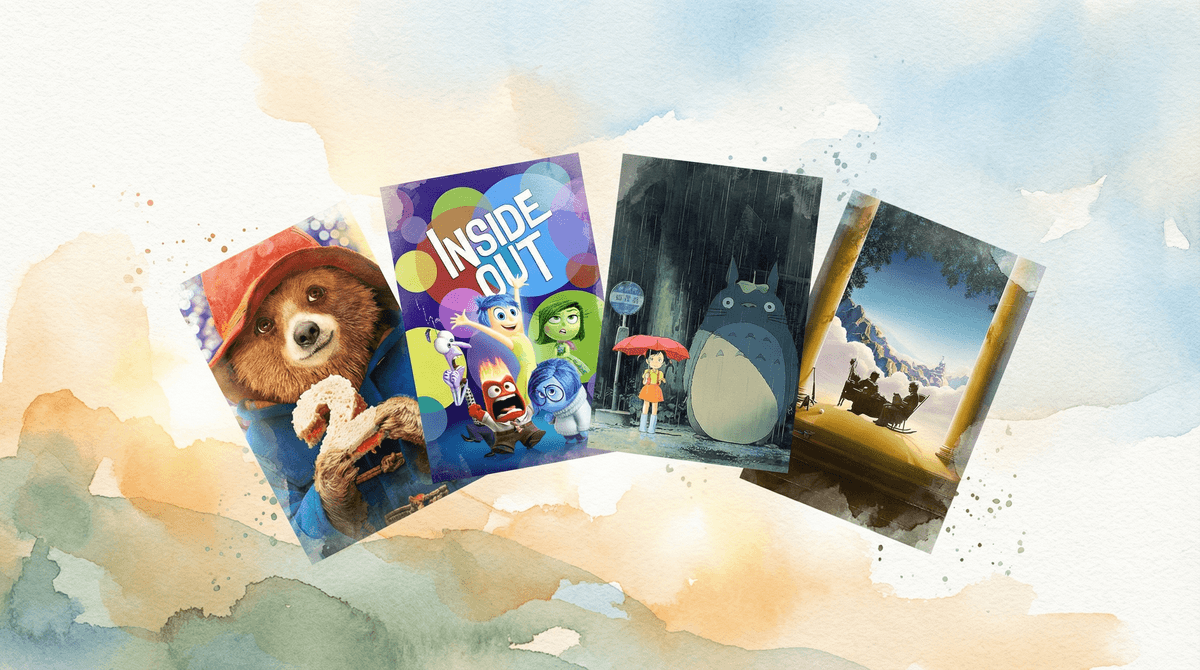
Emotional honesty: The best feel-good movies don't shy away from real feelings—sadness, disappointment, fear—they just don't wallow in them. Think Inside Out or Paddington 2.
Humor that respects everyone: Jokes that work for both 8-year-olds and 40-year-olds, without relying on mean-spiritedness or references that fly over kids' heads. The Mitchells vs. The Machines nails this.
Characters worth rooting for: Not perfect characters, but ones trying their best. Bonus points if they're not just archetypes.
Visual warmth: This is subtle, but the color palette, pacing, and cinematography actually matter. Compare the cozy feeling of Encanto to the frenetic energy of some other animated films.
Ages 4-7
- Paddington and Paddington 2: Genuinely funny, gorgeously shot, and surprisingly moving
- My Neighbor Totoro: Gentle, magical, and perfect for wind-down time
- Moana: Adventure with heart and incredible music
Ages 8-12
- The Mitchells vs. The Machines: Hilarious, visually inventive, and actually about something (family connection in the digital age, ironically)
- Hunt for the Wilderpeople: Quirky, heartfelt, and quotable (PG-13 for some language, but nothing egregious)
- Encanto: Generational trauma wrapped in stunning animation and Lin-Manuel Miranda songs
- The Princess Bride: The ultimate family movie that holds up across generations
Ages 13+
- Little Miss Sunshine: Dysfunctional family road trip that somehow leaves you feeling hopeful (R-rating for language and themes—preview first)
- School of Rock: Pure joy in movie form
- Chef: A food truck, a father-son relationship, and no manufactured drama
- Amélie: Whimsical, French, and subtitled (which is actually great for older kids)
Streaming is both blessing and curse: Every platform has feel-good options, but their algorithms won't necessarily surface them. Netflix, Disney+, Apple TV+, and even Amazon Prime all have hidden gems. You'll need to actively search rather than just scrolling the homepage.
Preview culture exists for a reason: Sites like Common Sense Media or getting answers to specific content questions can help you understand what you're getting into. A movie can be feel-good and still have moments that need context for your specific kid.
Rewatching is underrated: Kids often want to watch the same movie repeatedly, and that's actually developmentally appropriate. A truly good feel-good movie holds up to multiple viewings—and you might catch things you missed the first time.
International cinema is your friend: Some of the best feel-good movies aren't in English. Subtitles are actually great for reading practice, and movies like Ponyo or Kiki's Delivery Service offer different storytelling rhythms than American films.
Feel-good movies are a small act of resistance against the attention economy. They prove that entertainment doesn't have to be optimized, algorithmically generated, or designed to keep you hooked for the next episode. Sometimes a complete, satisfying story that leaves everyone feeling a little better is exactly what your family needs.
The key is being intentional about what you choose—which, honestly, is what Screenwise is all about. Not every movie night needs to be profound, but knowing the difference between "this will keep them quiet" and "this might actually bring us together" is worth the extra three minutes of research.
Start a family movie list: Let everyone add suggestions. Rotate who picks. Make it a thing.
Create a cozy ritual: Dim lights, special snacks, phones in another room. The environment matters.
Talk after: Even just "what was your favorite part?" opens up conversation and makes the experience more memorable.
Want recommendations based on your family's specific ages and interests? That's exactly what Screenwise is built for.