

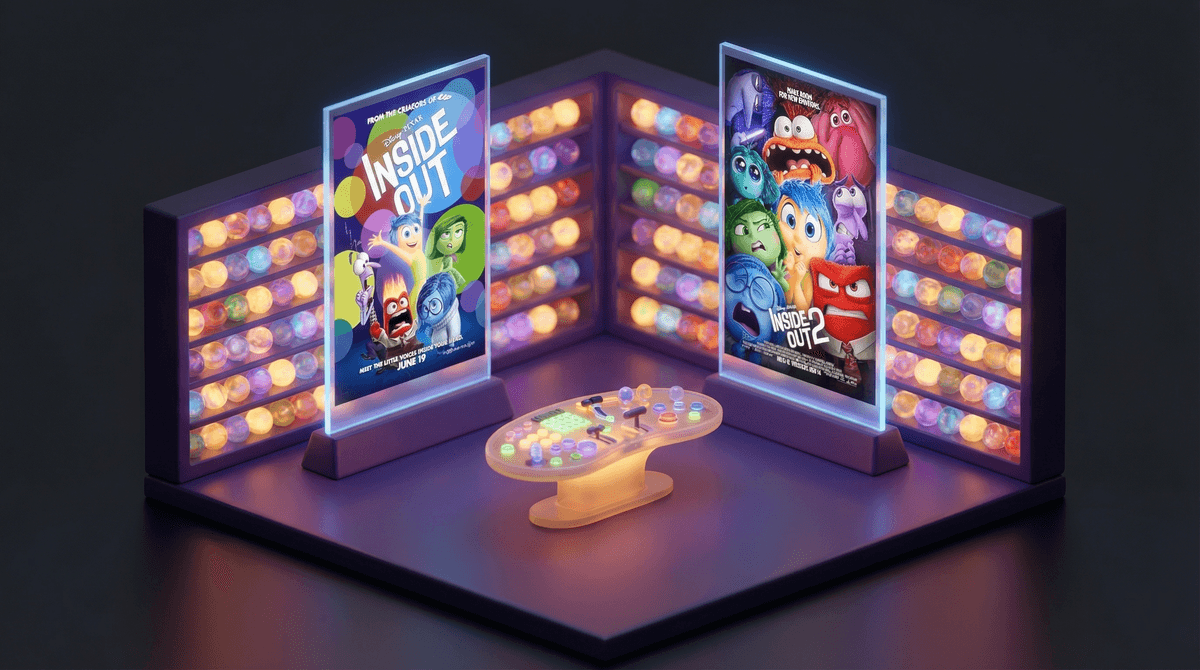
Inside Out is Pixar's 2015 animated masterpiece that takes place almost entirely inside the mind of an 11-year-old girl named Riley. The film personifies five core emotions—Joy, Sadness, Fear, Anger, and Disgust—as characters who operate a control center in Riley's brain, managing her responses to the world around her.
The story follows Riley as her family moves from Minnesota to San Francisco, and she struggles to adapt to this major life change. Inside her mind, Joy (who's been running the show since Riley was born) tries desperately to keep Riley happy, while accidentally sidelining Sadness. When Joy and Sadness get lost in the deeper parts of Riley's mind, the remaining emotions struggle to help Riley navigate her new life, leading to some genuinely emotional moments that hit parents right in the feels.
Screenwise Parents
See allThe sequel, Inside Out 2, released in 2024 and introduces new emotions like Anxiety and Embarrassment as Riley enters her teenage years—but let's focus on the original for now.
Here's the thing: Inside Out might be the most important film about emotional intelligence ever made for kids. And honestly? For adults too.
Most kids' movies teach lessons about friendship, bravery, or being yourself. Inside Out does something different—it teaches kids (and reminds parents) that all emotions have value, even the uncomfortable ones. The film's core message—that sadness isn't something to fix or avoid, but rather an essential part of processing difficult experiences—is revolutionary for a kids' movie.
In an era where we're all trying to raise emotionally intelligent humans who can name their feelings and ask for help, Inside Out literally gives kids a vocabulary and framework for understanding what's happening in their own heads. When your kid says "my Anger is taking over right now," that's actually pretty sophisticated emotional awareness for a 9-year-old.
The film also normalizes the messiness of big transitions. Riley doesn't handle the move perfectly—she pulls away from her parents, quits hockey, tries to run away. The movie shows that struggling with change is normal, not a character flaw.
Ages 5-7: The movie is rated PG and most kids this age can watch it, but the concepts might go over their heads. They'll enjoy the colorful characters and funny moments, but the deeper themes about depression, identity, and emotional complexity might not land yet. That's okay! You can always revisit it in a few years. Some kids this age find the scenes where Riley's personality islands crumble genuinely scary—use your judgment based on your kid's sensitivity.
Ages 8-11: This is the sweet spot. Kids this age are developing more emotional complexity themselves, starting to experience those mixed feelings where you're happy and sad at the same time. Riley is 11 in the movie, so many kids in this range see themselves in her experience. The film can open up conversations about their own big feelings.
Ages 12+: Tweens and teens often find the movie incredibly validating, especially if they're going through their own transitions (middle school, moving, friendship drama). They're old enough to appreciate the sophisticated storytelling and psychological accuracy. Many therapists actually use clips from this movie in sessions with adolescents.
It's genuinely emotional. Like, you will probably cry. Multiple times. The scene where Bing Bong sacrifices himself? Waterworks. When Riley finally breaks down and tells her parents she misses Minnesota? Get the tissues ready. This is actually a feature, not a bug—it models that it's okay for feelings to be big and messy.
The mental health representation is surprisingly accurate. Child psychologists have praised the film for its depiction of how depression can manifest in kids—the emotional numbness, the withdrawal, the gray-ing out of Riley's world. If your child is going through something similar, this movie can be a gentle entry point for conversations, but it might also be intense. Learn more about using media to talk about mental health with kids .
.
It's not just about being positive. In a culture that often pushes toxic positivity ("just look on the bright side!"), Inside Out shows that trying to force happiness and suppress sadness actually makes things worse. Joy literally has to learn that Sadness needs to do her job. This is a powerful counter-message to the "good vibes only" mentality kids absorb from social media.
The abstract thought sequence might confuse younger kids. There's a scene where Joy and Sadness go through "Abstract Thought" and become increasingly simplified versions of themselves. It's clever and funny if you get it, but genuinely confusing if you don't. Just a heads up.
It opens doors for ongoing conversations. After watching, kids often start talking about their own emotions using the movie's framework. "My Fear is worried about the test tomorrow" or "Disgust doesn't want me to eat that broccoli." This is actually a great development—it creates distance between the child and the emotion, making feelings less overwhelming and more manageable.
Make it a family movie night. This isn't a "plop the kids in front of the TV while you do dishes" kind of movie. The conversations that happen during and after are where the real value lives.
Pause and discuss. When Joy tries to keep Sadness from touching memories, ask: "Why do you think Joy doesn't want Sadness to help?" When Riley's islands of personality start crumbling, talk about what makes up your kid's identity—what are their islands?
Share your own emotions. If you tear up during the movie, let your kids see it. "This part makes me sad because it reminds me of when I moved away from my best friend in 5th grade." Modeling emotional vulnerability is powerful.
Follow their lead afterward. Some kids want to process immediately ("Can we talk about why Riley ran away?"). Others need time to sit with it. Both are fine. You can always circle back the next day: "I was thinking about Inside Out—have you ever felt like your Joy and Sadness were fighting?"
Inside Out is one of those rare pieces of media that's genuinely good for kids AND actually enjoyable for parents. It's not just entertaining—it's a tool for building emotional literacy in your family.
In a digital age where kids are constantly exposed to curated highlight reels on social media and pressure to perform happiness, Inside Out's message that all emotions are valid and necessary feels more important than ever. It gives families a shared language for talking about the hard stuff.
Is it going to solve all your parenting challenges? No. But it might make the conversation about why your kid is melting down over seemingly nothing a little easier to navigate. And in the trenches of modern parenting, we'll take all the help we can get.
- Watch it together and see what resonates with your kid
- Check out Inside Out 2 when your kid hits the tween/teen years—it tackles anxiety and the complexity of adolescent emotions
- Use the movie's framework in daily life: "Which emotion is in charge right now?" can become a helpful check-in question
- Explore other media that handles mental health well for kids—Find age-appropriate recommendations