

Let's be real: "reluctant reader" is just a nice way of saying your kid would rather do literally anything else than pick up a book. And honestly? In 2026, can we blame them? They're competing with Minecraft worlds that never end, YouTube videos that auto-play forever, and group chats that ping every 30 seconds.
A reluctant reader isn't a kid who can't read—it's a kid who doesn't want to. Maybe they associate reading with schoolwork. Maybe they haven't found their thing yet. Maybe they tried a few books that bored them to tears and decided the whole medium wasn't for them. (Like judging all of television based on one episode of a show your parents made you watch in 1987.)
The good news? This is totally fixable. The bad news? It requires letting go of what you think reading "should" look like.
Yes, reading builds vocabulary, comprehension, empathy, focus—all the things the research says. But here's what matters more right now: finding something your kid wants to engage with deeply enough to get lost in it.
That's the real skill we're after. The ability to focus. To imagine. To care about something that isn't algorithmically designed to keep their attention for exactly 47 seconds before serving up the next dopamine hit.
Books are one of the best training grounds for this, but only if we don't turn them into another thing kids are failing at.
It feels like homework. If every book comes with comprehension questions or a required book report, reading becomes just another assignment.
They haven't found their format yet. Some kids need graphic novels. Some need audiobooks. Some need books that are 90% pictures. Some need fantasy worlds, some need fart jokes, some need both.
The barrier to entry feels too high. A kid who's used to TikTok's instant gratification sees a 200-page book and thinks "that's going to take forever" before they've even cracked it open.
They tried books that adults picked for them. Nothing kills reading faster than forcing a kid through a "classic" that speaks to exactly zero of their interests. (Looking at you, well-meaning grandparents gifting leather-bound collections of things published in 1872.)
Ditch Your Definition of "Real Reading"
Graphic novels? That's reading. Dog Man? Reading. Manga? Reading. The Minecraft Essential Handbook? Also reading. Reddit threads about Fortnite strategies? You better believe that's reading.
If your kid is decoding words and extracting meaning, they're reading. Full stop. We can work our way up to Tolkien later.
Audiobooks Count (Fight Me)
"But they're not really reading!" Yes, they are. They're processing a narrative, following a story, building comprehension. If you're worried they're "cheating," consider that audiobooks are actually harder for some kids because they can't skim or skip around.
Epic! and Audible both have massive kids' libraries. Let them listen while building in Minecraft or drawing. Multitasking isn't always bad—sometimes it's the gateway drug.
Find Their Format
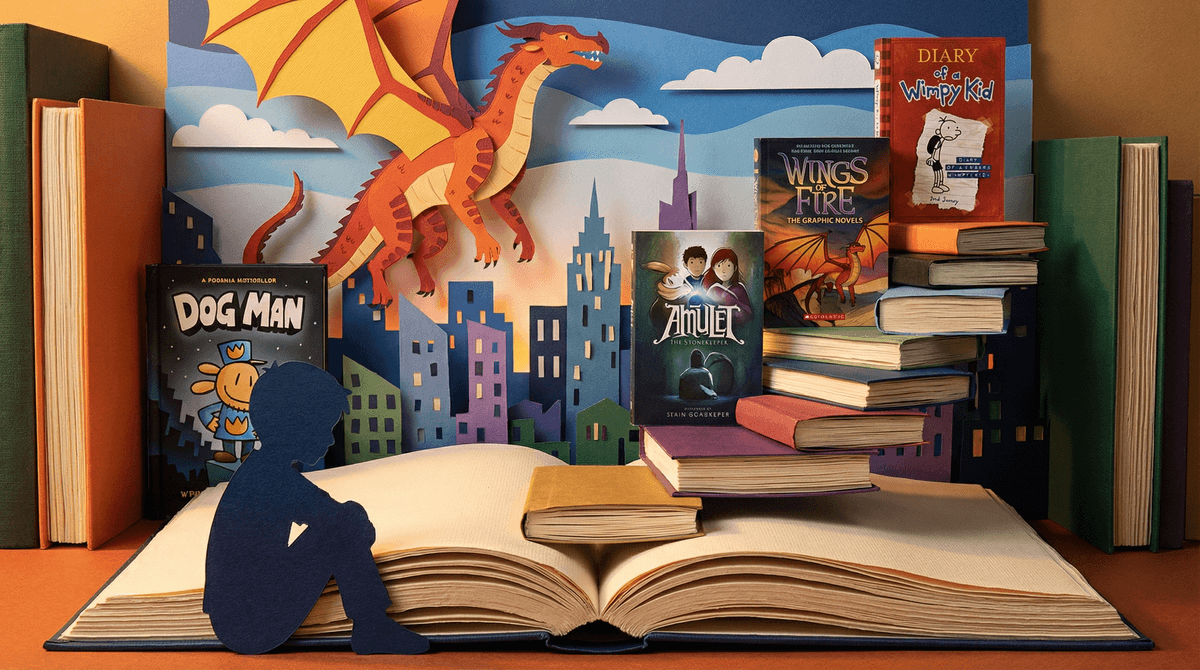
For visual kids: Start with graphic novels. Amulet, Wings of Fire graphic novels, anything by Raina Telgemeier. The pictures aren't training wheels—they're a legitimate storytelling medium.
For kids who love gaming: There are SO many books based on games they already love. Minecraft novels, Pokémon chapter books, Five Nights at Freddy's books. Is it literature? Who cares. It's reading.
For comedy fans: Diary of a Wimpy Kid, Captain Underpants, The Bad Guys. Potty humor is a feature, not a bug.
For fantasy lovers: Percy Jackson is the gateway to everything. Once they're hooked, you've got Harry Potter, Keeper of the Lost Cities, and about 10,000 other options.
Make It Social
Kids are on Discord and Snapchat talking about everything. Why not books? Some schools have book clubs, but you can also find online communities (with your supervision) where kids discuss series they love.
Or start small: "Hey, I'm reading this too—want to race to chapter 5 and then talk about it?"
Remove All Pressure
No book reports. No "what did you learn?" No forced discussions. If they DNF (did not finish) a book, that's fine. Adults do that all the time.
The goal is to build positive associations with reading, not to check boxes.
Use Screen Time as a Bridge, Not a Barrier
Your kid loves Avatar: The Last Airbender? Great! There are graphic novels that expand the story. They're obsessed with a YouTube creator? Some of them have written books (yes, really—DanTDM and others have published actual books).
Don't fight the screen. Use it as a bridge to the page.
Ages 5-7: Picture books still count. Let them "read" to you by describing what's happening in the illustrations. Elephant & Piggie and Dog Man are perfect for this age.
Ages 8-10: This is prime graphic novel territory. Also try series with short chapters like Magic Tree House or Who Would Win? books (yes, the ones that pit animals against each other in hypothetical battles—kids LOVE these).
Ages 11-14: They want to feel grown up. Try books that deal with real issues but aren't preachy. Wonder, Refugee, or if they want pure escapism, any of Rick Riordan's mythology series.
Ages 15+: At this point, if they're still reluctant, try adult books that match their interests. Thriller fans might love One of Us Is Lying. Sci-fi fans might finally be ready for Ender's Game. Don't force "young adult" books on teens who want something meatier.
❌ Don't compare them to their sibling who reads constantly
❌ Don't take away screens as punishment for not reading
❌ Don't force books you loved as a kid (your nostalgia ≠ their interest)
❌ Don't make every book a teaching moment
❌ Don't ban "low quality" books—let them read what they want
The goal isn't to raise a kid who loves reading. The goal is to raise a kid who can read, who knows how to focus on something for more than 90 seconds, and who has experienced getting lost in a story at least once.
If that happens through graphic novels and audiobooks and Minecraft handbooks, that's a win. If they eventually graduate to "real" books, great. If they don't, but they're still engaging with narratives and building comprehension, you've succeeded.
Stop fighting about reading and start experimenting. Try ten different formats and genres. Let them quit books that aren't working. Model reading yourself (yes, even if it's just scrolling through news articles—they're watching).
And remember: there's no such thing as a kid who hates reading. There are only kids who haven't found their book yet.
This week: Ask your kid what they're interested in right now—not what you wish they were interested in, what they actually care about. Then find three books/graphic novels/audiobooks in that topic and let them choose one. No strings attached.
Need specific recommendations? Find books for your specific kid's interests —it's like having a librarian who actually knows what Skibidi Toilet is.