

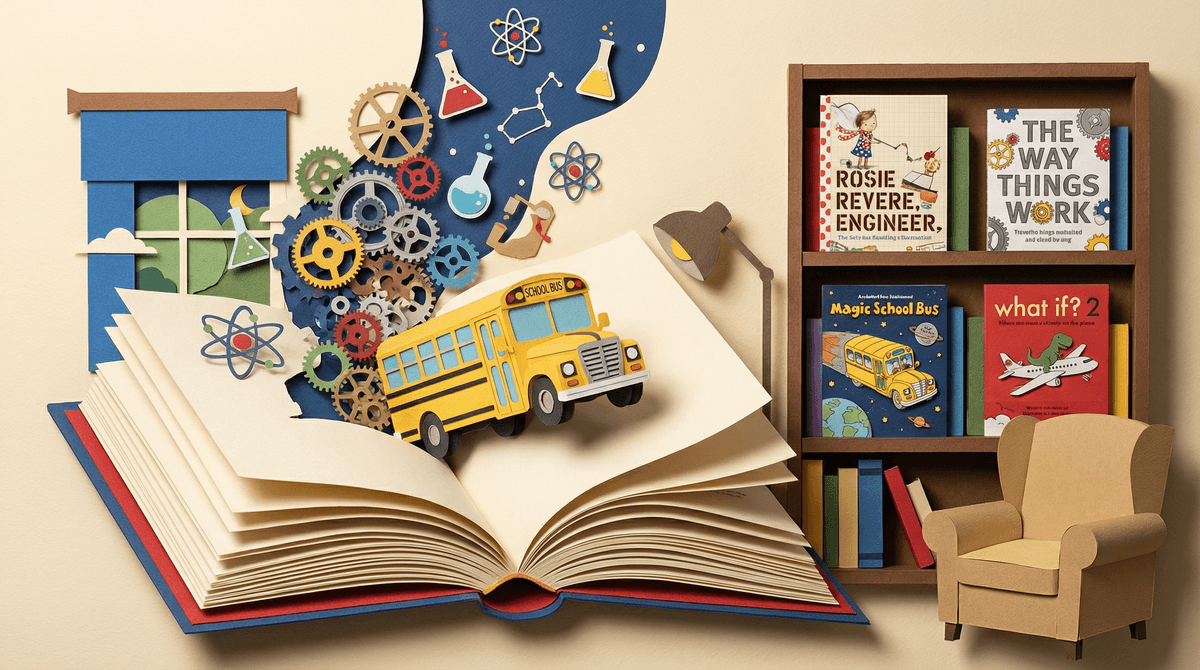
Let's get one thing straight: every book is educational. Yes, even Captain Underpants. Even Dog Man. Even that graphic novel series your kid is reading for the 47th time instead of the "quality literature" gathering dust on their shelf.
But when parents say "educational books," we usually mean books that actively teach something—science concepts, history, math, critical thinking, emotional intelligence—while still being, you know, readable. Books that spark curiosity about the world. Books that build vocabulary and background knowledge. Books that make kids go "wait, WHAT?" and then disappear down a rabbit hole of learning.
The real challenge? Finding books that can compete with Roblox, YouTube, and whatever else is lighting up their screens. Because here's the truth: a book that sits unread is educating exactly no one.
There's solid research showing that kids who read for pleasure have better academic outcomes, stronger vocabularies, and more developed empathy. But here's what the research doesn't capture: kids who love reading have a superpower that screens can't fully replicate—the ability to sustain deep attention, follow complex narratives, and build entire worlds in their imagination.
This isn't anti-screen propaganda. Screens are fine! But books offer something different: no ads, no algorithm pushing them toward increasingly stimulating content, no chat feature where someone might tell them their Minecraft build sucks. Just a kid and a story (or facts, or ideas) at whatever pace works for them.
The other thing? Background knowledge compounds. A kid who reads about ancient Egypt at 8 is primed to understand more when they hit world history at 13. A kid who devours books about space becomes the one who actually gets the James Webb telescope memes. Reading widely makes everything else easier.
Let's be honest—a lot of educational books are essentially textbooks in disguise. Dry facts. Stock photos. That weird overly-earnest tone that screams "a committee of adults thought you should learn this."
Kids can smell that energy from a mile away.
The best educational books don't feel educational. They feel like discovering a secret. They're funny, weird, beautifully illustrated, or written by someone who's genuinely obsessed with their subject and wants to share that obsession.
Some gold standards:
- The "Who Would Win?" series (Ages 5-8): Ridiculous animal matchups with actual facts. Peak engagement.
- Nathan Hale's Hazardous Tales (Ages 8-12): American history as graphic novels that are genuinely funny and don't sanitize the complicated parts.
- The Way Things Work Now by David Macaulay (Ages 8+): How machines work, explained with woolly mammoths. Iconic.
- What If? by Randall Munroe (Ages 10+): Absurd science questions answered with actual physics. Kids who love this often end up reading it aloud to their parents.
- Brown Girl Dreaming by Jacqueline Woodson (Ages 9+): Memoir in verse that teaches history, poetry, and empathy simultaneously.
For younger kids, anything by Mo Willems teaches emotional regulation better than most parenting books teach parents.
Ages 4-7: Picture Books That Teach Without Lecturing
This is the golden age for sneaking in learning through pure delight. Look for:
- Books with rich vocabulary used naturally in context
- Stories that explore emotions and social situations
- Non-fiction that answers the "why" questions they're already asking
The Magic School Bus series remains undefeated here. Also anything by Andrea Beaty (Rosie Revere, Engineer; Ada Twist, Scientist) for STEM concepts wrapped in rhyme.
Ages 8-10: The Chapter Book Sweet Spot
This is when kids can handle more complex ideas but still need narrative momentum. They're also starting to develop specific interests—lean into those HARD.
- Kid obsessed with ancient Egypt? Get them the Ancient Egypt edition of the Horrible Histories series.
- Into animals? National Geographic Readers are reliably good and come in different reading levels.
- Loves gaming? The Wild Robot by Peter Brown has that Minecraft survival vibe but with gorgeous prose.
Ages 11-14: When They Think They're Too Old for "Kid Books"
Plot twist: they're not. But they do need books that respect their growing capacity for nuance and complexity.
This is the age for:
- Narrative non-fiction that reads like a thriller (Bomb by Steve Sheinkin about the race to build the atomic bomb)
- Graphic novels that tackle real issues (March by John Lewis about the Civil Rights Movement)
- Books that show how things work (The Immortal Life of Henrietta Lacks by Rebecca Skloot for advanced readers)
1. Stop making reading feel like vegetables
The fastest way to kill reading is to make it a chore. "You can have screen time after you read for 30 minutes" trains kids to see books as the obstacle between them and fun. Instead, position reading as its own form of entertainment—which it is.
2. Match books to their actual interests, not what you wish they were interested in
Your kid loves Fortnite? Get them Hilo, a graphic novel series with similar energy. Into true crime YouTubers? I Survived series delivers that adrenaline hit.
3. Graphic novels count. Audiobooks count. Re-reading counts.
Some parents worry that graphic novels are "cheating" or that listening to audiobooks isn't "real reading." This is nonsense. The goal is engagement with stories and ideas. However they get there is fine.
4. Build in browsing time
Regular library trips where kids can just... browse. No agenda. No "pick something educational." Let them discover. The library is free, which means they can take risks on weird books without it being a $15 mistake.
5. Create reading-friendly environments
Hard to read when the Xbox is calling from the living room. A cozy reading nook, good lighting, and actual quiet time (which means you're also not on your phone) makes a difference.
6. Read what they're reading
Not to quiz them, but to have actual conversations about it. "Wait, so the dragon is actually the good guy?" is a much better dinner table conversation than "what did you learn today?"
The "reading level" obsession is overblown
Yes, reading levels matter for matching kids with books they can decode. But a kid reading "below level" about something they're passionate about is learning more than a kid struggling through an "appropriate" book about nothing they care about.
Series books are actually great
Some parents worry their kid is "stuck" reading the same series. But series books build reading stamina, create confident readers, and teach kids that finishing a book means there's another one waiting. Once they're hooked on reading, you can nudge them toward variety.
Non-fiction often hooks reluctant readers
Kids who say they "hate reading" often mean they hate fiction. Try DK Eyewitness books, Guinness World Records, or anything by Steve Jenkins. Sometimes facts are more compelling than stories.
Diverse books aren't just for diverse kids
Every kid benefits from seeing different perspectives, cultures, and experiences in their reading. It's not "political"—it's just... reality. The world is diverse; books should be too.
Building a home library that actually gets read isn't about having the "right" books—it's about having their books. The ones that match their interests, their reading level, their sense of humor, their questions about the world.
Start with what they already love and build from there. The kid obsessed with Pokémon might love books about animal adaptations. The Minecraft kid might devour books about engineering or survival stories.
And remember: a kid reading "junk" is still building vocabulary, practicing comprehension, and developing the habit of reading. You can nudge toward variety, but the goal is to create readers, not to win some imaginary literary Olympics.
This week:
- Ask your kid what they're curious about right now—not what book they want, but what they're interested in
- Hit the library and let them browse for 20 minutes with zero pressure
- Check out Screenwise's guide to screen-free activities for creating space where reading can happen
This month:
- Audit your home library—are there books that match their current interests, or just books you hoped they'd like?
- Try audiobooks for car rides or bedtime (Libby app = free library audiobooks)
- Model reading yourself—kids who see parents reading are more likely to read
This year:
- Build the habit of regular library trips (every 2-3 weeks)
- Create a "book budget" where they get to pick books at the bookstore sometimes
- Join Screenwise to get personalized recommendations that actually match your kid's interests and reading level
The competition for your kid's attention is real. But books have been competing with distractions for generations and they're still here. Because when you find the right book at the right time? Nothing else comes close.