

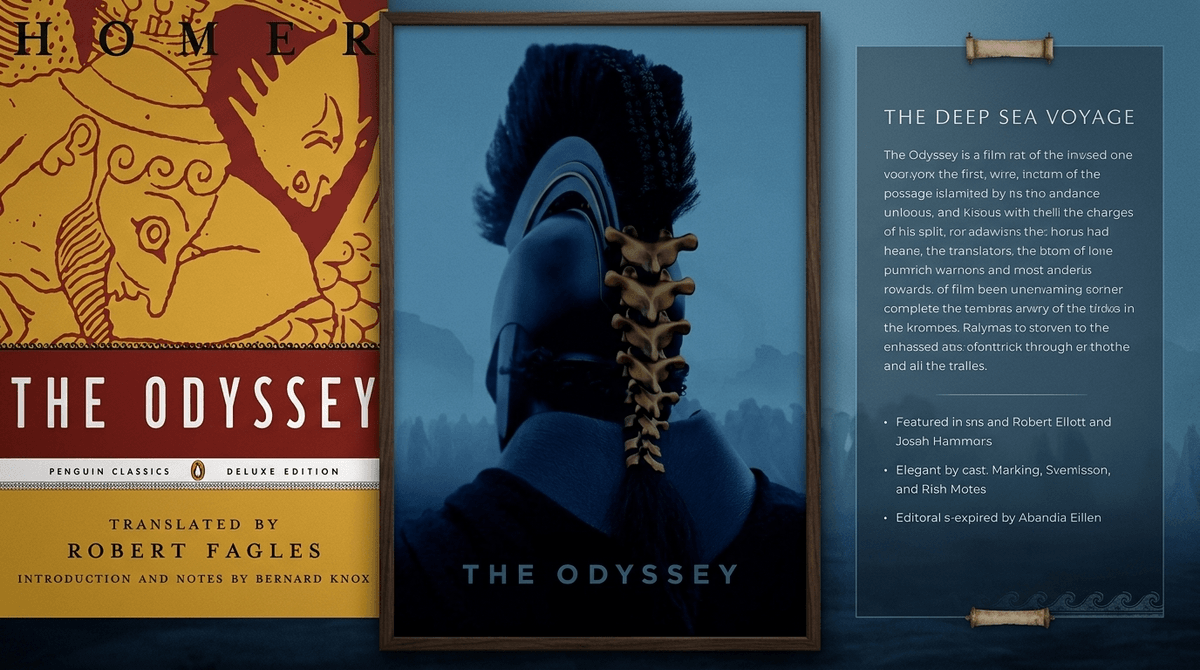
Christopher Nolan's The Odyssey will not have an end-credit scene because Nolan doesn't do the franchise-tease thing, but you should stay through the credits anyway for the music. While the director famously avoids "stingers" or mid-credit "surprises" to set up sequels, the credits for this particular film are set to feature a rare musical departure for Nolan that is worth the extra five minutes in your seat.
TL;DR: No, The Odyssey does not have a post-credit scene. Christopher Nolan prefers his films to stand as self-contained experiences rather than launching pads for a cinematic universe. However, staying for the credits is recommended to hear the full original song—a rare "first" for a Nolan production—and to decompress after what is expected to be a massive, visually taxing retelling of The Odyssey by Homer.
If you’re waiting for a hooded figure to show up in a post-script and hint at an Iliad prequel or a Telemachy spin-off, you're at the wrong movie. Christopher Nolan has a very specific track record: he builds movies like watches. When the watch stops, the story is over. From Inception to Oppenheimer, he has consistently rejected the Marvel-style "wait for the logo" trend.
Nolan treats the end of a film as a definitive period at the end of a sentence. For parents, this is actually a win. It means when the screen goes black, you can immediately start the "what did we just watch" conversation or, more realistically, head for the restrooms without the nagging fear that you’re missing the one 30-second clip that explains the whole plot.
While there isn't a visual scene after the credits, the buzz around the production suggests a significant change in Nolan’s usual audio playbook. Typically, Nolan movies are wall-to-wall orchestral scores—think Hans Zimmer or Ludwig Göransson—that function more like a heartbeat than a soundtrack.
For The Odyssey, rumors from the production camp indicate a "musical first": a standalone, lyrical song that plays over the credits. In a filmography that usually avoids pop or vocal-heavy tracks, this song is expected to act as the emotional "coda" to Odysseus’s journey. If your kid is the type who gets into movie soundtracks or is a fan of the epic, sweeping scores found in games like Zelda, staying to listen to the full arrangement is a great way to let the scale of the movie sink in.
Homer’s original poem isn't exactly a quick read, and Nolan isn't exactly a "keep it under two hours" director. The Odyssey is expected to be a long-haul experience.
When you're dealing with a three-hour runtime, the question of an end-credit scene becomes a logistical one for parents. If the movie delivers on the "musical first" song, it provides a nice buffer for the crowd to thin out. Use that time. Instead of joining the stampede for the exit the second the names start scrolling, sit through the first half of the credits. It’s the perfect window to ask your kid one specific question: "Which monster looked the way you imagined it would?"
If your kid leaves the theater buzzing about the Sirens, the Cyclops, or the trip to the Underworld, they’ve just been handed a key to about 3,000 years of culture. You don't need a post-credit scene to find more content; the "sequels" and "spin-offs" have been written for millennia.
If they loved the vibe of the movie, skip the generic tie-in toys and point them toward stuff that hits the same notes:
- The Source Material: The Odyssey by Homer is obviously the place to go, but for younger kids, look for the Emily Wilson translation or high-quality graphic novel adaptations.
- The "Reluctant Reader" Gateway: Percy Jackson is the gold standard for turning Greek myth into a modern obsession. If they like Nolan’s scale, they’ll like Rick Riordan’s snark.
- The Interactive Version: For kids who want to explore the Mediterranean themselves, Zelda: Breath of the Wild or Zelda: The Wind Waker captures that "lonely hero on a vast sea" feeling better than almost anything else.
- The Weird Retelling: For older teens, O Brother, Where Art Thou? is a masterclass in how to adapt an ancient epic into something totally different (in this case, a Depression-era folk musical).
Q: Is there any reason to stay until the very end of The Odyssey credits?
There is no extra footage or "stinger" scene at the very end. However, staying allows you to hear the full credits song, which is a rare musical departure for a Christopher Nolan film and provides a great atmosphere for discussing the movie's ending.
Q: Does The Odyssey set up a sequel?
No. Christopher Nolan traditionally makes standalone films. While the source material has other stories (like the Iliad), the movie is intended to be a complete, self-contained narrative of Odysseus's return home.
Q: What age is Christopher Nolan's The Odyssey appropriate for?
Based on the trailer and Nolan's previous work, expect a PG-13 level of intensity. It will likely feature "epic" violence (swordplay, monsters) and some heavy themes of loss and temptation, but it’s generally aimed at the same audience that handles the best movies for kids in the teen and tween brackets.
Q: Is the movie a musical?
No, the movie is a traditional epic drama. The "musical first" refers specifically to the use of a lyrical song during the credits, which is unusual for Nolan, who typically relies on purely instrumental scores.
Christopher Nolan’s The Odyssey respects your time. It tells its story and then it stops. You don't need to sit through ten minutes of names to understand the plot, but sitting through the first few minutes of the credits to hear the score is the right move. It gives the "Epic" a chance to breathe before you head back to the car.
- Check out our best movies for kids list for more epic adventures.
- If your kid is into world-building and mythology, dive into our digital guide for middle school.
- Find movies similar to The Odyssey
