

When we talk about diversity in gaming, we're talking about who gets to be the hero. Which stories get told. Who gets to see themselves saving the world, solving puzzles, or building entire universes.
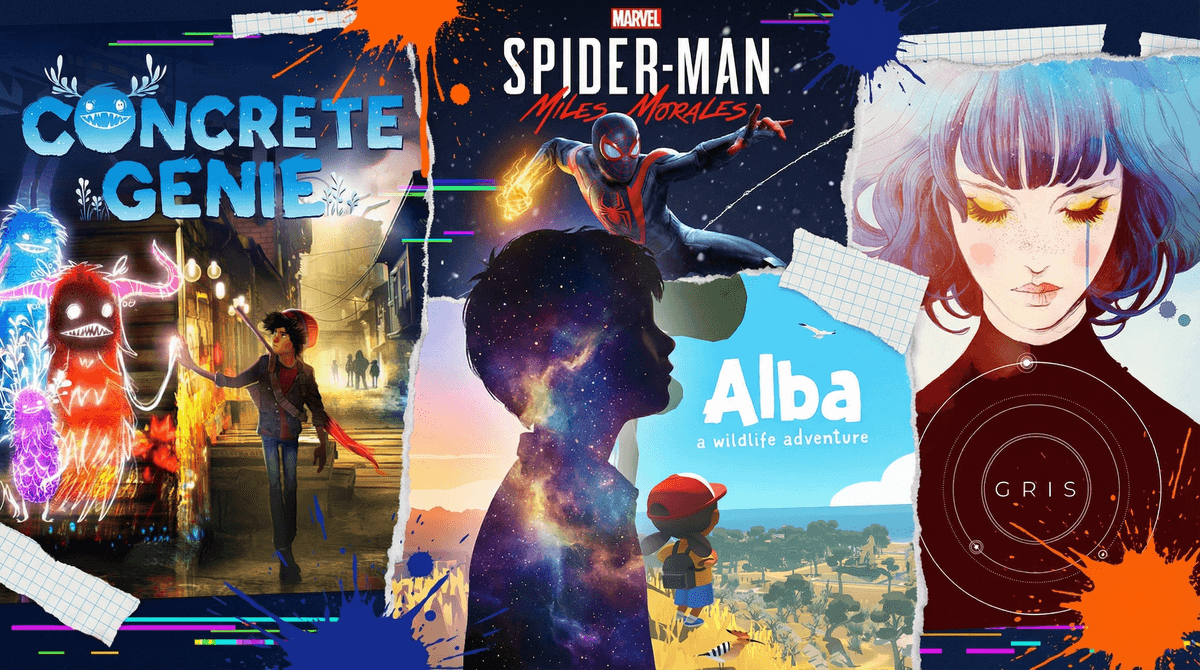
For decades, gaming protagonists looked pretty similar: white, male, often gruff and armed. But the last 10-15 years have brought a real shift. Now we've got games where you can play as a young Black girl exploring her neighborhood (Concrete Genie), a Mexican-American teen navigating life and death (Gris), or literally anyone you want to create in games like The Sims 4 or Roblox.
This isn't just about checking boxes. It's about expanding what gaming can be and who gets to feel like they belong in these digital worlds our kids spend so much time in.
Here's the thing: kids absorb messages about who matters from every piece of media they consume. When your daughter only ever sees male protagonists, she learns something. When your son never encounters characters with disabilities, he learns something too. When kids of color rarely see heroes who look like them, that absence speaks volumes.
Research backs this up. Studies show that diverse representation in media helps kids develop empathy, challenges stereotypes, and supports positive identity development. One 2020 study found that children who played games with diverse characters showed increased acceptance of people different from themselves.
But it's not just about representation for underrepresented kids. All kids benefit from diverse gaming experiences. Your white son needs to see Black girls as protagonists. Your able-bodied daughter needs to encounter characters with disabilities. Your straight kids need to know LGBTQ+ people exist and have stories worth telling.
Gaming is one of the most immersive forms of media. When kids actively play as someone different from themselves—making choices, solving problems, experiencing that character's world—it builds understanding in ways passive media can't match.
Diversity in gaming shows up in lots of ways:
Character representation: Race, ethnicity, gender, body type, disability, sexual orientation, family structures Story perspectives: Whose experiences get centered? What cultures and communities do we explore? Development teams: Who's actually making these games? (Diverse teams tend to create more authentic diverse content) Accessibility features: Can kids with different abilities actually play? Colorblind modes, subtitles, remappable controls all matter
Some games nail multiple aspects. Celeste features a protagonist dealing with anxiety and depression, was made by a diverse indie team, and includes extensive accessibility options. Splatoon 3 lets kids customize characters with different skin tones, body types, and gender expressions without making it A Big Deal.
Other games might excel in one area but fall short in others. That's okay—we're looking for variety across your kid's gaming diet, not perfection in every title.
Ages 5-8:
- Alba: A Wildlife Adventure - Play as a young girl protecting Mediterranean wildlife
- Sackboy: A Big Adventure - Customize your character with tons of inclusive options
- Animal Crossing: New Horizons - Choose your appearance, hair, and style freely
Ages 9-12:
- Life is Strange: True Colors - Asian-American protagonist, LGBTQ+ representation (Ages 12+)
- Spiritfarer - Diverse cast of characters from different cultures and backgrounds
- It Takes Two - Interracial couple as co-protagonists (great for co-op play)
- Spider-Man: Miles Morales - Afro-Latino teen hero in a story about community and identity
Ages 13+:
- The Last of Us Part II - LGBTQ+ protagonist, diverse cast (mature content, know your teen)
- Hades - Greek mythology reimagined with diverse casting and bisexual protagonist
- Tell Me Why - First major game with a transgender protagonist
- Horizon Zero Dawn - Strong female lead in a post-apocalyptic world with diverse tribes
"My kid doesn't care about this stuff": They might not articulate it, but kids notice. They notice who gets to be powerful, who gets to be funny, who gets to be the hero. Even if they don't comment on it, representation (or lack thereof) shapes their understanding of whose stories matter.
"Isn't this just forced diversity?": When people say this, they usually mean "I'm used to everyone looking like me and this feels different." Here's the truth: the real world is diverse. Games that reflect that aren't forcing anything—they're finally catching up to reality.
"We just want fun games, not political statements": Representation isn't inherently political. A Black protagonist isn't a political statement any more than a white one is. An LGBTQ+ character existing isn't political—it's just... existing. Some games do tackle social issues directly, and that's fine too. You can decide what's right for your family, but don't confuse "includes people who aren't like me" with "is making a political statement."
Quality still matters: Diverse games need to be good games. Don't force your kid to play something mediocre just because it has representation. The good news? Many of the best games of the past decade also happen to be diverse. Quality and representation aren't in conflict.
Check for authenticity: Games created with input from the communities they represent tend to feel more genuine. Look for diverse development teams or consultants from relevant communities. Learn more about how to evaluate authenticity in media .
.
You don't need to make this a Big Talk. Try:
"Who's your favorite character to play as? Why?" - Opens the door to discussing what makes characters appealing
"Have you noticed if there are characters in your games who remind you of people you know?" - Helps kids connect game worlds to real diversity
"What do you think about how [character] looks/acts/talks?" - Encourages critical thinking about representation
"Want to try a game where you play as someone totally different from you?" - Frames diverse gaming as an adventure, not homework
For older kids, you can be more direct: "I'm curious if you've noticed that game characters are more diverse now than when I was your age. What do you think about that?"
Diverse gaming isn't about checking boxes or forcing an agenda. It's about expanding the worlds our kids inhabit and the perspectives they encounter. It's about making sure every kid gets to see themselves as the hero sometimes, and gets to walk in someone else's shoes other times.
The gaming industry has made real progress here, but it's not universal. You'll still find plenty of games with all-white, all-male casts. That's fine—those can be part of a balanced gaming diet. The goal isn't to ban anything, but to make sure your kid's gaming experience includes diverse voices and perspectives.
Start with one game from the list above that matches your kid's age and interests. Play it together if you can. See what conversations emerge naturally. That's really all it takes.
- Browse games with strong female protagonists
- Explore games that teach empathy
- Check out our guide to inclusive character creation in popular games
- Find diverse game recommendations based on your kid's current favorites