

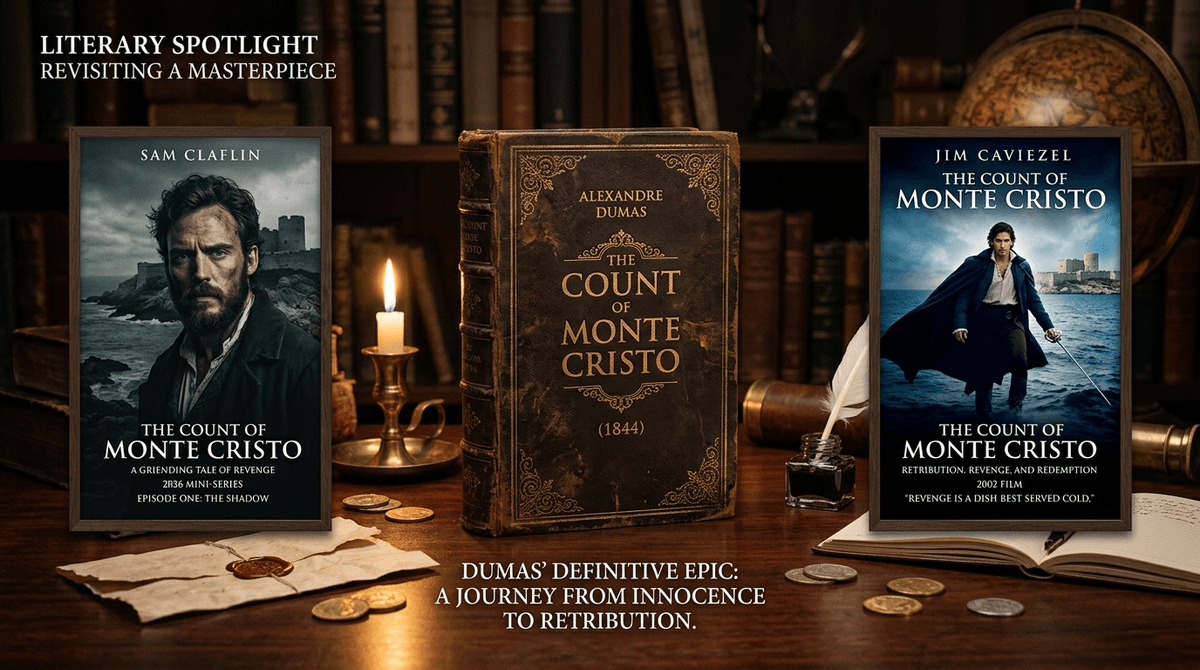
The new 2026 adaptation of The Count of Monte Cristo is essentially the ultimate "receipts" story—it’s a lush, high-stakes revenge thriller that is perfect for teens (13+) who love a good "downfall" arc, but the heavy themes of psychological warfare and the dark prison sequences might be a bit much for the middle school crowd.
TL;DR: The 2026 remake of The Count of Monte Cristo (show) starring Sam Claflin is an eight-part masterpiece of "patience is a virtue" revenge. Screenwise recommends this for ages 13 and up due to its intense emotional weight, period-accurate violence, and complex moral questions. It’s a fantastic alternative to modern "brain rot" content, offering deep historical context and a cautionary tale about what happens when you let a grudge consume your entire life.
If you haven't been keeping up with the PBS Masterpiece schedule, this new version of The Count of Monte Cristo is the big "prestige TV" event of the spring. Directed by Bille August and starring Sam Claflin (who you probably know from The Hunger Games or Daisy Jones & the Six), this isn't a rushed two-hour movie. It’s an eight-episode deep dive into the original Alexandre Dumas book.
The story follows Edmond Dantès, a young sailor who is framed for treason on his wedding day. He spends years rotting in a grim island prison, meets a wise old mentor (played by the legendary Jeremy Irons), escapes, finds a literal mountain of gold, and spends the rest of the series systematically ruining the lives of the men who betrayed him. It’s the original "leveling up" story, but with a much higher body count and better outfits.
We live in a culture of "cancelation" and "calling people out." Kids today see revenge play out in real-time on social media every single day. The Count of Monte Cristo takes that impulse—the desire to see someone get what’s coming to them—and plays it out to its logical, often tragic, conclusion.
For parents, this is a "stealth education" win. While your teen thinks they’re watching a swashbuckling adventure, they’re actually engaging with:
- Post-Napoleonic French History: It’s a lot more interesting when there are sword fights involved.
- Literary Structure: Dumas was the king of the "cliffhanger" (he literally invented them for serialized newspapers).
- Moral Philosophy: Is Edmond the hero, or has he become the villain by the end?
If your kid is interested in the series, or if you want to build a "unit study" that doesn't feel like school, here is how to navigate the different versions:
Best for: Ages 13+ This is the "definitive" modern version. It’s slow-burn, beautifully shot, and doesn't shy away from the psychological toll of isolation. Note for parents: There is a brief scene involving a "hashish tincture" (drug use) which is straight from the book but might catch you off guard if you only remember the sanitized 2002 movie.
Best for: Strong readers 14+ The original book is massive—over 1,000 pages. Unless your kid is a total bookworm, look for an abridged version first. It’s the ultimate "long game" story, but it requires a lot of focus.
Best for: Ages 11+ If the 2026 series feels too heavy or slow, this movie is the "popcorn" version. It changes the ending significantly (making it much happier), but it’s a great entry point for younger kids who just want to see a guy escape from prison and fight with swords.
Best for: Any age Wait, why is a farming game here? Because Monte Cristo is about a man who loses everything and has to rebuild a life from scratch. If the revenge themes of the show are too dark, Stardew Valley offers that same satisfying "progression" loop—starting with nothing and building an empire—without the need to ruin anyone's life in Paris.
Don’t just let the credits roll. Use the show as a springboard for some real talk:
- Justice vs. Revenge: "Edmond spent 20 years planning this. Was it worth it? Did he actually get his life back, or did he just waste more of it on the people he hated?"
- The Digital Footprint: "In the 1800s, Edmond had to physically find letters and secrets to ruin people. Today, we have 'receipts' and screenshots. How is modern call-out culture similar to what the Count does?"
- Identity: "Edmond changes his name and personality to fit in with the rich people in Paris. Have you ever felt like you had to act like a different person to fit into a specific group or platform?"
Screenwise gives the 2026 series a high WISE Score for educational value, but a "Yellow Light" for emotional intensity.
Sam Claflin is fantastic, but his portrayal of Edmond’s despair in the first two episodes is heavy. He looks genuinely unwell, and the scenes where he’s being "broken" by the prison guards are visceral. It’s not "saw-style" gore, but it’s the kind of gritty realism that might give younger kids (under 12) some bad dreams.
Also, Jeremy Irons as the Abbé Faria is basically a masterclass in acting, but his character’s death is a major emotional pivot. If your child is sensitive to themes of aging or illness, you might want to watch those scenes together.
Q: Is the 2026 Count of Monte Cristo okay for a 10-year-old? Probably not. Between the intense prison isolation, the complex political betrayals, and the slow-burn pacing, most 10-year-olds will either be bored or a bit freaked out. Stick to the 2002 movie for that age group.
Q: Does the new series follow the book exactly? It’s much closer than previous versions because it has eight hours to tell the story. However, it adds a "modern twist" to the dialogue and some of the character motivations to make it feel more relevant to 2026 audiences.
Q: Are there any "content warnings" parents should know about? Beyond the prison intensity, there is some period-typical violence (duels, sword fights), themes of infidelity, and a scene involving historical drug use (hashish). It’s very much a TV-14 vibe.
The 2026 Count of Monte Cristo is a rare win for "intentional" screen time. It’s high-quality, intellectually stimulating, and provides a massive opportunity to talk to your teens about forgiveness and the futility of living for revenge.
