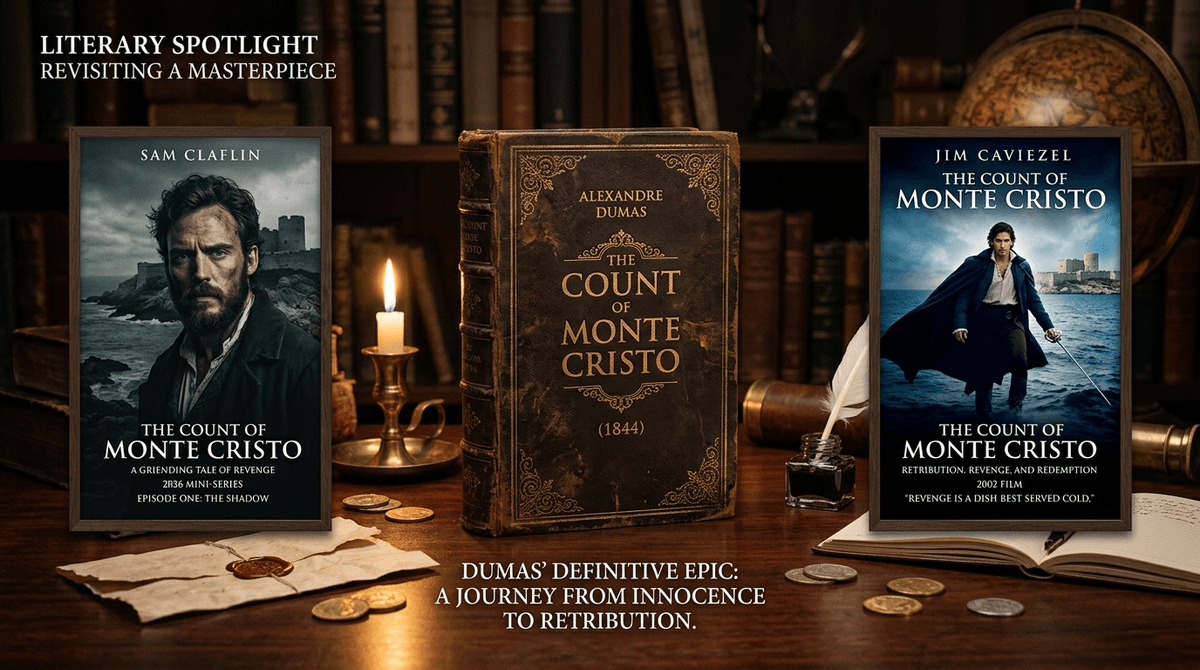
If you’re seeing this pop up on your teen’s radar now, it’s likely because of the buzz surrounding the Sam Claflin series. It’s the perfect time to point them toward the source material, but you need to be strategic about how you hand this over. This isn’t a book you just "finish"—it’s a book you survive, and for most readers, that survival depends entirely on which version they pick up.
The Abridged Trap
The 2011 edition listed here is a literal brick. At over 1,200 pages, it is a massive undertaking for even the most voracious reader. If your kid is a "get to the point" type of person, handing them the unabridged version is the fastest way to make sure they never read a classic again.
The middle 600 pages are essentially a 19th-century version of Gossip Girl—lots of social climbing, opera-house posturing, and intricate family trees. For a teen who wants the John Wick energy of the prison break and the final revenge, these chapters can feel like quicksand. Don’t be a purist here. If they aren't interested in the nuances of French banking politics, there is no shame in finding a high-quality abridged version that keeps the pacing tight.
The Blueprint for the Modern Anti-Hero
We talk a lot about Batman and the Punisher, but Edmond Dantès is the blueprint. What makes this work for a 2026 audience is that Dantès isn't a "good guy" in the modern sense. He is a traumatized man with god-like wealth who spends decades gaslighting his enemies into self-destruction.
If your kid liked the calculated, cold-blooded planning in Death Note or the "burn it all down" energy of modern revenge thrillers, they will find the Count’s transformation fascinating. It’s a masterclass in the long game. While the "revenge" part is fun, the real value for a teen reader is watching the psychological toll that revenge takes on the person carrying it out. If you're navigating the themes of justice versus vengeance, our guide to The Count of Monte Cristo: Revenge, Redemption, and the 2026 Remake offers a great framework for those dinner-table debates.
Where They’ll Get Stuck
The prison break at the Chateau d'If is some of the most electric writing in history. Most kids will fly through that. The friction starts when Dantès becomes the Count and moves to Italy.
The Rome chapters feature a fairly graphic execution scene and some heavy drug use (the Count is a fan of hashish, which was the "exotic" trope of the time). It’s not gratuitous, but it marks the shift from an adventure story to something much more cynical and adult. If they can make it through the Roman Carnival, the payoff in the final third of the book is one of the most satisfying "all the pieces matter" endings ever written.
"All human wisdom is contained in these two words: 'Wait and Hope.'"
That’s the core of the book, but for a 15-year-old living in an era of instant gratification, the "wait" part is the hardest sell. If they’re struggling with the middle-book slump, remind them that every weird side character and boring dinner party is a fuse being lit for the explosion at the end.