

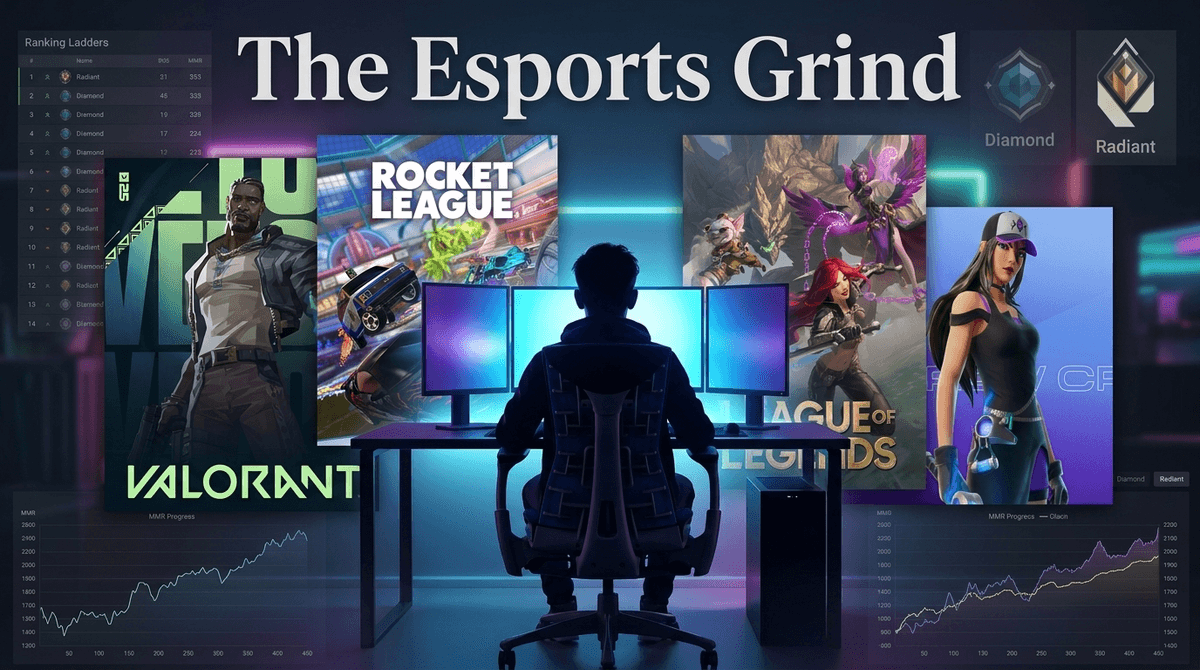
TL;DR: Competitive gaming (Esports) can build amazing skills like teamwork and resilience, but the "grind" for rank can lead to burnout, anxiety, and exposure to toxic communities. The goal isn't to ban the games, but to help your child navigate the high-pressure environment of "Ranked" play without losing their mind (or their sleep).
Quick Links for the Competitive Household:
- Fortnite – The gateway drug to competitive play.
- Valorant – High-stakes tactical shooter with a notoriously "spicy" (toxic) community.
- Rocket League – "Soc-car" that’s high skill but generally lower on the "brain rot" scale.
- League of Legends – The ultimate time-sink; incredible depth, but can be a mental health minefield.
- Discord – Where the "team chat" actually happens (and where the drama lives).
If your kid is playing Minecraft in Creative mode, they’re relaxing. If they’re playing "Ranked" in Valorant or League of Legends, they are essentially working a high-stress second job.
In the competitive world, players are ranked by "MMR" (Matchmaking Rating) or "ELO." Every win moves them up a tiny bit; every loss feels like a personal failure that sets them back hours of work. This creates a "just one more game" loop that isn't about fun—it's about validation and status. When they say they can't pause, they aren't lying; leaving a ranked match often results in actual penalties, like being banned from the game for a few hours or losing significant rank.
It’s easy to look at a kid screaming at a monitor and think, "Why do you even do this if it makes you miserable?" But for a 12-year-old, being "Diamond" rank in Apex Legends is the modern equivalent of being the starting quarterback.
- Social Currency: In many middle and high schools, your rank is your identity. Being "hardstuck Silver" is a genuine insult.
- The Flow State: When a kid is "in the zone," they are practicing intense focus and hand-eye coordination.
- Entrepreneurship: Many kids see the path from Roblox to professional Esports or streaming as a legitimate career path.
See if the Valorant competitive community is toxic for middle schoolers
Competitive gaming isn't inherently bad, but the "grind" can become a "mental health tax." Here is what to watch for:
1. "Tilting" and Rage
"Tilting" is a poker term gamers use when frustration leads to poor decision-making. If your kid is slamming desks, screaming at teammates, or ending a session in a worse mood than they started, they are tilted. This isn't just "being a sore loser"—it's a sign that their self-worth has become too tied to the game's outcome.
2. The Toxic Lobby Culture
Competitive games are notorious for "toxicity." This includes "griefing" (intentionally ruining the game), "flaming" (verbal abuse), and "gatekeeping." In games like Overwatch 2 or Counter-Strike 2, the voice chat can get dark fast. If your child is using "Ohio" as a slang term for "weird," that's fine. If they're picking up slurs or aggressive communication styles from toxic lobbies, that's a problem.
3. Sleep Deprivation and "The One More Game" Syndrome
Most competitive games have matches that last 30–45 minutes. If a child loses a match at 9:00 PM, they often feel a desperate need to "win back" their rank, leading to 1:00 AM sessions. This ruins their REM sleep, which is basically fuel for adolescent emotional regulation.
If your kid is obsessed with competition, you don't have to force them to play Animal Crossing (which they will find boring). Instead, steer them toward games or content that balance the competitive itch with better vibes.
Ages 8+ It’s basically soccer with rocket-powered cars. It is incredibly difficult to master, which satisfies the "pro" itch, but because it isn't a "shooter," the vibe tends to be slightly less aggressive. It’s also one of the few Esports where parents can actually understand what’s happening on screen.
Ages 12+ Fighting games are "1v1." This is huge for mental health because there are no teammates to blame and no one to scream at you for "throwing" the match. It teaches personal accountability and the "growth mindset" better than almost any other genre.
Ages 12+ If your kid is burnt out on multiplayer, Hades is a "roguelike" that is single-player but extremely challenging. It rewards "dying and trying again," which helps reframe failure as progress—a vital skill for any competitive gamer.
Ages 10+ This isn't a game; it's a docuseries about legendary sports coaches. Watching this with your kid can help bridge the gap between "gaming" and "sportsmanship." It helps them see that the mental struggle of a League of Legends pro is the same as an NBA coach.
- Ages 7-10: Keep them away from "Ranked" modes and open voice chat. Stick to games like Splatoon 3, which is competitive but uses "canned" chat (pre-set phrases) to prevent toxicity.
- Ages 11-14: This is the peak "Sigma" and "Skibidi" era where social status is everything. They will want to play Valorant or Fortnite. This is the time to set "Hard Stop" times for ranked play. No starting a new ranked match after 8:30 PM.
- Ages 15+: Focus on "The Why." If they want to go pro, they need to treat it like an athlete: that means gym time, proper food, and mental health breaks. If they aren't trying to go pro, help them realize when the game is no longer serving them.
If you walk in and say, "Stop playing that stupid game, it's making you angry," you've already lost. They will tune you out. Instead, try to speak their language:
- Ask about the "Meta": "What's the current meta? Is Fortnite still dominated by snipers?" This shows you respect the game as a skill.
- Identify the "Tilt": "Hey, you sound pretty tilted. Do you think your MMR is going to go up or down if you play another match while you're this frustrated?"
- The "Touch Grass" Strategy: It’s a meme, but it’s real. "You've been in the trenches for three hours. Let's go touch grass (literally go outside) for 15 minutes to reset your brain before the next session."
Competitive gaming isn't "brain rot" if it's approached with intentionality. It can teach a kid how to handle pressure, how to analyze their own mistakes (VOD reviewing), and how to work with a team of strangers.
However, the industry is designed to keep them hooked through "FOMO" (Fear Of Missing Out) and the dopamine hit of the rank-up. As the parent, you are the "Mental Performance Coach." Your job isn't to take away the controller, but to ensure they have a life outside the screen that is more rewarding than their "Diamond" rank.
- Audit the Voice Chat: Sit in the room while they play a match of Valorant with the volume up. If the lobby sounds like a dumpster fire, talk about the "Mute" button.
- Set a "No-Ranked" Window: Encourage "Casual" or "Creative" modes in the hour before bed.
- Validate the Effort: If they win a big tournament or hit a new rank, celebrate it like you would a good grade or a soccer goal. When they feel seen, they’re more likely to listen when you tell them it’s time to log off.
Check out our guide on the best gaming headsets for kids that actually have good mic controls