

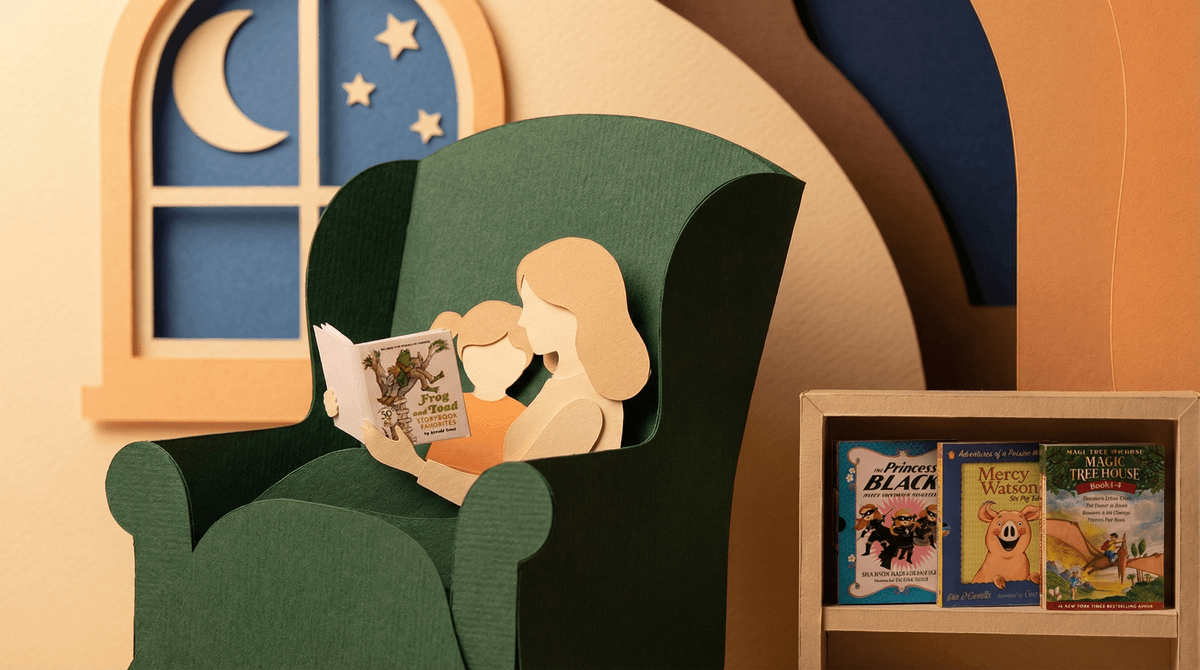
Chapter books for 4-6 year olds are basically the bridge between picture books and "real" chapter books. They're longer stories broken into short chapters (usually 5-10 minutes of reading time each), with illustrations sprinkled throughout to keep little eyes engaged. Think Ivy and Bean, The Magic Tree House, or Junie B. Jones.
Here's the thing though: most kids this age can't actually read these books independently yet. And that's completely fine! These books are designed for read-aloud time — that cozy ritual where you're building literacy skills, imagination, and honestly some of the best memories of early childhood.
The sweet spot? Books with 50-150 pages, simple vocabulary mixed with some challenging words (great for building context clue skills), and plots that can handle a cliffhanger without causing bedtime meltdowns.
You might be wondering why a digital wellness platform is talking about old-school paper books. Here's why: read-aloud time is one of the most powerful tools you have against the pull of screens.
When kids are used to the instant gratification of YouTube Kids or Bluey (which, to be clear, is excellent), asking them to sit still and imagine what's happening in a story feels almost radical. But chapter books do something screens can't: they force the brain to create its own visuals, follow complex narratives over multiple days, and build genuine patience.
Plus, it's 20-30 minutes of genuinely screen-free time that doesn't feel like deprivation. No one's crying about missing Roblox when you're finding out if the pigeon finally gets to drive the bus.
Ages 4-5: Start with heavily illustrated chapter books where each chapter is basically a complete mini-story. Mercy Watson by Kate DiCamillo is perfect — a pig who loves toast, chapters are 3-5 pages, and there are pictures on every spread. Frog and Toad technically isn't marketed as a chapter book, but it functions like one and is absolutely beloved.
Ages 5-6: You can start introducing slightly longer chapters and more complex plots. The Boxcar Children (start with the original), Nate the Great, and Princess in Black series hit that sweet spot. Kids this age can usually handle a cliffhanger and remember what happened yesterday.
The kindergarten reality check: Some kindergarteners are ready for Harry Potter. Most aren't. Some are still solidly in board book territory. All of this is normal. Don't let the kid whose parent announces they're "already reading chapter books independently!" make you feel behind. Reading development varies wildly at this age .
.
You're building attention span. In a world where TikTok and YouTube Shorts are training brains for 15-second dopamine hits, asking a 5-year-old to follow a story across multiple days is genuinely countercultural. Start with one chapter a night. Some nights they'll beg for more. Some nights they'll wiggle like they're made of worms. Both are fine.
The illustrations matter. Don't feel like you need to jump straight to text-heavy books. The pictures aren't "cheating" — they're scaffolding. Dog Man and Captain Underpants are technically graphic novels, but they're getting reluctant readers to engage with longer narratives. I'll take a kid excited about a "dumb" book over a kid who thinks reading is boring any day.
Representation is huge at this age. Kids are forming their sense of what stories are "for them." Last Stop on Market Street, Yasmin, Isadora Moon, and Freddie Ramos offer diverse characters and experiences. Representation isn't just nice-to-have; it's literally shaping whether kids see themselves as readers.
Series are your friend. Once you find a character your kid loves, milk it. There are like 130 Magic Tree House books. That's months of bedtime sorted. Same with Bink and Gollie, Owl Diaries, and The Bad Guys.
Some books have... questionable content. Junie B. Jones uses "bad grammar" that makes some parents twitchy. Captain Underpants has toilet humor. Diary of a Wimpy Kid (which is really for older kids but some 6-year-olds love) has a protagonist who's kind of a jerk. My take? If it gets them excited about reading, we can have conversations about "book voice vs. real voice" and why Greg Heffley maybe isn't the best role model.
Create the ritual. Same time, same cozy spot, every night. This isn't just about the book — it's about the routine. Put the iPad in another room. Make it a thing.
Let them pick (within reason). Take them to the library and let them choose from the early chapter book section. They'll be more invested in a book they selected, even if it's the 47th book about a farting dinosaur.
Don't force it. Some nights are going to be a battle. That's okay. Read a picture book instead. Come back to the chapter book tomorrow. The goal is building positive associations with reading, not grinding through a curriculum.
Ask questions, but not too many. "What do you think will happen next?" is great. Turning every page into a comprehension quiz is not. Let them just enjoy the story sometimes.
Chapter books for 4-6 year olds aren't about hitting some developmental milestone or keeping up with other families. They're about carving out time in your day that's slow, imaginative, and genuinely connecting. In a house full of screens (and let's be real, all our houses are full of screens), that 20 minutes of reading together becomes this little pocket of calm.
Will your kid still want to watch Paw Patrol? Yes. Will they still beg for "just one more" Minecraft video? Absolutely. But they'll also start asking "can we read our chapter?" at bedtime. And that question? That's the whole point.
Ready to explore? Check out building healthy reading habits alongside screen time or browse our guide on age-appropriate books vs. shows.