

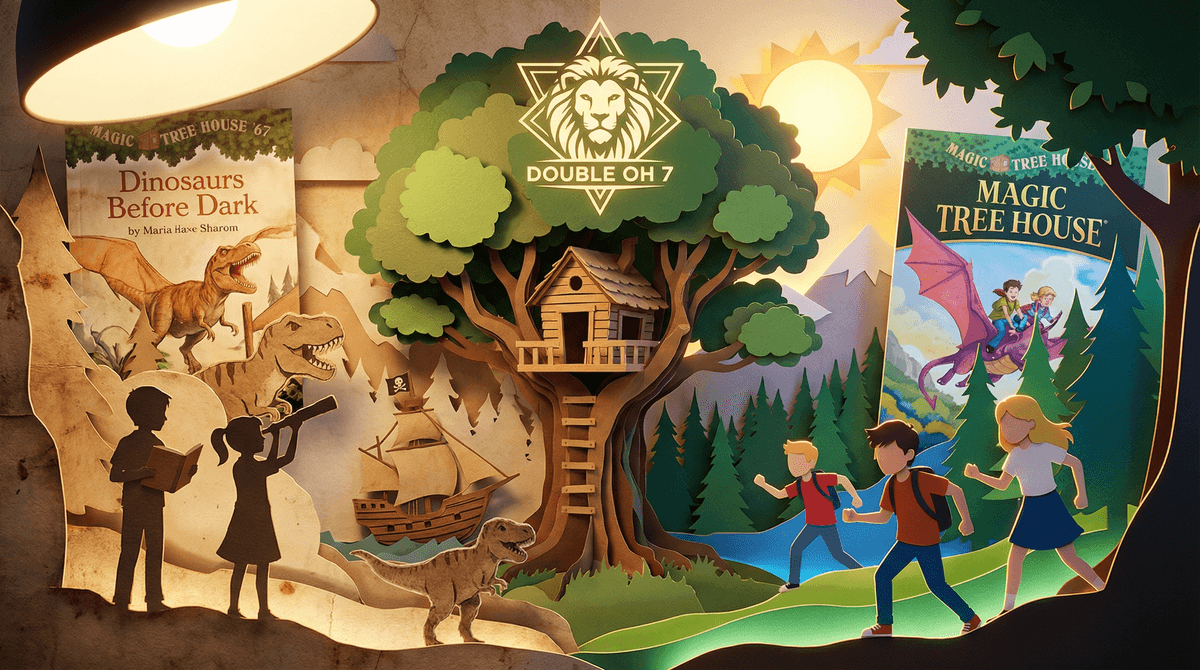
TL;DR: The Magic Tree House is the ultimate "bridge" franchise. It moves kids from picture books to chapter books, and now, from paper to pixels. With the recent explosion of graphic novels and the long-awaited animated series development, Jack and Annie are more relevant than ever. It’s high-quality, low-stress media that actually encourages historical curiosity rather than just "brain rot."
Get a reading list based on your kid's interests
If you managed to get through the 90s without encountering Jack and Annie, here’s the gist: two siblings from Frog Creek, Pennsylvania, find a treehouse in the woods filled with books. The treehouse belongs to Morgan le Fay (a magical librarian from Camelot), and it can transport them to any time and place depicted in the books.
It’s the "Goldilocks" of kids' media: not too scary, not too babyish, and just the right amount of educational. For decades, Mary Pope Osborne’s Magic Tree House books have been the undisputed heavyweight champions of the 1st-to-3rd-grade reading level.
But we aren't just talking about the dusty paperbacks in the back of the classroom anymore. The franchise has leveled up into graphic novels, a massive audiobook collection, and a push into high-quality animation that aims to compete with the flashy stuff your kids see on YouTube.
Kids in the 6-9 age range are in a developmental sweet spot where they are starting to crave independence but still find the world a little bit daunting. Jack (the cautious, note-taking researcher) and Annie (the impulsive, animal-loving risk-taker) represent the two halves of every kid's brain.
In a world of Skibidi Toilet and high-octane Roblox sessions, The Magic Tree House offers something different: competence porn. Jack and Annie solve problems using their wits, their books, and their kindness. There’s no "Ohio" rizz or "alpha" posturing here—just two kids trying to figure out how to talk to a ninja or survive a T-Rex encounter.
The transition from text-heavy pages to vibrant screens is usually where parents start to worry. We’ve all seen a great book get "hollowed out" into a mindless 11-minute cartoon. Fortunately, the Magic Tree House expansion has been handled with a lot of respect for the source material.
These are the perfect "gateway drug" for kids who find a wall of text intimidating. The art is modern and expressive, but it keeps the pacing of the original stories. If you have a kid who would rather play Minecraft than pick up a book, hand them Dinosaurs Before Dark (Graphic Novel). It’s a visual win that still builds literacy skills.
After years of development rumors, the move into animation is finally bringing the series to the same screens where kids watch Bluey or The Octonauts. The show leans into the "Fact Tracker" aspect of the brand, making it feel more like an adventure documentary than a mindless slapstick cartoon.
If your kid finishes a book about the Titanic and starts asking 1,000 questions, these are the companion guides. They are the ultimate "anti-brain-rot" content because they teach kids how to research.
Check out our guide on finding high-quality educational YouTube channels
While the brand is generally "squeaky clean," here is how to break it down by age:
- Ages 4-6: Stick to the audiobooks or the graphic novels as a read-aloud. The vocabulary is simple enough for them to follow, but the "peril" (like being chased by a shark) might be a bit much for very sensitive souls.
- Ages 7-9: This is the "Golden Age." They can likely read the original chapter books independently. This is also the prime age for the animated series.
- Ages 10+: They might start to feel "too old" for Jack and Annie unless they move into the Merlin Missions, which are longer, more complex, and feature higher stakes.
The "Magic Tree House" ecosystem is one of the safest bets in the digital landscape, but there are a few things to keep in mind as your kid moves from the books to the broader web:
- The "YouTube Rabbit Hole": If your kid gets obsessed with a topic from the books (like Ancient Egypt), they will inevitably head to YouTube to find videos about it. While their intent is educational, YouTube's algorithm doesn't care about "The Magic Tree House"—it cares about engagement. Ensure they are using YouTube Kids or a supervised account so they don't go from "How were pyramids built?" to "Top 10 Scariest Mummies Found on Camera" in three clicks.
- Fandom & Games: There are various Magic Tree House websites and minor browser games. These are generally very safe and don't feature the predatory "loot box" mechanics you'll find in Roblox or Fortnite.
- The "Screen-to-Page" Ratio: The new animated series is great, but it’s fast. The books require "deep work" and visualization. A good rule of thumb? For every episode they watch, have them read one chapter of the corresponding book. It keeps the "mental muscles" working.
Jack and Annie often meet historical figures like William Shakespeare or Clara Barton. While the books are well-researched, they are still historical fiction. This is a great opportunity to talk to your kids about what’s real and what’s "for the story."
In an era of AI-generated misinformation, teaching a 7-year-old to ask, "Did that actually happen, or did the author add that for the plot?" is a foundational media literacy skill.
If your kid is diving into the series, use these prompts to move the experience from "passive consumption" to "active learning":
- "If you had a magic tree house, where is the first place you’d go? Would you take a notebook like Jack or just jump in like Annie?"
- "That episode about the Vikings was wild. Do you think the real Vikings actually wore those helmets, or was that just for the show?"
- "I saw there’s a Magic Tree House Fact Tracker about Ninjas. Want to see if the library has it so we can see what Jack’s notes would look like?"
The Magic Tree House is a rare win for parents. It manages to be "cool" enough for kids to stay engaged while being "wholesome" enough that you don't have to pre-screen every single page or episode.
Whether they are reading the graphic novels, listening to the audiobooks on a road trip, or watching the animated series on a rainy Saturday, you’re looking at some of the highest-quality "bridge" media available today.
It’s not brain rot. It’s not "mid." It’s a classic for a reason.
- Audit the Bookshelf: If your kid is a reluctant reader, grab the first Graphic Novel.
- Audiobook Hack: Use Libby or Audible to get the audiobooks for car rides. Mary Pope Osborne narrates many of them herself, and she’s fantastic.
- Check the Community: Use the Screenwise survey to see what percentage of other parents in your school district are letting their kids transition to the Magic Tree House animated series and at what age.