

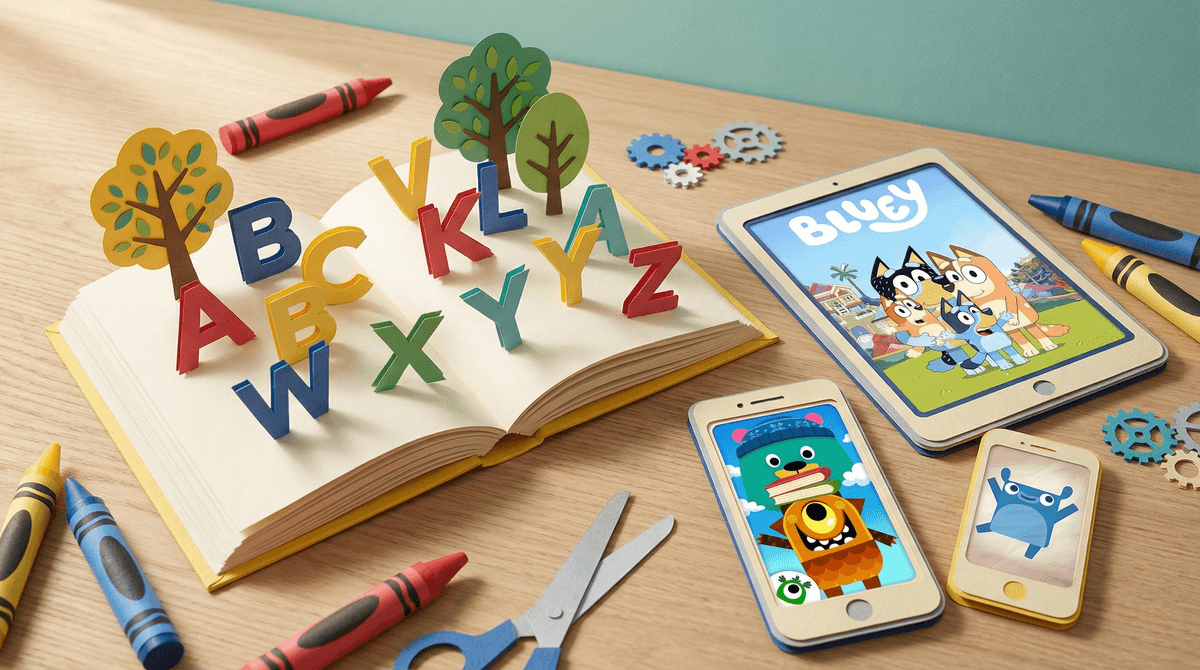
Let's be real: teaching a preschooler to read in 2026 looks wildly different than it did even ten years ago. Your three-year-old can navigate to their favorite YouTube channel before they can tie their shoes. They know how to skip ads, restart episodes, and probably have opinions about which version of Bluey is "the good one."
The question isn't whether screens will be part of your child's literacy journey—they already are. The question is how to use them intentionally alongside the classic stuff (yes, actual books still matter, sorry) to build real reading skills.
Here's the thing: digital tools can genuinely help with early literacy. But they can also be a total waste of time dressed up in educational packaging. The difference? Knowing what actually works and what's just keeping your kid quiet while you make dinner.
Preschool is when brains are absurdly receptive to language. Kids are building phonemic awareness (recognizing sounds in words), learning letter recognition, understanding that print carries meaning, and developing vocabulary at a pace they'll never match again.
The research is pretty clear: quality matters way more than quantity. Thirty minutes of interactive reading beats three hours of passive screen time every single time. But here's where it gets interesting—some digital tools can actually enhance what you're already doing with physical books and conversations.
The problem? Most "educational" apps are garbage. They're designed to keep kids tapping, not learning. They're bright, loud, and full of rewards that have nothing to do with actual literacy skills.
The good stuff:
Apps like Homer and Teach Your Monster to Read are built on actual reading science. They focus on phonics, letter sounds, and word recognition in ways that require active participation. Your kid isn't just watching—they're doing.
Khan Academy Kids is legitimately free (like actually free, no weird in-app purchases) and has solid early literacy content mixed with math and social-emotional learning.
The "educational" content that's actually fine:
Shows like Bluey and Daniel Tiger's Neighborhood won't teach phonics, but they model rich vocabulary and complex sentence structures. When you watch together and talk about what's happening, you're building comprehension skills.
Podcasts like Story Pirates and Circle Round are phenomenal for building listening comprehension and narrative understanding—both critical pre-reading skills.
The stuff that's basically junk food:
Those YouTube channels with the weird CGI characters and nursery rhymes? Cocomelon, I'm looking at you. They're not evil, but they're not building literacy skills either. They're just... there. Fast cuts, repetitive content, minimal language complexity. If your kid loves them, fine, but don't kid yourself that it's educational screen time.
Ages 2-3: Focus on building vocabulary through conversation and read-alouds. If you're using screens, keep it to 15-20 minutes max of truly interactive content. Khan Academy Kids has a solid toddler section. But honestly? Physical books and talking about literally everything you're doing together beats any app at this age.
Ages 4-5: This is when letter recognition and phonics can really take off. Apps like Endless Alphabet make letter learning genuinely fun. PBS Kids Games has free content tied to shows like Super Why! that actually teaches reading strategies.
But here's the critical part: screen time can't replace the back-and-forth of conversation. Apps are supplements, not replacements. Your kid needs to hear you read with expression, ask questions, make predictions, and connect stories to their life.
Co-viewing and co-playing changes everything. Sitting next to your kid while they use an app or watch a show and actually engaging—asking questions, making connections, extending the learning—turns passive consumption into active learning. "Oh, that word starts with 'B' just like your name!" or "What do you think will happen next?" makes all the difference.
Physical books are irreplaceable. The tactile experience of holding a book, turning pages, and seeing print from left to right builds foundational skills that screens can't replicate. Plus, there's actual research showing that kids comprehend and retain more from physical books than e-books, especially at this age.
Audiobooks count. Listening to stories builds vocabulary, comprehension, and attention span. Services like Libby (free with a library card) have tons of picture books with narration. Put one on during car rides or while doing puzzles together.
Writing matters as much as reading. Let your kid "write" with crayons, markers, chalk, or even apps like Writing Wizard. Scribbling is pre-writing. Dictating stories to you while you write them down is building narrative skills. All of it counts.
Building preschool literacy skills in 2026 means being intentional about mixing the old and the new. Yes, use apps and educational shows—but use the good ones, use them together, and use them as supplements to reading actual books and having actual conversations.
Your preschooler doesn't need an iPad loaded with every educational app. They need a library card, regular read-aloud time, and adults who talk to them like they're interesting people (because they are). If screens are part of that mix, great. Just make sure they're earning their place.
Start here:
- Get a library card if you don't have one. Use Libby to access digital and audio books for free.
- Pick ONE quality literacy app to try. Khan Academy Kids is free and excellent.
- Read together every single day. Even five minutes counts.
- Talk about everything. Narrate your grocery shopping, describe what you're cooking, ask open-ended questions constantly.
If you want to go deeper:

The goal isn't perfection. It's being intentional. You've got this.