

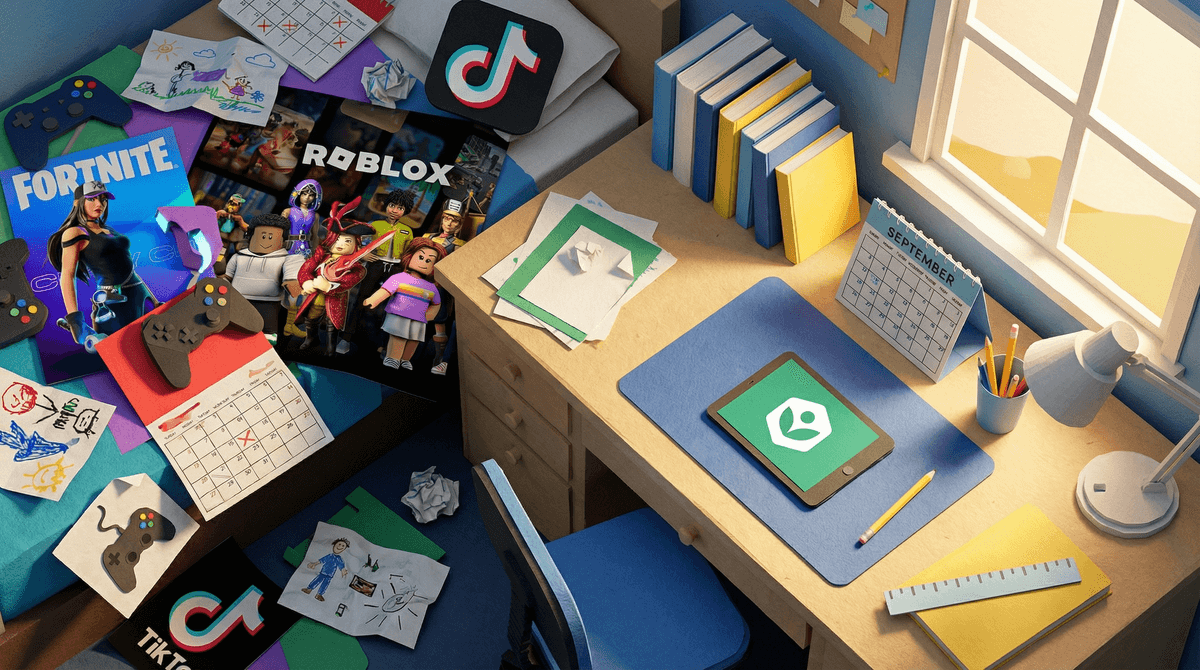
Ah yes, the annual September reckoning. Your kid spent June, July, and August basically fused to their iPad, staying up until midnight playing Fortnite, and now you need to somehow convince them that 8pm bedtimes and "no screens during homework" are totally reasonable expectations.
Welcome to the back-to-school screen time reset—where the rules you carefully built during the school year have completely evaporated like morning dew, and you're staring down the barrel of reestablishing boundaries with a kid who's had three months of digital freedom.
The good news? You're not starting from scratch. The bad news? Your kid will absolutely act like you are.
Let's be real about what happened over summer: you probably relaxed the rules because summer is supposed to be relaxing. Maybe you were working and screens kept everyone sane. Maybe you figured they'd earned some freedom. Maybe you were just tired and picked your battles elsewhere. All completely valid.
But here's what your kid experienced: a new normal. They didn't think "wow, what a nice temporary summer exception!" They thought "oh cool, this is how we do things now."
And now you're about to tell them otherwise, which from their perspective feels less like "returning to normal" and more like "brand new punishment for no reason."
This is why the back-to-school screen time conversation is so universally dreaded. You're not just reestablishing old rules—you're actively taking away something they've gotten used to having.
Mistake #1: The Cold Turkey Crackdown
Going from "unlimited YouTube" to "absolutely no screens on weekdays" overnight is technically possible, but it's going to be absolutely miserable for everyone. Kids aren't great at handling abrupt change, and you're setting yourself up for massive pushback, sneaking, and resentment.
Mistake #2: The Guilt-Driven Delay
The flip side is feeling so bad about "taking away their fun" that you keep pushing the conversation back. "We'll start the rules next week... okay next week... okay after this weekend..." Meanwhile, school has started, homework isn't getting done, and bedtime is still a disaster.
Mistake #3: The Vague Announcement
"We need to be better about screens" is not a plan. Kids need specifics. When? How much? What counts as screen time and what doesn't? Without clear boundaries, you're just creating confusion and constant negotiation.
Start the Conversation Early (Like, Now)
Don't spring new rules on the first day of school. Give at least a week's notice. Frame it as a transition: "Summer screen time rules were great for summer, but school needs different rules so your brain has time for homework, sleep, and everything else."
This isn't negotiable, but the how can involve some input from them. What do they think is reasonable? You might be surprised—sometimes kids suggest stricter rules than you were planning (though don't count on it).
Be Specific About What's Changing
Write it down. Actually write it down. Something like:
- Weekday screens: 1 hour after homework, ending by 7pm
- Weekend screens: 2 hours per day, but not before 10am
- Phone in bedroom: No. Charges in the kitchen by 8:30pm.
- Exceptions: Family movie nights, educational content for school projects
Notice what this includes: when screens happen, how much, and where. Not just "less screen time."
Phase It In If You Need To
If summer was truly a free-for-all, consider a 1-2 week transition where you gradually tighten things up. Week one might be "screens off by 8pm" and "no phones at dinner." Week two adds "homework before screens." By week three, you're at your full school-year rules.
This gives everyone time to adjust and makes the change feel less like a punishment.
Address the "But WHY?" Question
Because they will ask. And "because I said so" might work for a five-year-old, but older kids need actual reasons.
Try something like: "Your brain needs downtime that isn't screens. You need enough sleep to actually learn at school. And honestly, when you're on screens all evening, we barely see you, and I miss you."
That last part matters more than you think.
Roblox, Minecraft, and Fortnite
These probably dominated summer. The good news is they're not going anywhere—you're just putting them back in their proper place. Consider setting up better parental controls now that you're reestablishing rules. If you haven't checked their friend lists or chat settings all summer, now's the time.
YouTube and TikTok
These are the time vampires. "Just one more video" turns into 90 minutes of brain rot faster than anything else. Consider making these weekend-only or requiring they happen in shared spaces, not bedrooms.
Discord and Snapchat
If your middle or high schooler uses these for actual friend communication, recognize that completely cutting them off during the week might genuinely impact their social life. But "staying in touch with friends" doesn't require hours of access. Maybe 20-30 minutes in the evening for messaging, but not the infinite scroll of group chats.
Educational Apps and Content
Here's where you can be flexible. If your kid genuinely uses Khan Academy or watches Crash Course videos, that's different from Mr. Beast videos (though Mr. Beast has his own issues worth knowing about ). Consider having different rules for different types of content.
If you have multiple kids at different ages, this gets complicated fast. Your 14-year-old will absolutely notice if your 10-year-old has the same screen time limits. And your 10-year-old will absolutely notice if the 14-year-old gets more freedom.
The answer isn't making everything equal—it's making everything fair based on age and responsibility. Older kids who consistently do homework, help around the house, and follow the rules can earn more freedom. Younger kids get less because their brains literally need more sleep and less stimulation.
Write down the different rules for different ages so everyone can see the progression. "When you're in 8th grade, you'll get these privileges too" helps younger kids see it as something to work toward rather than unfair treatment.
Expect complaints. Expect "but everyone else gets unlimited screen time!" Expect dramatic sighs and door slams.
Here's what helps:
Stay calm. You're not the bad guy, you're the parent making sure their brain develops properly and they get enough sleep.
Don't engage in endless debate. You can explain your reasoning once, maybe twice. After that, it's just "I hear that you're frustrated, and the rule still stands."
Acknowledge that it sucks. "I know this feels unfair after summer. Change is hard." Validation doesn't mean changing the rules, but it does help them feel heard.
Follow through consistently. If you say screens off at 8pm, and then let it slide to 8:45pm because you're tired, you've just taught them the rules are negotiable. Don't do this to yourself.
Bringing back screen time rules after summer isn't about being mean or controlling. It's about helping your kid's brain function well enough to actually succeed at school, sleep enough to grow, and have time for non-screen activities that matter.
Yes, they'll be annoyed. Yes, the first week will be rough. But by week three, the new normal will be... normal again.
And next summer, maybe have a conversation upfront about "summer rules" versus "school rules" so the transition back isn't such a shock. Though honestly, you'll probably still end up here again next September. That's just parenting.
- This week: Have the conversation. Write down the specific rules together.
- Next week: Start the transition. Phase in rules if needed.
- Check your tech: Update parental controls, check privacy settings, review friend lists on gaming platforms.
- Get support: If you're co-parenting, make sure you're on the same page about the rules. Inconsistency between houses makes everything harder.
And if you need help figuring out what rules actually make sense for your specific kid and situation, Get back-to-school screen time rules to get personalized guidance based on your family's actual digital habits and your community norms.
You've got this. Even when it doesn't feel like it.