

You know that feeling when you're reading along, thinking you've got the story figured out, and then—BAM—the author pulls the rug out from under you? Not in a cheap gotcha way, but in a way that makes you sit back and go "wait, WHAT?" and immediately want to talk to someone about it?
That's what we're talking about here. Books with plot twists that genuinely surprise you. Narratives that subvert expectations. Stories that challenge assumptions about characters, morality, or how the world works. The kind of books that make kids (and adults) want to immediately flip back through pages to catch the clues they missed, or text their friends "HAVE YOU READ THIS YET?!"
Screenwise Parents
See allThese aren't just shock-value books that try to be edgy for the sake of it. We're talking about well-crafted stories where the surprise actually deepens the narrative, makes you think differently, and sticks with you long after you've finished reading.
In a world where kids are constantly consuming content that's designed to be predictable and algorithmically optimized for engagement, books that genuinely surprise them are actually doing some heavy lifting for their developing brains.
Critical thinking development: When a book subverts expectations, kids have to actively reconsider what they thought they knew. They learn that their first interpretation isn't always correct, which is honestly a life skill we all need more of in 2026.
Empathy building: Many of the best "shocking" books reveal that a character we thought was a villain has understandable motivations, or that a hero isn't as pure as we believed. This kind of moral complexity is exactly what helps kids develop nuanced thinking about people and situations.
Reading engagement: Let's be real—getting kids to choose reading over TikTok or Roblox is hard. But a book that genuinely shocks them? That's the kind of thing that creates actual readers, not just kids who complete assigned reading.
Ages 8-10: Gateway Twists
At this age, kids are ready for their first taste of "things aren't what they seem" without being genuinely disturbed.
The One and Only Ivan by Katherine Applegate has a gut-punch revelation about halfway through that reframes everything you've read. It's based on a true story, which adds another layer of impact.
The Wild Robot by Peter Brown isn't a traditional twist book, but it consistently subverts expectations about nature, technology, and what it means to be alive in ways that spark great conversations.
Wonder by R.J. Palacio uses multiple perspectives to reveal that what we thought about various characters was incomplete or wrong. Each new section is a mini-revelation.
Ages 10-13: Mind-Bending Middle Grade
This is the sweet spot age where kids can handle more complex narrative structures and moral ambiguity.
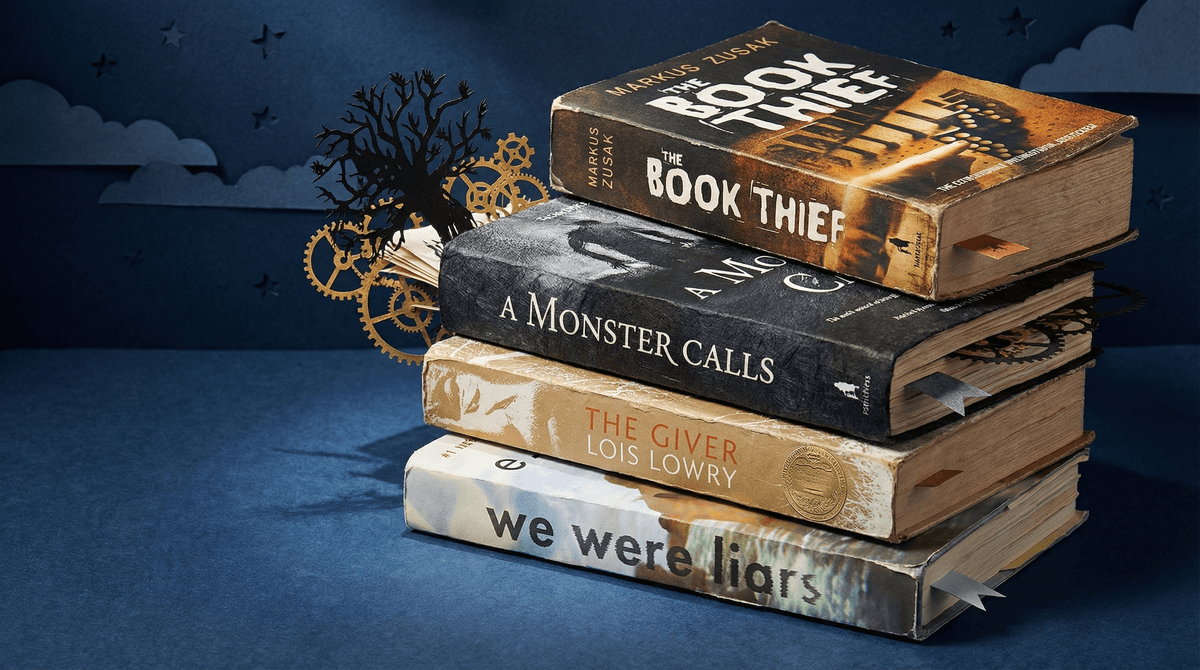
The Giver by Lois Lowry is the classic for a reason. The slow reveal of what Jonas's "perfect" society actually is remains one of the most effective dystopian twists in children's literature.
A Monster Calls by Patrick Ness has a final revelation that's devastating but ultimately hopeful. Fair warning: have tissues ready, and be prepared to talk about grief.
The Mysterious Benedict Society by Trenton Lee Stewart is full of smaller twists and puzzles, teaching kids to question everything while being genuinely entertaining.
Ages 13+: Complex Narratives
Teens can handle unreliable narrators, moral complexity, and stories that don't tie up neatly.
We Were Liars by E. Lockhart has one of those endings where you immediately want to reread the entire book. The twist recontextualizes everything, and teens LOVE discussing whether they saw it coming.
The Book Thief by Markus Zusak has Death as the narrator, which is itself a subversion, but the real power is in how it makes WWII Germany feel both familiar and horrifying.
They Both Die at the End by Adam Silvera tells you the ending in the title, but the journey is full of smaller revelations about how we choose to live when we know our time is limited.
Not all shocks are created equal: There's a difference between a well-crafted plot twist and a book that's just trying to be dark or edgy. If your kid is reading something that feels gratuitously shocking without narrative purpose, it's worth a conversation about what makes a good twist versus cheap manipulation.
The reread factor: Kids who love these books often want to reread them immediately to catch the clues. This is actually fantastic for reading comprehension and critical analysis, even if it means they're not moving on to the next book on your list.
Spoiler culture: These books are HARD to talk about without spoiling. If your kid is reading one, they might be weirdly secretive about it—not because it's inappropriate, but because they don't want to ruin the experience for you. Respect that.
Processing time: A really good twist can leave kids feeling unsettled or wanting to talk through what they just read. Make space for those conversations, even if they happen at bedtime when you're exhausted.
Instead of asking "did you like it?" (which often gets a shrug), try:
- "What surprised you most about that book?"
- "Was there a moment where you had to rethink everything?"
- "Did any character turn out to be different than you expected?"
- "If you could go back and reread it knowing what you know now, what would you notice?"
These questions invite kids to think critically about narrative structure and authorial choices, not just whether they "liked" something.
Books that shock you in a good way are doing exactly what great literature should do: challenging assumptions, building empathy, and making readers think critically about the world. In an age where so much content is designed to be passively consumed, these books demand active engagement.
They're also just really fun to read and discuss, which honestly might be the most important thing. A kid who's been genuinely shocked by a book twist is a kid who's experiencing the joy of being surprised by a story—and that's the kind of reading experience that creates lifelong readers.
Want more book recommendations tailored to your kid's specific interests and reading level? Check out age-appropriate book recommendations or explore alternatives to screen time that actually work.