

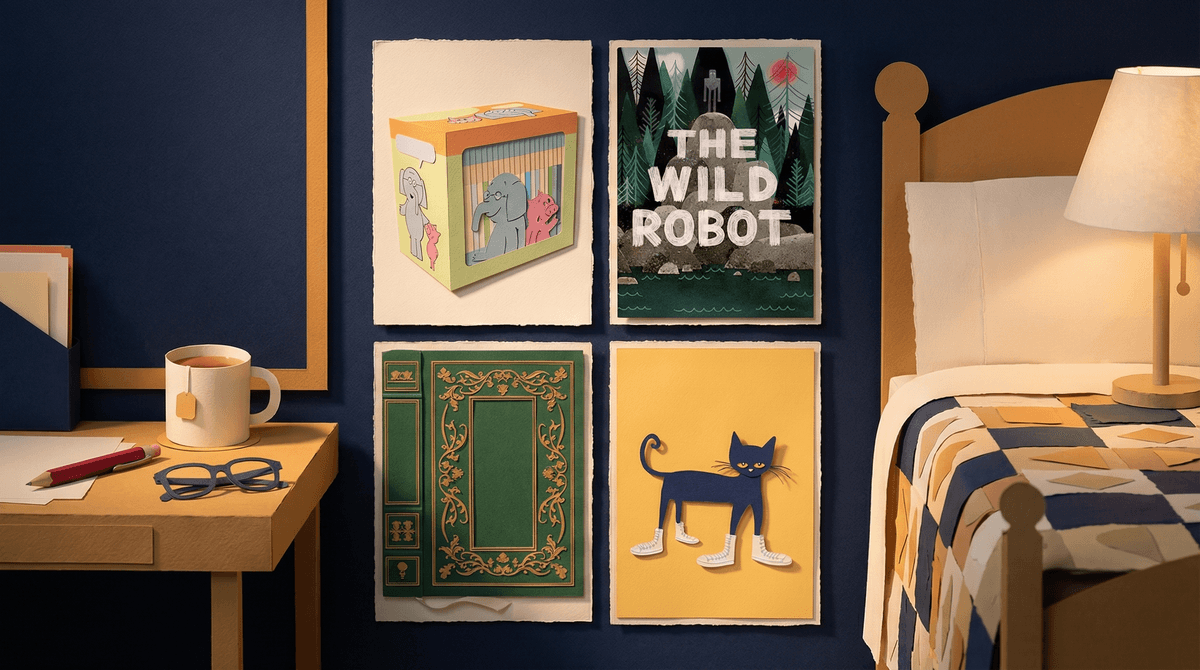
Here's something I find fascinating: teachers spend all day curating books for other people's children, then go home and... read completely different stuff to their own kids. Or sometimes the exact same stuff, but for totally different reasons than you'd think.
I started asking teachers what they actually read at home, and the answers were honestly more revealing than any "best books" list from a parenting magazine. Because these are people who've seen thousands of kids respond to thousands of books. They know what actually holds attention, what sparks questions, what gets requested again and again, and—maybe most importantly—what makes bedtime take 45 minutes instead of 15.
This isn't about what wins awards or what's trending on BookTok. This is about what educators trust enough to bring into their own homes, when they're tired and just want their kid to please just go to sleep already.
Teachers have a superpower that most of us don't: they see patterns. They know which books third graders are still talking about in fifth grade. They can spot a book that looks beautiful but has pacing that loses 90% of kids by page three. They've watched certain books create actual readers out of reluctant ones.
And here's the thing—when teachers choose books for their own kids, they're not performing for anyone. They're not trying to look like Good Parents™ or impress other adults. They're just trying to survive bedtime and maybe, possibly, raise humans who like reading.
The books that make it into teachers' homes have passed a very specific test: they work in the real world, with real kids, when you're exhausted and still have dishes to do.
After talking to dozens of educators (and lurking in teacher forums, because research), here are the patterns:
The "Gateway Drug" Books (Ages 3-7)
Teachers consistently mention books that make kids want to read more. Not books that adults think are Important Literature, but books that create readers:
- Elephant & Piggie by Mo Willems—teachers love these because they're genuinely funny, the emotional beats are real, and kids can actually read them independently pretty early
- Dog Man series—yes, really. Teachers who see reluctant readers devour these at school are buying them for home, even though they're basically comic books about a dog-cop who fights crime
- Pete the Cat—the chill vibe is apparently very effective for anxious kids (and anxious parents)
The "Actual Literature That Kids Don't Hate" Books (Ages 6-10)
This is where teachers really flex their expertise—finding books that are genuinely well-written but don't feel like homework:
- Wonder by R.J. Palacio—multiple teachers mentioned this as a book their kids requested to read again, which is wild for a 300-page novel about a kid with facial differences
- The Wild Robot by Peter Brown—apparently this book makes kids cry and then immediately ask for the sequel
- Anything by Jacqueline Woodson—teachers mention her constantly because she writes about real stuff (family, identity, change) in ways that kids actually understand
The "Chapter Books That Don't Suck" Category (Ages 7-12)
Teachers are very specific about chapter books because they've seen which ones kids abandon after two chapters:
- Percy Jackson series—teachers love that it makes Greek mythology accessible and that kids will voluntarily read 300+ pages
- Diary of a Wimpy Kid—teachers initially resisted this series, then watched it turn non-readers into readers and surrendered
- Hatchet by Gary Paulsen—still showing up on teachers' lists because it's survival story + coming of age + actual suspense
Just as interesting as what teachers choose is what they skip:
Overly Didactic Books: Teachers see enough "lesson books" at school. At home, they want stories that let kids discover themes naturally rather than books that feel like they're trying to Teach a Lesson™.
Books That Are Really for Adults: You know those picture books that are clearly designed to make parents cry? Teachers mostly skip them. They want books their kids actually connect with, not books that perform childhood for adult feelings.
Anything That Makes Bedtime Longer: If a book consistently leads to 47 follow-up questions or gets kids amped up instead of winding down, it gets moved to "daytime reading."
Ages 3-5: Teachers emphasize books with rhythm, repetition, and real emotional content. They're not dumbing things down—they're looking for books that respect kids' emotional intelligence while matching their attention spans.
Ages 6-8: This is the "learning to read" vs. "reading to learn" transition. Teachers choose books that kids can read independently but still want to read together. The sweet spot is books that work both ways.
Ages 9-12: Teachers get more hands-off here, focusing on building a home library that offers options. They mention keeping a mix of "comfort reads" (easier books kids can fly through) and "challenge reads" (books that push reading level) available.
Teachers Don't Always Choose "Educational" Books: Multiple educators mentioned that they're more relaxed about book choices at home than parents expect. If their kid wants to read the same Captain Underpants book for the 47th time, they let it happen. Reading is reading.
They Care More About Volume Than Quality: Teachers consistently emphasize that kids reading anything regularly is more valuable than kids reading "important" books occasionally. A kid who reads 50 graphic novels is building better reading skills than a kid who struggles through 3 "classic" chapter books.
They Follow Their Kids' Interests Aggressively: If a kid is obsessed with sharks, teachers will find every shark book that exists—fiction, nonfiction, graphic novels, whatever. They know that interest is the best motivator for reading.
They're Not Precious About Books: Teachers mentioned letting kids read in the bath, read while eating snacks, read with flashlights under covers. They want reading to feel like a normal, accessible part of life, not a Special Activity that requires perfect conditions.
The books teachers read to their own kids aren't necessarily the ones that win awards or get featured in literacy campaigns. They're the books that work—that hold attention, spark curiosity, get requested again, and actually fit into real family life.
The biggest pattern? Teachers trust books that create readers more than books that create reading moments. They're playing the long game, building kids who see reading as something they want to do, not something they should do.
If you're looking to build your own home library, start by asking your kid's teacher what they read at home. Not what they recommend for school, but what they actually read to their own kids when they're tired on a Tuesday night. That's the real list.
Want to explore specific books or build a reading list for your kid's age and interests? Ask about age-appropriate books for your family .
.
Looking for alternatives to screens during downtime? Check out our guide to building reading habits that actually stick.
And if you're dealing with a reluctant reader, you're not alone—let's talk about what actually works.