

Look, we need to talk about something that makes a lot of parents uncomfortable: how to help our kids understand racism, systemic injustice, and what it means to stand up for what's right. And honestly? Books are one of the best tools we have.
These aren't just "issue books" gathering dust on a shelf. The right books about racism and justice meet kids where they are—whether that's a picture book about a kid noticing unfairness on the playground, a middle-grade novel exploring identity and belonging, or a YA book tackling police brutality head-on. They open doors to conversations that matter, give kids language for what they're seeing in the world, and help them develop empathy and critical thinking skills.
The thing is, these conversations are happening whether we facilitate them or not. Kids are seeing news headlines, hearing things at school, and forming their understanding of the world. We can either help shape that understanding with context, nuance, and age-appropriate information, or we can leave them to figure it out on their own.
Here's what we know: kids start noticing racial differences as early as 6 months old. By age 5, they're already developing racial biases based on what they observe around them. And by the time they're in middle school, they're forming complex ideas about fairness, justice, and their role in society.
The good news? Research shows that talking openly about race and reading diverse books actually reduces bias and increases empathy. Avoiding the topic doesn't keep kids "innocent"—it just means they're learning from less reliable sources (like that kid on the bus who definitely shouldn't be anyone's moral compass).
Plus, for kids of color, seeing themselves in stories—especially stories where they're the heroes, not just the victims—is incredibly powerful. And for white kids, learning about racism isn't about guilt; it's about understanding history, recognizing current realities, and developing the tools to be part of positive change.
Ages 3-7: Building Empathy and Noticing Difference
Start with books that celebrate diversity and introduce concepts of fairness in concrete, kid-friendly ways:
- The Colors of Us - A beautiful exploration of different skin tones that's perfect for the "why is their skin brown?" questions
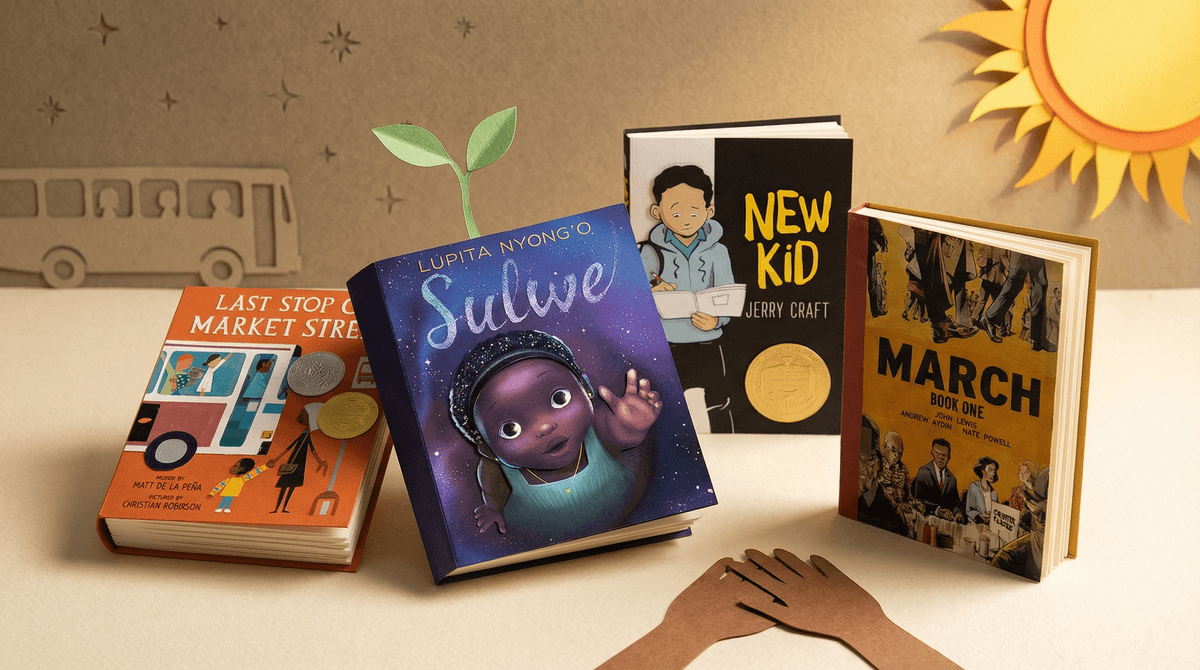
- Last Stop on Market Street - Tackles economic inequality and finding beauty in your community without being heavy-handed
- Something Happened in Our Town - Addresses police violence in an age-appropriate way (yes, really—and it's done well)
- Sulwe - Written by Lupita Nyong'o, this is a gorgeous story about a dark-skinned girl learning to love herself
At this age, keep it simple. Talk about fairness, kindness, and how everyone deserves to be treated with respect. Answer questions honestly but briefly—you don't need to explain systemic racism to a 5-year-old, but you can say "some people are treated unfairly because of their skin color, and that's not okay."
Ages 8-12: Understanding History and Standing Up
This is when kids can start understanding historical context and thinking critically about systems:
- Ghost Boys by Jewell Parker Rhodes - A powerful story about a 12-year-old Black boy killed by police. Tough topic, beautifully handled.
- New Kid - A graphic novel about being one of the few kids of color at a private school. Funny, relatable, and real.
- The Watsons Go to Birmingham—1963 - Historical fiction that makes the Civil Rights era accessible and personal
- Brown Girl Dreaming - Jacqueline Woodson's memoir in verse about growing up Black in the 1960s and 70s
- March trilogy - John Lewis's graphic novel memoir about the Civil Rights Movement. Absolutely essential.
Kids this age are developing their sense of justice and starting to understand that "not fair" can be about more than who got the bigger cookie. They're ready for more complex stories and can handle difficult emotions—sadness, anger, confusion—with support.
Ages 13+: Grappling with Complexity
Teens can handle the full complexity of racism, justice, and activism:
- The Hate U Give by Angie Thomas - The gold standard. A Black teen witnesses her friend's death by police and finds her voice. There's also a movie adaptation that's excellent.
- Stamped: Racism, Antiracism, and You - Jason Reynolds's remix of Ibram X. Kendi's work for teens. Clear, accessible, and doesn't pull punches.
- Dear Martin - A Black teen writes letters to Dr. King while dealing with racism at his prep school
- All American Boys - Told from two perspectives (one Black, one white) after a police brutality incident
- Between the World and Me - Ta-Nehisi Coates's letter to his son. Not specifically for teens, but mature high schoolers can handle it.
Teens are forming their worldviews and figuring out who they want to be. These books give them frameworks for understanding injustice and models for taking action.
"But won't this make my kid sad/angry/uncomfortable?"
Maybe! And that's... kind of the point? Racism should make us uncomfortable. The question isn't whether to shield kids from difficult truths, but how to help them process those truths in age-appropriate ways.
Think of it like teaching kids about climate change or poverty—we don't want to traumatize them, but we also don't want to raise people who are shocked to discover injustice exists.
"I'm worried I'll say the wrong thing."
Join the club. Here's the secret: it's okay to not have all the answers. You can say "I'm not sure, let's learn about this together" or "That's a really good question—what do you think?" The goal isn't perfection; it's opening the door to ongoing conversation.
Learn more about how to talk to kids about race if you're feeling stuck.
"Should I only read these books during Black History Month?"
No. Absolutely not. Diversity shouldn't be a February special. These books should be part of your regular rotation, just like fantasy books or graphic novels or whatever else your kids love.
"My kid is white—do they really need to read these?"
Especially if your kid is white. White kids need to understand racism too—not to feel guilty, but to understand history, recognize current realities, and develop empathy and awareness. Plus, learning about racism is part of being an informed citizen.
For parents of kids of color:
You know your child and your community best. Some families want books that show resilience and joy; others want books that name racism directly. Some want both at different times. Trust your instincts about what your kid needs and when.
Read together when possible - Especially for younger kids, reading together lets you gauge reactions, answer questions, and provide context.
Follow their lead - If they want to talk, talk. If they need time to process, give them space. Not every book needs a deep discussion afterward.
Connect to real life - "Remember in New Kid when Jordan felt left out? Have you ever felt like that?" helps kids apply what they're reading to their own experiences.
Don't make it a one-and-done - One book isn't going to solve racism or make your kid an expert. This is an ongoing conversation that evolves as they grow.
Balance heavy with hopeful - Yes, read books about hard topics. But also read books that celebrate Black joy, Indigenous resilience, and diverse communities thriving. Kids need both.
Books about racism and justice aren't "extra" or "optional" or something to get to "when kids are old enough." They're essential tools for raising empathetic, informed humans who can navigate—and hopefully improve—the world they're inheriting.
You don't have to be an expert. You don't have to have all the answers. You just have to be willing to start the conversation and keep it going. And honestly? Books make that so much easier.
Start with one. See what resonates. Ask your librarian for recommendations (seriously, librarians are magic). And remember: these conversations might be uncomfortable, but they're also some of the most important ones you'll have.
Not sure where to start? Pick one book from the age range that fits your kid and read it together this week. That's it. One book, one conversation.
Want more recommendations? Check out our guides to diverse books for kids or books about empathy and kindness.
And if you're looking for other ways to have these conversations beyond books, See age-appropriate ways to talk about current events.