

Look, losing a pet is absolutely brutal for kids. Like, really brutal. It's often their first encounter with death, and suddenly they're navigating this massive, confusing grief that feels too big for their body. And as parents, we're stuck trying to comfort them while also dealing with our own sadness about Mr. Whiskers or Buddy.
Pet loss books are picture books, chapter books, and middle grade novels specifically written to help kids process the death of a pet. They validate the very real grief kids feel, normalize the messy emotions that come with loss, and often provide a framework for talking about death, memory, and moving forward. Some are gentle and hopeful, some are raw and honest, and the best ones manage to be both.
Here's the thing: kids don't automatically know how to grieve. They need permission to feel sad, angry, confused, or even guilty. They need to know it's okay to cry one minute and want to play the next. They need language for what's happening in their chest.
Books give kids that permission and that language. They show children that grief is normal, that other people (even fictional ones) have felt this way, and that you can survive something that feels unsurvivable.
Plus, books create a safe space to talk. Reading together means you're both looking at the page instead of at each other during those hard moments. It's easier for a kid to say "I feel like that character" than to articulate their grief from scratch.
Ages 3-6: Picture Books That Validate Big Feelings
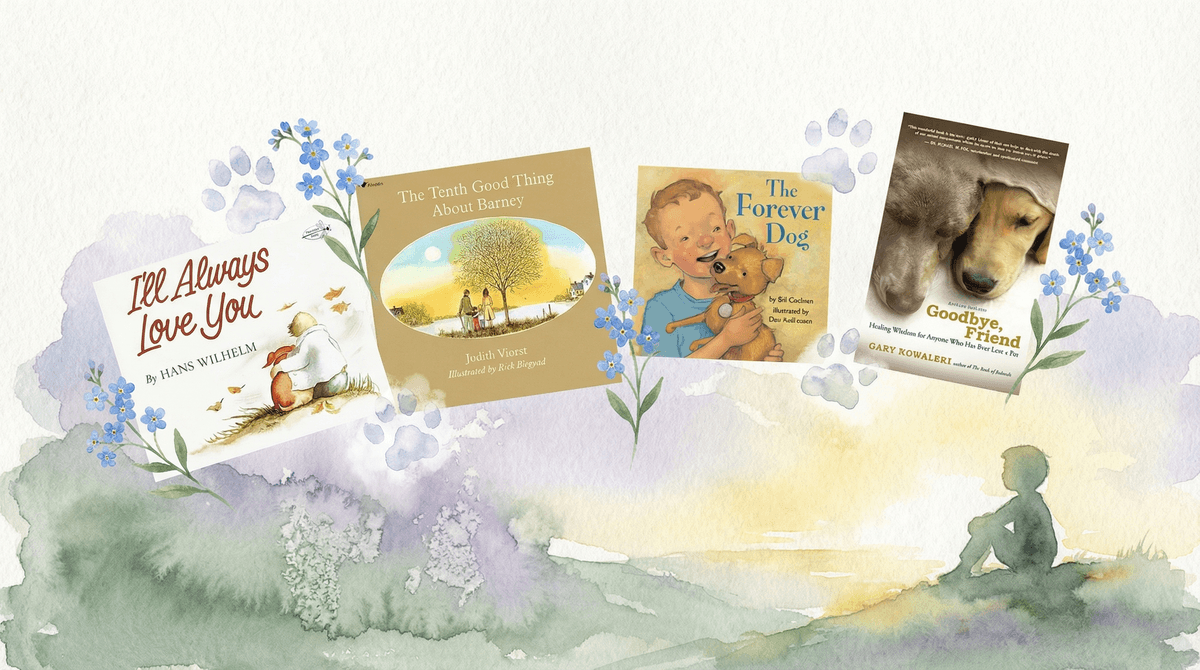
The Tenth Good Thing About Barney by Judith Viorst
This is the classic for a reason. A boy's cat dies, and at the funeral, he tries to think of ten good things about Barney. It's simple, honest, and doesn't shy away from sadness. The ending is beautifully matter-of-fact about death being part of the cycle of life.
Goodbye, Friend by Gary Paulsen
A boy and his dog were best friends, and now the dog has died. That's it. That's the book. And it's perfect for that reason—no sugar-coating, no "he's in a better place," just the acknowledgment that this loss hurts and that's okay.
I'll Always Love You by Hans Wilhelm
A boy tells his dog "I'll always love you" every night, and when the dog dies of old age, he's comforted knowing his dog knew how much he was loved. This one is great for kids dealing with guilt about things left unsaid.
Ages 7-10: Chapter Books for Deeper Processing
Because of Winn-Dixie by Kate DiCamillo
Okay, the dog doesn't die in this one (spoiler alert), but it's still a beautiful book about loss, grief, and the fear of losing what you love. DiCamillo is a master at writing about hard emotions in ways that feel true.
Mustache Baby Meets His Match — wait, wrong one. A Dog's Purpose by W. Bruce Cameron
This one's for older kids in this range (probably 10+), but it explores reincarnation and the idea that love continues beyond death. Some families will love this concept; others might find it conflicts with their beliefs. Know your audience.
Jasper and the Riddle of Riley's Mine — no wait, The Forever Dog by Bill Cochran
A boy's dog dies, and he gets a new puppy. Sounds simple, but it beautifully explores the guilt of "replacing" a pet and how new love doesn't erase old love.
Ages 11+: Books That Don't Pull Punches
Sonya's Chickens — okay I'm messing with you. Where the Red Fern Grows by Wilson Rawls
This is the nuclear option. If your kid hasn't ugly-cried over a book yet, this will do it. Two dogs die (sorry, but you need to know). It's devastating and beautiful and has been destroying children emotionally since 1961. But it's also about loyalty, love, and how grief changes us. Read it together if you can.
The Art of Racing in the Rain by Garth Stein
Told from the dog's perspective, which is either brilliant or manipulative depending on your mood. It's about a dog named Enzo watching his owner navigate life's hardships. The dog dies (they always do), but it's a meditation on living fully and the bond between humans and animals.
These books will make your kids cry. That's the point. Don't try to stop the tears or rush to "but we can get another pet!" Let them sit in the sadness. Grief needs space.
Your own feelings matter too. If you're also devastated about the pet, it's okay to cry while reading. It shows kids that adults grieve too and that sharing sadness can be healing.
Not every book will land. Some kids need gentle and hopeful; others need raw and real. If a book isn't working, try another. There's no perfect grief book—just the right one for your kid right now.
Timing matters. Some kids want to read these books immediately after a loss; others need weeks or months. Some want to read them before an elderly pet dies to prepare. Follow their lead.
Talk about your family's beliefs. Many of these books touch on what happens after death—heaven, reincarnation, becoming part of nature. If a book's perspective doesn't match your family's beliefs, that's okay. Use it as a conversation starter: "This book says X, but our family believes Y."
Books are amazing tools, but they're not the only ones. Some kids process through:
- Drawing or writing their own stories about their pet
- Creating a memory box with the collar, favorite toy, photos
- Planting something in the pet's memory
- Making a photo book or scrapbook
- Talking to other kids who've lost pets
If your child's grief feels overwhelming or persistent (not eating, not sleeping, withdrawn for weeks), it might be time to talk to a counselor. Grief is normal; getting stuck in it sometimes needs professional help.
Pet loss books won't make the pain go away—nothing will. But they can make kids feel less alone in it. They can give language to the wordless ache. They can show that it's possible to remember and love and eventually (not quickly, but eventually) feel okay again.
The best book is the one that meets your kid where they are: in the middle of something hard, needing to know they'll make it through.
And hey, you'll make it through too. Even if you're crying into a picture book at bedtime, wondering how a story about a dead goldfish is hitting this hard. Welcome to parenting—it's all beautiful and terrible and worth it.
- Check your local library for these titles (librarians are grief-book experts)
- Read ahead if you're worried about content—you know your kid best
- Consider reading together rather than having them read alone
- Talk to other parents
 about what worked for their families
 - Give yourself grace—you're helping your kid through something genuinely hard, and that matters