

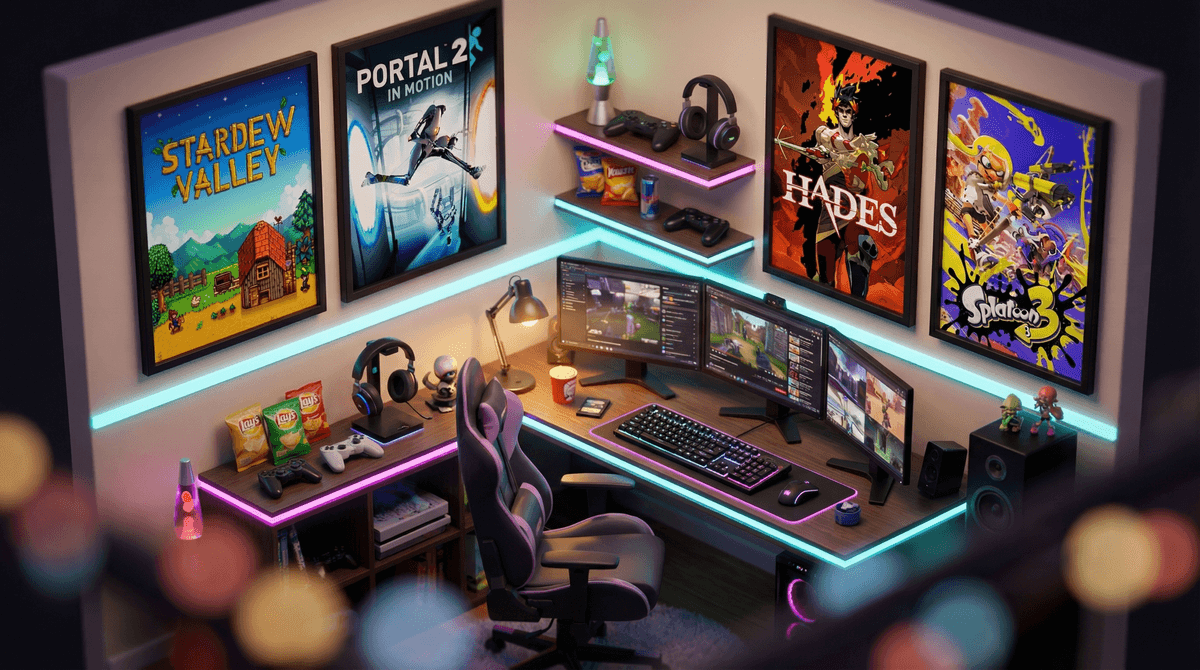
Look, we all know teens are going to game. The question isn't whether they should play video games (that ship sailed around the time Minecraft became more culturally significant than actual mining). The real question is: what should they be playing?
Because here's the thing—when most parents think "teen video games," they land on Fortnite, Call of Duty, or whatever battle royale is trending on TikTok this week. And sure, those games are popular for a reason. But the gaming landscape for teens is SO much richer than just shooters and survival games.
There are games that teach genuine problem-solving, games with stories that rival prestige TV, games that spark creativity, and yes—games that are actually just fun without making you worry about voice chat toxicity or loot box gambling mechanics.
Teens are at this weird developmental sweet spot where they're old enough to handle complex narratives and challenging gameplay, but they're still forming habits around how they engage with media and online communities. The games they play now aren't just entertainment—they're social spaces, creative outlets, and honestly, a huge part of their identity formation.
The average teen spends about 2-3 hours gaming per day (more on weekends, obviously). That's a LOT of time. So yeah, it matters what they're doing during those hours.
Story-Rich Games That Hit Different
The Last of Us Part I & II (Ages 17+)
Okay, this is mature content—violence, heavy themes, the whole deal. But if your older teen is ready for it, these games are basically interactive prestige television. The storytelling is phenomenal, the character development is complex, and it sparks genuine conversations about morality, loss, and survival. Just be aware: this is emotionally heavy stuff.
Hades (Ages 13+)
Greek mythology meets roguelike gameplay, with writing that's genuinely witty and characters you'll actually care about. It's challenging without being frustrating, and the story unfolds gradually through repeated playthroughs. Plus, it's got that "one more run" addictiveness that's actually teaching perseverance and pattern recognition.
Stardew Valley (Ages 10+)
The cozy farming sim that somehow became a cultural phenomenon. Your teen can build a farm, form relationships with townspeople, explore caves, and basically create their own little digital life. It's genuinely relaxing, has zero violence, and teaches resource management and planning. The multiplayer is wholesome too.
Creative & Building Games (Beyond Minecraft)
Terraria (Ages 10+)
Think Minecraft meets Metroidvania. It's 2D, but don't let that fool you—the depth here is wild. Building, exploring, boss fights, and a genuine sense of progression. The multiplayer is great for friend groups, and there's no voice chat drama unless they opt into it.
Splatoon 3 (Ages 10+)
A shooter where you're... painting the ground? Hear me out. This is Nintendo's take on competitive multiplayer, which means it's colorful, creative, and way less toxic than most online shooters. The matches are short (3 minutes), there's no voice chat with strangers, and the whole vibe is just... fun? Remember fun?
Problem-Solving & Strategy Games
Portal 2 (Ages 10+)
Physics-based puzzle game with one of the best co-op modes ever made. It's clever, it's funny (legitimately funny, not "game writing" funny), and it makes your brain work in interesting ways. The cooperative mode is perfect for teens and parents to play together, if you're into that.
Civilization VI (Ages 10+)
Turn-based strategy where you build a civilization from the Stone Age to the Space Age. It's basically a history lesson disguised as a game. Fair warning: games can take HOURS, and the "just one more turn" thing is real. But it teaches planning, resource management, and consequences of decisions.
Celeste (Ages 10+)
A platformer about climbing a mountain that's also about anxiety and self-doubt. It's hard—like, genuinely challenging—but it has amazing accessibility options so players can adjust the difficulty. The story deals with mental health in a way that actually resonates with teens.
Multiplayer Games That Won't Destroy Your Soul
Among Us (Ages 9+)
Yeah, it's not new, but it's still huge with teens. Social deduction game where you're trying to figure out who the impostor is. Best played with friends in a private lobby. The public lobbies can be... a lot. But in a controlled setting with people they know? It's actually great for social reasoning and communication skills.
It Takes Two (Ages 13+)
Co-op only (literally cannot be played solo), which makes it perfect for teens who want to game with a friend or family member. Creative gameplay that constantly changes, great story, and it requires actual cooperation and communication. Some mature themes about relationships, but handled thoughtfully.
Not all M-rated games are created equal. The ESRB rating system is helpful but blunt. The Last of Us is M-rated for mature themes and violence. Grand Theft Auto is M-rated for... well, everything. Know the difference.
Online multiplayer is where things get complicated. A game can be perfectly fine content-wise, but the online community can be toxic. Voice chat with strangers is almost always a gamble. Private lobbies with friends? Usually fine. Learn more about managing online gaming safety.
Gaming can actually be social and positive. I know, I know—it looks like they're just staring at a screen. But for many teens, gaming is how they hang out with friends, especially post-pandemic. It's their basketball court, their mall, their third space.
Price matters. Some games are $60 upfront, done. Others are "free" but have battle passes, skins, and microtransactions that add up FAST. Fortnite and Roblox are technically free, but... yeah, about that .
.
The best video games for teens aren't necessarily the most popular ones or the ones with the biggest marketing budgets. They're games that match your teen's interests, challenge them appropriately, and ideally, don't come with a side of toxic online communities or predatory monetization.
Your move: Ask your teen what they're interested in—story, competition, creativity, hanging with friends—and find games that match. Better yet, ask what their friends are playing and research those specific titles. The Screenwise game database has detailed breakdowns of content, online features, and what ages each game actually works for.
And hey, maybe even play something with them. Portal 2 co-op or It Takes Two might surprise you. You might actually have fun. Wild concept, I know.