

Look, we need to talk about teen movies. Not the ones marketed to teens (though some of those are fine), but films that actually meet teenagers where they are—navigating identity, questioning authority, figuring out relationships, and generally feeling like the world makes zero sense.
The best films for teenagers aren't just entertainment. They're conversation starters, mirror holders, and sometimes the thing that makes a kid feel less alone. They can introduce complex ideas about morality, identity, and social justice in ways that don't feel like a lecture. And honestly? Watching good movies together is one of the few screen activities that doesn't feel like you're competing with their phone.
The sweet spot is films that respect teen intelligence while acknowledging their emotional intensity. Movies that don't talk down, don't sanitize everything, but also don't glorify the stuff that keeps you up at night worrying.
Here's the thing about teenagers and media: they're going to consume it whether you're involved or not. The question is whether you're part of the conversation.
Watching films together (or at least knowing what they're watching) gives you insight into what they're thinking about. When your 14-year-old wants to watch a movie about a kid dealing with mental illness, that's information. When they're drawn to stories about found family or social justice or first love, you're getting a window into their interior world.
Plus, teenagers are actually at the perfect age for film literacy. They can handle complex narratives, unreliable narrators, moral ambiguity, and subtext. This is when they can start appreciating why a film works, not just whether they liked it.
And let's be real: the alternative to you helping curate their film education is them scrolling through Netflix's "Trending Now" section at 11pm, which is how you end up with questions about Euphoria that you're not ready to answer.
Ages 13-14: The Bridge Years
This is tricky territory. They're not little kids anymore, but they're also not equipped for everything older teens can handle. Look for:
- Coming-of-age stories with emotional depth but not graphic content
- Films that deal with identity, friendship, and family dynamics
- Movies that introduce moral complexity without being nihilistic
Great picks:
- The Perks of Being a Wallflower - Mental health, friendship, trauma (has some mature themes, watch together first)
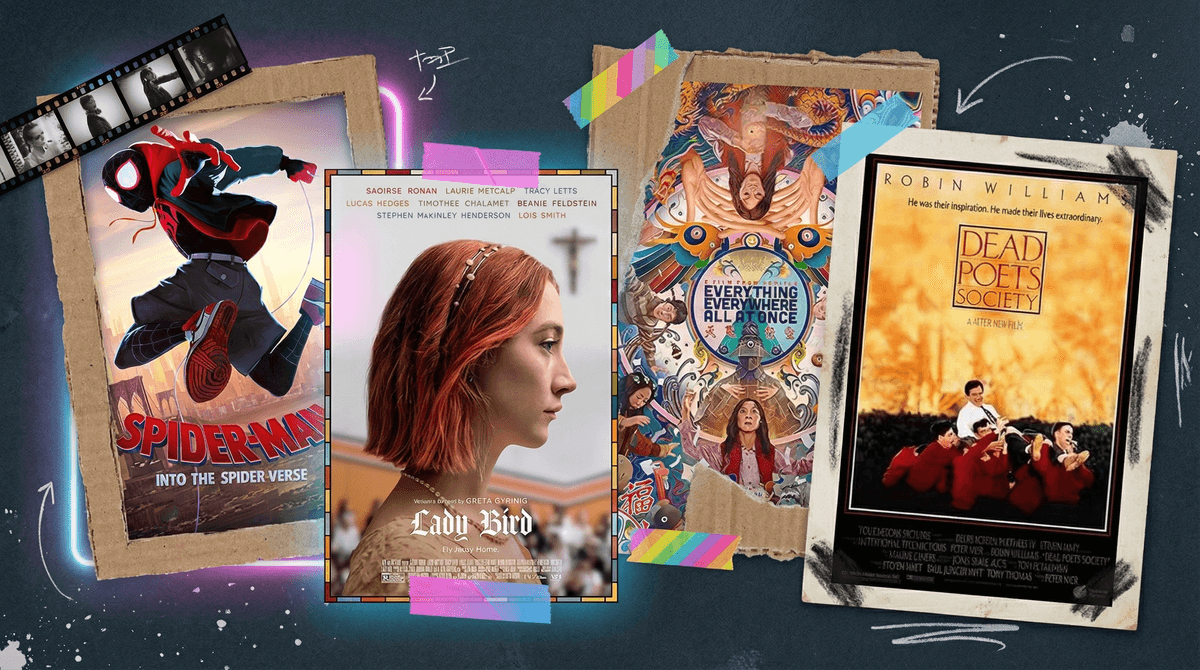
- Spider-Man: Into the Spider-Verse - Identity, responsibility, gorgeous storytelling
- Hunt for the Wilderpeople - Found family, grief, genuinely funny
- The Edge of Seventeen - Captures teen awkwardness perfectly without being cringe
- Bend It Like Beckham - Cultural identity, following your dreams, family expectations
Ages 15-16: Ready for Complexity
Now we're cooking. They can handle moral ambiguity, complex social issues, and more mature content (within reason). This is the age for films that challenge their thinking.
Great picks:
- Lady Bird - Mother-daughter relationships, class, identity (some language/sexual content)
- The Breakfast Club - Still relevant, still perfect for discussing stereotypes and authenticity
- Dead Poets Society - Conformity, passion, tragedy (have tissues ready)
- Hidden Figures - Race, gender, history, STEM
- Moonlight - Identity, sexuality, masculinity, poverty (mature themes)
- Eighth Grade - Social media anxiety captured perfectly (some language)
Ages 17-18: Almost Adult Territory
They're basically adults. They can handle R-rated content, complex themes, and films that don't have neat resolutions. This is when you can introduce them to films that will stick with them for life.
Great picks:
- Call Me By Your Name - First love, desire, heartbreak (sexual content)
- The Social Network - Ambition, betrayal, tech culture
- Parasite - Class, capitalism, moral complexity
- Everything Everywhere All at Once - Family, identity, nihilism vs. meaning (some violence/language)
- Juno - Teen pregnancy handled with humor and heart
- Whiplash - Ambition, abuse, perfection (intense themes)
For the kid who loves sci-fi: Arrival is stunning and thoughtful. Ex Machina raises questions about AI and consciousness (some sexual content, 16+).
For the kid who's into social justice: Selma, 13th (documentary), or The Hate U Give.
For the kid who thinks they hate old movies: Ferris Bueller's Day Off still slaps. So does 10 Things I Hate About You.
For the kid dealing with mental health stuff: Inside Out isn't just for kids. Silver Linings Playbook handles mental illness with nuance (some mature content).
Ratings are guidelines, not gospel. You know your kid. Some 14-year-olds can handle R-rated films with mature themes. Some 17-year-olds aren't ready. Common Sense Media is your friend for specific content warnings.
"Mature themes" doesn't mean "inappropriate." A film dealing with suicide, racism, or sexual identity isn't necessarily something to avoid—it might be exactly what your teen needs to see. The question is whether it's handled thoughtfully or exploitatively.
Watch together when possible, but don't force it. Some films are better experienced alone first. Offer to watch, but respect if they want privacy. You can always discuss after.
Ask questions, don't interrogate. "What did you think?" is better than "What was the message?" Let them process. Sometimes the conversation happens three days later while you're driving somewhere.
Foreign films and subtitles aren't the enemy. Spirited Away, Cinema Paradiso, Amélie—these are gorgeous films that expand their worldview. Yes, they have to read. They'll survive.
The best films for teenagers are the ones that treat them like the almost-adults they are—capable of handling complexity, worthy of respect, and hungry for stories that reflect their experience or expand their understanding of the world.
You're not looking for movies that teach a lesson (teens can smell that a mile away). You're looking for films that spark something—a conversation, a question, a feeling, a new way of seeing.
Start with what they're interested in and build from there. Let them pick sometimes. Watch the ones that make you uncomfortable and talk about why. Use this guide to find more films based on their interests.
And remember: every kid who's ever rolled their eyes at a "family movie night" suggestion has also had a film completely change how they see the world. You're just trying to increase the odds of the latter.
Create a family watch list together. Let them add films they're curious about, you add ones you think they'd love. Take turns picking.
Check out Letterboxd. It's like Goodreads for movies, and teens actually use it. You can follow each other and see what they're watching/rating.
Don't sleep on documentaries. Won't You Be My Neighbor?, Free Solo, Blackfish—they're often more engaging than fiction.
Need help navigating streaming services or setting up age-appropriate profiles? Check out our streaming guides . Want to talk through whether a specific film is right for your teen? See if a specific film is right for your teen.