

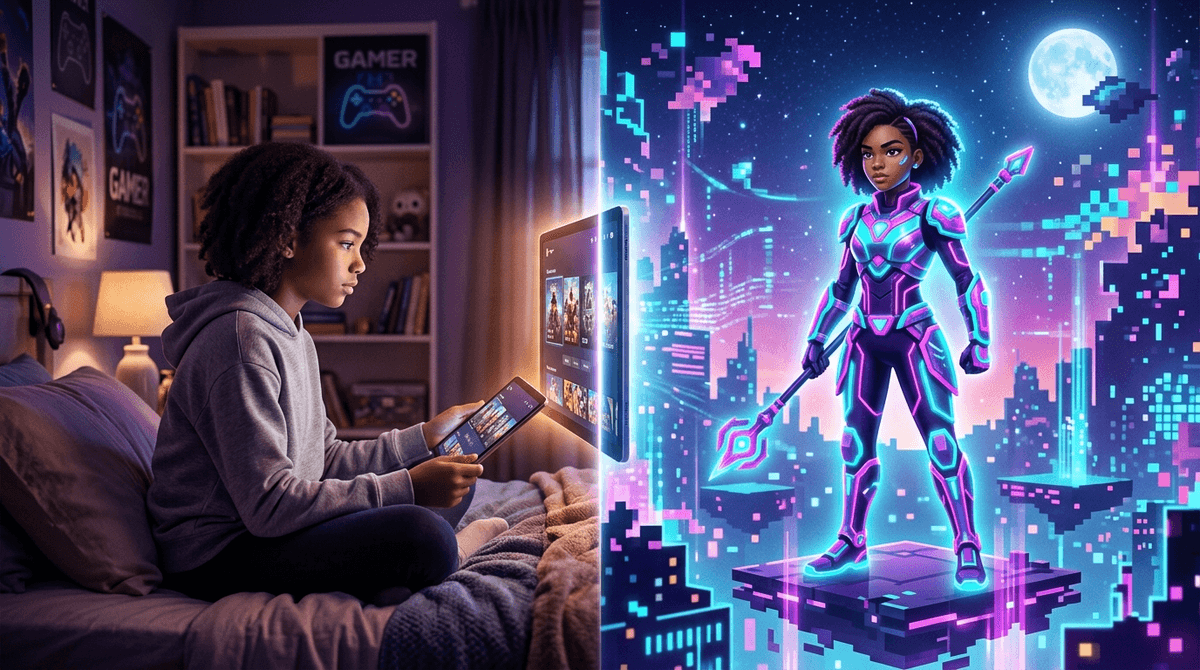
TL;DR: Your kid’s avatar isn't just a "character"—it’s their digital identity, social standing, and psychological mirror. In 2026, a "default skin" is the modern equivalent of wearing the wrong shoes on the first day of school. Understanding the "Proteus Effect" and the social hierarchy of platforms like Roblox and Fortnite is key to navigating their digital self-esteem.
Quick Links for the Avatar-Obsessed:
- Creative Expression: Minecraft
- Social Status & Skins: Fortnite
- The Digital Marketplace: Roblox
- Stylized Selfies: Zepeto
- The "Starter" Avatar: Toca Life World
If you’ve spent any time at school pickup lately, you’ve probably heard kids talking about "no-skins," "defaults," or how someone’s avatar is "so Ohio" (which, for the uninitiated, basically means weird or cringey). It’s easy to dismiss this as just another layer of "brain rot" or playground nonsense, but there’s something much deeper happening.
For kids today, the line between their physical self and their digital self is incredibly thin. When a middle schooler spends two hours tweaking the jawline of their Zepeto character or begging for V-Bucks to buy a specific Fortnite skin, they aren't just playing a game. They are managing their reputation.
In the physical world, we use clothes, haircuts, and accessories to tell the world who we are. In digital spaces, "skins" (the outfits and appearances of avatars) serve the exact same purpose, but with higher stakes.
In Fortnite, if you play as the "Default" skin (the free one the game gives you), you are often targeted by other players. It’s not just about aesthetics; it’s a signal of "newness" or a lack of investment. Being a "Default" is a social death sentence in some circles. Conversely, having a rare skin from a past "Battle Pass" is a sign of status and longevity.
This is where the Proteus Effect comes in. Research shows that the way our avatars look actually changes how we behave. If a kid’s avatar looks powerful and heroic, they tend to act more confidently. If their avatar is a "troll" character—like something out of the Skibidi Toilet universe—they might lean into more chaotic or disruptive behavior.
Get insights on how video game skins affect child psychology
Different platforms offer different "identity vibes." Here’s how the big ones break down in terms of self-image:
This is the wild west of digital identity. Because Roblox is a platform of millions of games rather than one single experience, kids use their avatar to navigate vastly different social contexts. One minute they are a realistic teenager in a roleplay hangout, the next they are a blocky superhero. The No-BS Take: Roblox is essentially a digital mall where the "cool kids" have the best limited-edition items. It’s a breeding ground for consumerism, but it also allows for incredible creativity.
Identity here is often more about "craft" than "clout." Kids can create their own skins from scratch, pixel by pixel. This is where we see the most authentic self-expression. If your kid is spending hours on a skin editor, they are learning basic graphic design and digital literacy. It’s much less about "buying" status and more about "making" it.
Think of this as the "Instagram of avatars." It’s highly focused on fashion, trends, and looking "perfect." For older kids (12+), Zepeto can be a double-edged sword. It offers a way to experiment with style without the body dysmorphia that comes with filtered selfies on TikTok, but it still pushes a very specific, stylized standard of beauty.
Identity here is tied to pop culture. Do you want to be Peter Griffin, Lady Gaga, or a giant banana? Fortnite is about "fandom" identity. It’s less about who the kid is and more about what they like.
We need to talk about the money. Roblox often markets itself as a place where kids can learn to be entrepreneurs by creating and selling avatar items. While a tiny fraction of creators make real money, for 99% of families, it’s a one-way street of Robux flowing out of your bank account.
When your kid says they "need" a new skin, they are often feeling a genuine social pressure. It’s the same feeling we had about the right brand of jeans in 1998. However, the digital world is designed to exploit this. "Limited time" offers and "mystery crates" are psychological tricks designed to trigger FOMO (Fear Of Missing Out).
- Ages 5-8: Focus on play and creativity. Apps like Toca Life World or Disney Dreamlight Valley allow for avatar customization without the toxic social hierarchy.
- Ages 9-12: This is the peak "status" era. Set firm boundaries on spending. Use this time to talk about why they want a specific look. Is it because it looks cool, or because they’re afraid of being called a "default"?
- Ages 13+: Discuss the persistence of digital identity. Their Bitmoji or Discord profile picture is their "brand." This is a good time to explore more complex games like The Sims 4, which deals with identity and life choices in a more nuanced way.
The most important thing to understand is that disrespecting the avatar is disrespecting the kid.
If you tell your child, "It’s just a bunch of pixels, why do you care?" you are effectively telling them their social world doesn't matter. Instead, try to be curious.
Questions to ask:
- "What made you choose that specific outfit today?"
- "Do different people treat you differently when you wear that skin versus the other one?"
- "If you could design any avatar without using Robux, what would it look like?"
Digital skins are the "school clothes" of the 21st century. While the monetization of these identities is often predatory and—let’s be honest—pretty annoying for the person paying the credit card bill, the impulse behind it is deeply human.
Kids are using these pixelated mirrors to figure out who they are, who they want to be, and where they fit in. Our job isn't to stop them from having a digital identity, but to make sure they don't value the "skin" more than the person underneath it.
- Audit the "Skins": Sit down with your kid and have them show you their "closet" in Roblox or Fortnite. Ask them which one is their favorite and why.
- Set a "Status" Budget: Instead of one-off purchases, give them a monthly digital allowance. If they want the "cool" skin, they have to save up for it. This turns a social pressure into a lesson in budgeting.
- Encourage Creation over Consumption: If they love avatars, introduce them to Scratch or Canva where they can design their own characters and art for free.
Check out our guide on alternatives to Roblox for creative kids