

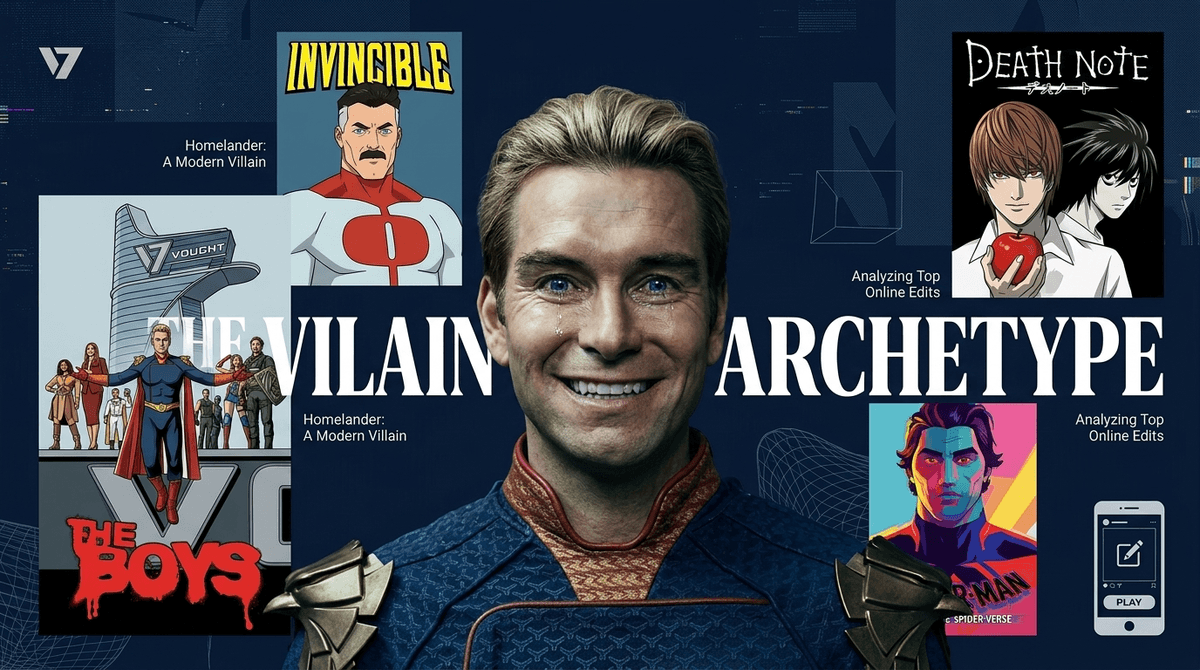
Antony Starr is currently the internet’s favorite way to signal that they’re "locked in," "alpha," or—more accurately for 2026—"sigma." If his twitchy, blonde, slightly terrifying face is haunting your kid’s feed, it’s because he has achieved a rare level of meme-immortality by playing one of the most convincingly unhinged villains in television history.
Antony Starr is the actor who plays Homelander in The Boys. Even if your kid isn't watching the ultra-violent show, they are definitely seeing the memes: Starr’s micro-expressions are the foundation of "sigma" culture, used to represent a "lone wolf" who is powerful, stoic, and borderline sociopathic. It’s less an obsession with the actor and more a fascination with the "Homelander vibe"—a mix of extreme power and total emotional instability.
Your kid probably isn't following Antony Starr’s career trajectory from New Zealand soaps to prestige TV. They know him as the guy who can make his eyes well up with tears while smiling like he’s about to vaporize a room.
By 2026, the "sigma" meme has evolved. It started as a way for teenage boys to LARP as "lone wolf" intellectuals, but it’s morphed into a shorthand for being unbothered, competitive, or just plain weird. Starr’s performance as Homelander—a character who is essentially "What if Superman were a narcissistic corporate asset?"—is the perfect raw material for this. When your kid sees a "Homelander edit," they’re seeing a 15-second clip of Starr looking intensely at a camera, set to a slowed-down phonk track.
The reason Starr is everywhere isn't just because The Boys is popular. It’s because he is a master of the "uncanny valley" facial expression.
In "sigma" edits, Starr’s face is used to represent:
- The "Internal Scream": When you’re annoyed but have to stay professional.
- The "God Complex": When you feel superior to everyone in the room.
- The "Locked In" Stare: Intense focus, usually applied to something trivial like hitting a personal best in the gym or winning a match in Fortnite.
It’s important to realize that for most kids, this is 100% irony. They aren't actually aspiring to be sociopathic supes; they’re using the character as a costume to play with themes of power and frustration.
One reason Starr remains so fascinating is the massive disconnect between the character he plays and who he is in real life. In interviews, he’s a dry, funny New Zealander who seems genuinely baffled by his own meme status.
Watching Starr out of character is actually a great "de-programming" tool if a kid is getting a little too deep into the Homelander-worship. It breaks the illusion of the "sigma" icon and reminds them that this is just a guy who’s really, really good at his job.
Where You’ve Seen Him (Besides the Memes)
If your kid is actually watching his work, they’re likely seeing:
- The Boys: The flagship. It’s a hard R—graphic violence, heavy satire, and zero filters. It’s a brilliant show, but it’s definitely the "deep end" of the pool.
- Banshee: An older, high-octane action show where he plays an ex-con posing as a sheriff. Also very adult, very violent, and very much the precursor to his Homelander intensity.
- Gen V: The college-aged spinoff of The Boys. It hits the same notes but with a younger cast, making it a major draw for the late-teen crowd.
If your kid is posting or watching Homelander edits, don't panic. They probably don't think a narcissistic murderer is a "role model." They think the memes are funny. But if you want to turn the obsession into a real conversation, try these angles:
- The "Mask" Conversation: Homelander is a character who is constantly performing. He has a public face and a private face. Ask your kid why they think that specific "fake smile" meme is so relatable. Is it because everyone feels like they’re faking it sometimes?
- Satire vs. Sincerity: The Boys is a satire of corporate greed and celebrity worship. The irony is that the internet often takes the characters being mocked and turns them into unironic idols. It’s a great chance to talk about whether a meme is making fun of someone or celebrating them.
- Acting as a Craft: Point out the technical skill. Starr isn't just "scary"—he’s doing a massive amount of work with his jaw, his eyes, and his posture. If your kid is into theater or film, Starr is a masterclass in "villain acting."
If your kid is drawn to the "dark hero" or "complex villain" archetype that Antony Starr embodies, there’s plenty of other media that explores these themes without the extreme "hard R" gore of The Boys.
This is the natural next step. It’s animated, but don't let that fool you—it’s just as intense as The Boys. It features Omni-Man, another "evil Superman" archetype, but explores the father-son dynamic in a way that’s actually quite moving. It’s a great bridge for kids who want "mature" superhero stories that actually have a soul.
For a younger audience (or just a visually stunning one), this movie deals with the "burden of being a hero" and the idea that the "villain" might just be someone with a different perspective. It’s high-stakes and stylistically brilliant without the cynicism of the "sigma" edits.
If the "sigma" obsession is about the "genius who thinks he’s a god" vibe, Death Note is the ultimate entry point. It’s a cat-and-mouse thriller about a high schooler who gains the power to kill anyone. It’s a fantastic study in how power corrupts, which is exactly the theme Starr explores as Homelander.
The biggest friction point with Antony Starr isn't the actor himself; it’s the "Sigma" algorithm. Once a kid starts liking Homelander edits, their feed will likely start serving them "Alpha" influencers, workout supplements, and increasingly "edgy" political content.
Pro-tip: If you see your kid’s feed becoming a wall of Antony Starr’s face, check in on the other videos. Are they about acting and movies, or are they about "how to be a cold, emotionless man"? The latter is the "sigma" trap, and it’s worth a casual "You know that character is the bad guy, right?" check-in.
Q: Is Antony Starr okay for my 12-year-old? Antony Starr the actor is fine, but his most famous work, The Boys, is definitely not for most 12-year-olds. It’s extremely graphic. However, watching his interviews or GQ/WIRED videos is a harmless way for a kid to engage with the actor behind the memes.
Q: What is "sigma culture" and why is Antony Starr the face of it? "Sigma" is internet-slang for a "lone wolf" who is successful but doesn't follow social rules. Antony Starr’s character, Homelander, is often used in these memes because he looks powerful and intense. Usually, kids use these memes ironically to joke about being "locked in" or focused.
Q: Why is Homelander so popular with kids? He’s the ultimate "forbidden fruit" character. He’s powerful, scary, and comes from a show they probably know they aren't supposed to watch yet. The memes allow them to engage with the "cool" parts of the character (the power, the intensity) without having to sit through the dark, adult themes of the show.
Antony Starr is a phenomenal actor who accidentally became the patron saint of teenage "edgelord" humor. If your kid is into him, they’re likely just riding a massive cultural wave. Enjoy the memes, but keep an eye on the "sigma" rabbit hole—and if they’re ready for the themes but not the gore, point them toward Invincible or Death Note.
- Check out our best shows for kids list for age-appropriate superhero alternatives.
- See our digital guide for middle schoolers to understand how "sigma" and "alpha" trends move through schools.
- Get help explaining a meme to your kid
