

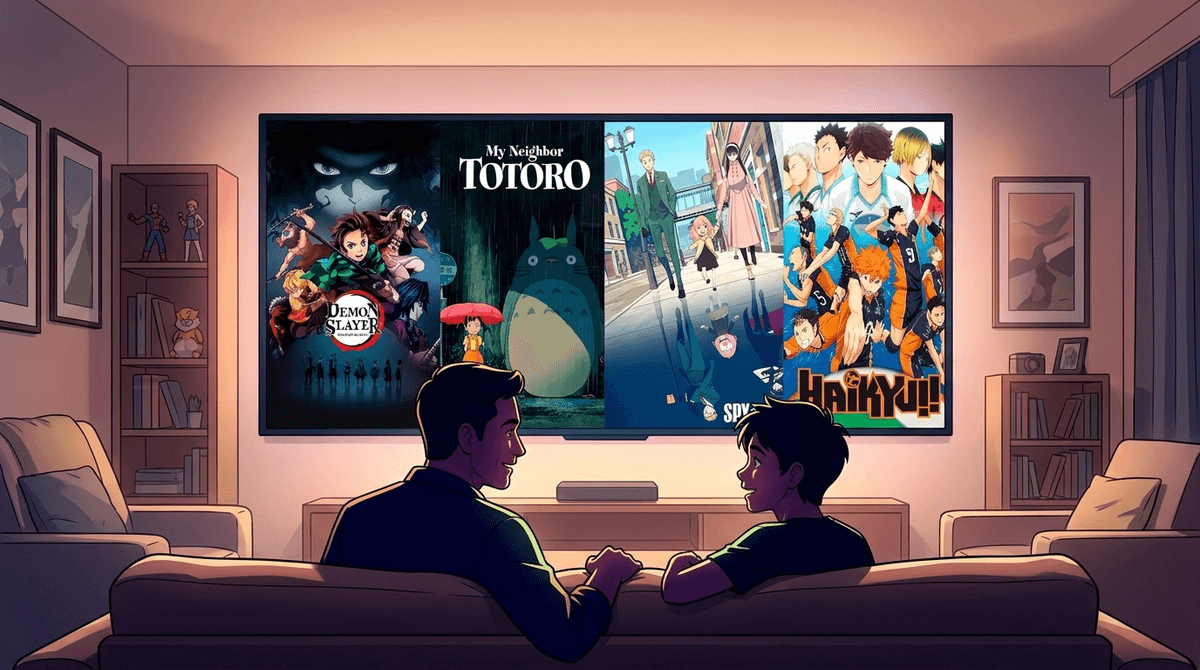
TL;DR: Anime isn't just "Japanese cartoons"—it's a massive medium ranging from wholesome forest spirits to ultra-violent psychological thrillers. If your kid is moving past Pokémon, they’re likely eyeing "Shonen" (action) hits like Demon Slayer or Spy x Family.
The quick list of what to watch in 2026:
- Ages 5-8: My Neighbor Totoro, Ponyo, Pokémon Horizons.
- Ages 9-12: Spy x Family, Little Witch Academia, Haikyu!!.
- Ages 13+: Demon Slayer, Your Name, Solo Leveling.
- Warning: Just because it’s animated doesn’t mean it’s for kids. Shows like Attack on Titan or Chainsaw Man are strictly for the older teen/adult crowd.
Find anime picks based on your kid's interests
In 2026, anime is no longer a niche hobby for the "nerdy" kids in the back of the library. It is the dominant cultural force in middle and high schools. According to Screenwise community data, roughly 72% of students in grades 6-12 consume anime at least weekly, often via Crunchyroll, Netflix, or Hulu.
The transition usually starts when a child grows out of the repetitive nature of Western "bridge" shows and craves something with higher stakes. Anime delivers that in spades. Unlike many American cartoons that reset to status quo every episode, anime series often tell one long, serialized story where characters actually age, die, or change forever.
It’s easy to dismiss anime as "brain rot" if you’ve only seen five seconds of a character screaming while their hair turns neon blue, but there’s a reason it has a stranglehold on Gen Alpha and Gen Z:
- Emotional Maturity: Anime doesn't talk down to kids. Even "kid" shows often deal with grief, failure, and complex social dynamics.
- The Aesthetic: The "anime style" is the visual language of the internet. From Roblox avatars to Discord profile pictures, the big eyes and expressive hair are everywhere.
- Community: Anime is a social currency. Knowing the lore of Jujutsu Kaisen is the 2026 equivalent of knowing every stat on a baseball card in 1995.
Ages 5-9: Wholesome and Whimsical
At this age, you want to stick to "Kodomomuke" (media for children). Studio Ghibli is the gold standard here.
- The ultimate "gentle" movie. No villains, no violence, just two sisters moving to the country and meeting a giant forest spirit. It’s a masterpiece.
- A magical take on The Little Mermaid. It’s bright, imaginative, and perfect for younger viewers who find Disney movies a bit too scary.
- Think Harry Potter, but more optimistic and centered on a girl who refuses to give up on her dreams despite having zero natural talent.
Ages 10-13: The "Shonen" Sweet Spot
"Shonen" technically means "boy," but these action-adventure shows have a massive female following. This is where things get "cool."
- This is the perfect family watch. A spy, an assassin, and a telepathic child pretend to be a normal family for their own secret reasons. It’s hilarious, wholesome, and has just enough action to keep it exciting.
- A sports anime about volleyball. It sounds boring, but it’s actually a masterclass in teamwork and perseverance. There is zero "bad" content here—just high-intensity sports drama.
- A "smart" anime. Everyone on Earth is turned to stone, and 3,700 years later, a teenage genius wakes up and uses the power of science to rebuild civilization. It’s basically a high-speed chemistry and physics lesson disguised as an adventure.
Ages 14+: High Stakes and Heavy Themes
If your teen is watching anime, they’re likely looking for "Seinen" (older teen/adult) or darker Shonen.
- The animation is breathtaking, but it is violent. There is sword fighting and blood, but at its heart, it’s a story about a brother’s desperate love for his sister.
- A stunning movie about two teenagers who start swapping bodies. It’s a beautiful, emotional rollercoaster that deals with memory and connection.
- Massively popular in 2025 and 2026. It follows a "weak" hunter who gains the ability to level up like a video game character. It’s very "gamer-centric" but features significant stylized violence.
Check out our guide on whether Demon Slayer is too violent for your middle schooler
The biggest mistake parents make is assuming that because a show is on Netflix and it's animated, it's safe.
1. "Fan Service" This is the anime industry's term for gratuitous sexualization. It might be a lingering shot of a character in a bikini or "accidental" physical contact. Even "clean" shows can have a random episode that feels wildly inappropriate.
- Pro-tip: If you see a show tagged with "Ecchi," that is a hard "no" for anyone under 17.
2. Cultural Differences in Violence Japanese media has a higher tolerance for "blood and guts" in shows aimed at 12-year-olds than American media does. A show like Attack on Titan features giants eating people. It’s a brilliant political allegory, but it’s also nightmare fuel for many kids.
3. The "Cuteness" Trap Some of the most disturbing anime use a "moe" (cute) art style to lure you in. Madoka Magica looks like a show about magical girls and sparkles, but it’s actually a deconstruction of the genre that involves significant psychological trauma.
If your kid is obsessed, don't just roll your eyes at the "weird cartoons." Use it as a bridge.
- Ask about the power system: Most action anime have complex rules for how characters get strong (Nen, Cursed Energy, Breathing Styles). Asking "How does the magic work in this world?" will get them talking for an hour.
- Discuss the "Sub vs. Dub" debate: Purists watch with original Japanese audio and English subtitles ("Subs"). Many kids prefer English voiceovers ("Dubs"). It’s a harmless, fun debate to have at dinner.
- Watch one episode: Seriously. Sit down and watch the first episode of Spy x Family with them. You might actually like it.
Anime is a rich, diverse world of storytelling that offers way more than just Pikachu. While there are dark corners of the medium that require a firm "not yet," the majority of mainstream anime provides a fantastic way for kids to explore complex themes, different cultures, and incredible art.
In 2026, being "Screenwise" about anime means moving past the "it's just a cartoon" mindset and recognizing it as the sophisticated (and sometimes messy) medium it is.
- Check the Wise Score: Before letting them binge a new series, look up the title on Screenwise to see the specific breakdown of violence, language, and "fan service."
- Audit the Watchlist: If they use Crunchyroll, go into the settings and ensure the "Mature Content" filter is toggled off.
- Start a "Family Anime Night": Pick a Ghibli movie or a lighthearted series like Haikyu!! to watch together.