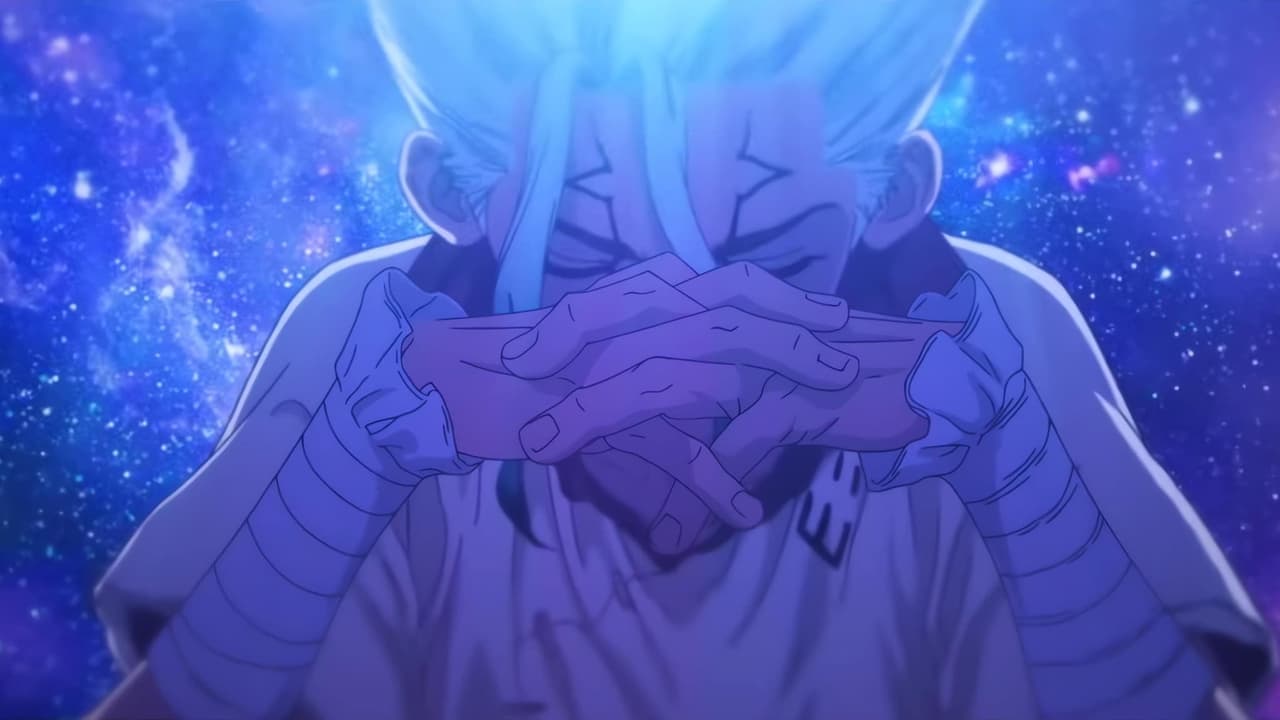
If you’ve spent any time watching your kid play Minecraft or Satisfactory, you already understand the appeal of Dr. Stone. It taps into that primal human urge to start with a handful of dirt and end up with a circuit board. Most survival stories focus on the "survival" part—hiding from monsters and scrounging for berries—but this show is obsessed with progress.
The premise is a high-concept reset button. A mysterious flash turns everyone on Earth into statues for 3,700 years. When the protagonist, Senku, finally breaks out of his stone shell, he doesn't just look for food; he starts calculating the exact date and begins a "Road to Science" to drag humanity from the Stone Age back to the modern era. It’s a power fantasy where the superpower isn't flight or super-strength, but a working knowledge of the periodic table.
The "Martian" for the TikTok generation
The best way to think about Dr. Stone is as a high-octane version of The Martian. It treats scientific discovery like a series of boss fights. When Senku needs to create a specific chemical or a piece of technology, the show breaks down the steps with a frantic, infectious energy. You’ll see them gather seashells to make calcium carbonate, which leads to soap, which leads to mortar.
It makes the mundane feel consequential. For a generation of kids used to instant gratification, watching characters spend months of "screen time" just to grind down glass for a pair of spectacles is a weirdly grounding experience. It’s one of the few shows that actually makes being a "nerd" look like the most dangerous and cool thing you could possibly be. If you're trying to figure out how this fits into the broader landscape of Japanese media, our guide on Beyond Pikachu: Decoding Your Child's Anime Obsession is a great place to start.
The friction you’ll actually feel
While the science is the draw, the "anime-ness" is the tax you have to pay. The most common complaint from parents—and even some fans on Reddit—is the character design for the women. While the guys are drawn with varying body types and faces, many of the female characters have a specific, "same-face" look with eyes spaced so far apart they look like herbivores.
There is also the "fan service" element. You’ll see some gravity-defying outfits and camera angles that feel unnecessary given the high-brow subject matter. It’s not enough to ruin the experience, but it’s the one thing that might make you roll your eyes while your kid is busy learning how to synthesize sulfa drugs from volcanic minerals.
If your kid liked "The Wild Robot" or "Bill Nye"
This is the natural evolution for a kid who has outgrown the "educational" label but still has a curious brain. It’s much more intense than a standard Saturday morning cartoon—there are stakes, there is stylized violence, and there’s a looming threat of a "Might Makes Right" empire that wants to stop science from returning.
The IMDb score of 8.1 is well-earned because the show respects the audience's intelligence. It doesn't cheat. If Senku needs a vacuum tube, he has to figure out how to blow the glass and create the filament. It’s a celebration of human history that makes you realize just how much work went into the phone currently sitting in your pocket.
If you want to engage with them after an episode, don't ask about the plot. Ask them what the "recipe" was for the latest invention. They’ll likely be able to tell you, and that’s the highest praise you can give a show like this.