

Fifth grade is this fascinating inflection point where kids are reading real books—like actual chapter books with complex plots and moral dilemmas—but they're also at peak "why would I read when I could watch YouTube?" energy. They're 10-11 years old, navigating friendship drama, figuring out who they are, and honestly? Screens are really good at capturing attention in ways that books have to work harder for.
But here's the thing: fifth graders who find books they actually love become readers for life. And those readers? They develop empathy, critical thinking, and attention spans that serve them way beyond elementary school. The goal isn't to shame screens—it's to find books that can actually compete.
Fifth grade is when standardized reading assessments start ramping up, but more importantly, it's when kids either become readers or... don't. They're old enough to choose their own books but young enough that you still have influence over what's in the house.
This is also the age where reading levels vary wildly. Some fifth graders are devouring 400-page fantasy novels, while others are still building stamina with shorter chapter books. Both are completely normal. The key is matching the kid to books that feel like a win, not a chore.
For the Fantasy Obsessed
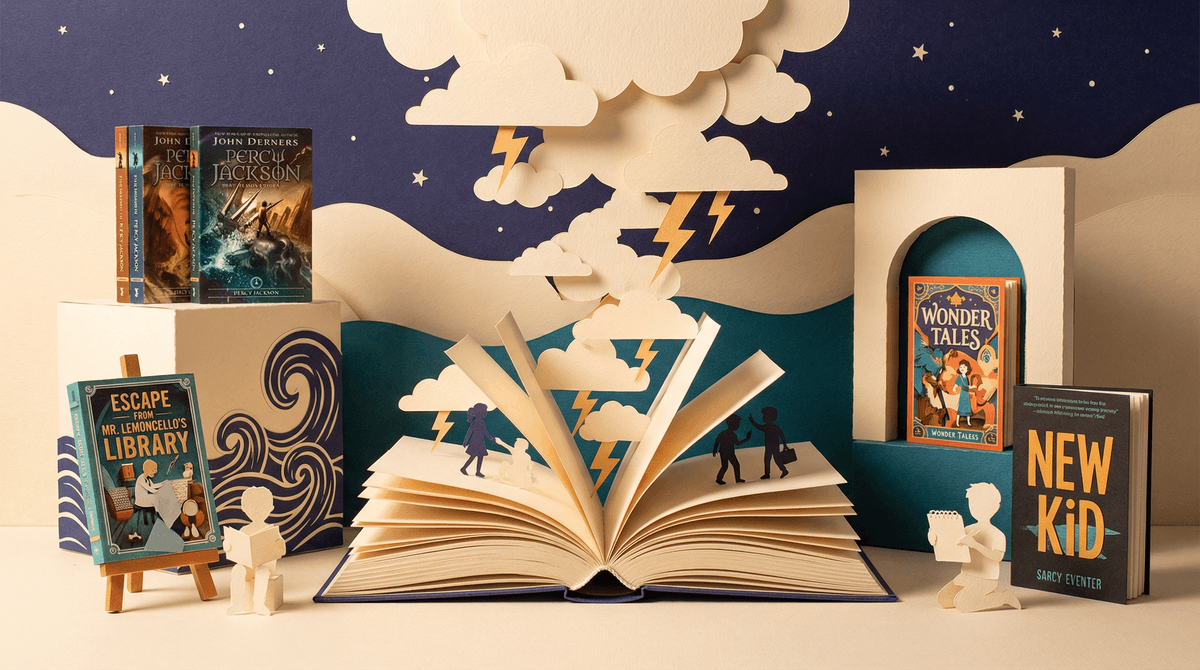
Percy Jackson and the Olympians by Rick Riordan - If your kid hasn't read these yet, start here. Greek mythology meets middle school, ADHD and dyslexia are reframed as demigod powers, and the humor is genuinely funny. The whole series is bingeable, and the Disney+ show just made it even more culturally relevant.
Wings of Fire by Tui T. Sutherland - Dragon tribes, prophecies, and surprisingly complex political intrigue. This series has a massive following among 5th graders (like, kids are drawing fan art in the margins of their homework). Fifteen books in the main series, so it's a commitment that pays off.
The Land of Stories by Chris Colfer - Fairy tale characters in a modern twist. Great for kids who loved fairy tales as younger readers but need something with more depth now.
For the Realistic Fiction Crew
Wonder by R.J. Palacio - The empathy-building powerhouse. Auggie Pullman has facial differences and is starting mainstream school for the first time. Multiple perspectives, genuine emotion, and it sparks really good conversations about kindness and belonging. Warning: you might cry.
New Kid by Jerry Craft - A graphic novel (yes, those count!) about a Black kid navigating a predominantly white private school. Funny, honest, and tackles microaggressions and identity in a way that's accessible for this age. Won the Newbery Medal for a reason.
Fish in a Tree by Lynda Mullaly Hunt - About a girl with dyslexia who's been hiding it by acting out. Perfect for kids who struggle with reading themselves, or for building understanding about learning differences.
For the Mystery/Adventure Seekers
The 39 Clues series - Multi-author series about orphaned siblings hunting for clues around the world. Fast-paced, shorter chapters, and there used to be an online game component (RIP) but the books still hold up. Great for reluctant readers.
Holes by Louis Sachar - A modern classic. Kid gets sent to a juvenile detention camp where they dig holes all day, and the plot weaves together in this incredibly satisfying way. Weird, funny, and surprisingly deep.
Escape from Mr. Lemoncello's Library by Chris Grabenstein - Willy Wonka meets escape room meets library. Puzzles, games, and a love letter to reading itself. Kids who like Roblox escape room games will vibe with this.
For the Graphic Novel Fans (Yes, These Count!)
Let's be clear: graphic novels are real reading. They require visual literacy, comprehension, and often tackle complex themes. If your kid will read a graphic novel but not a traditional chapter book, that's a win.
Smile by Raina Telgemeier - Memoir about middle school, braces, friendship drama, and finding yourself. Telgemeier's books are basically currency among 5th grade girls.
Amulet series by Kazu Kibuishi - Siblings, magic, alternate worlds, and genuinely beautiful artwork. Nine books, and kids devour them.
Dog Man by Dav Pilkey - Technically younger, but don't sleep on these for reluctant readers or kids who need a confidence boost. They're funny, they're quick, and they keep kids reading.
For the Kids Who Want to Learn Stuff
I Survived series by Lauren Tarshis - Historical disasters told through the eyes of kids who lived through them. Titanic, 9/11, Hurricane Katrina, etc. Short, gripping, and sneakily educational.
Who Was/What Was series - Biographies and historical events in accessible, illustrated formats. Not "baby books"—these are legitimate introductions to historical figures and moments.
Here's the uncomfortable truth: reading levels are useful tools but terrible labels. A kid reading "below grade level" who's engaged and building stamina is doing better than a kid reading "above grade level" who hates it.
That said, if you're concerned about reading level, focus on:
- Interest over level - A motivated reader will push through harder text
- Audiobooks count - Seriously, listening while following along builds skills
- Series are your friend - Once they're hooked, they'll keep going
- Graphic novels are valid - Visual literacy is literacy
If your kid is struggling, talk to their teacher before you panic. Sometimes it's a vision issue, sometimes it's a learning difference, sometimes they just need the right book.
Make it available - Books in the car, books in the bathroom, books on the coffee table. Accessibility matters.
Model it - Kids who see adults reading are more likely to read themselves. Even if you're reading on a Kindle, narrate it: "I'm reading this wild thriller..."
Audiobooks during screen time transitions - "You can have 30 more minutes of Minecraft while you listen to your book." It's a gateway drug.
Let them abandon books - Forcing a kid to finish a book they hate teaches them that reading is a chore. DNF (Did Not Finish) is a valid choice.
Library trips are free entertainment - Most libraries have way better kids' sections than they did when we were young. Let them explore.
Book series are cheat codes - Once they find a series they love, you've bought yourself months of reading momentum.
Look, we're not going to pretend books don't have to compete with YouTube, Roblox, and TikTok (yes, some 5th graders are on TikTok, we can talk about that later). Screens deliver dopamine hits in ways that books can't match.
But here's what books offer that screens often don't:
- Deep focus - The kind of sustained attention that builds executive function
- Empathy development - Research shows fiction readers are better at understanding others' perspectives
- Imagination activation - Their brain has to do the work of visualizing
- Offline independence - No wifi, no ads, no algorithm
The goal isn't books instead of screens—it's books and screens, with intentional choices about both.
Fifth grade readers need books that respect their intelligence, match their interests, and feel like a choice rather than an assignment. The "right" book is the one they'll actually read.
Start with what they already love (dragons? sports? true crime for kids? yes, that's a thing) and find books that scratch that itch. Let them read graphic novels, let them listen to audiobooks, let them read the same series seventeen times if that's what works.
Reading for pleasure at this age is a gift that compounds. It's not about hitting a certain level or reading a certain number of books—it's about building humans who want to read.
- Ask their teacher for recommendations based on your kid's specific interests and reading level
- Hit the library - Librarians are basically book matchmakers and they're weirdly good at it
- Try the "five page rule" - If a book doesn't grab them in five pages, they can abandon it
- Check out reading apps that aren't just screen time - Epic, Libby, and others can bridge the digital/reading gap
- Start a family read-aloud - Even 5th graders enjoy being read to, and it models that reading is valuable
And if your kid genuinely hates reading? That's a conversation for another day, but it's worth investigating why rather than just forcing it. Sometimes it's a vision issue, sometimes it's a learning difference, sometimes they just haven't found their book yet.