

TL;DR
If you’re short on time because you’re currently negotiating how many more minutes of "just one more show" your kid gets, here is the fast track to sanity:
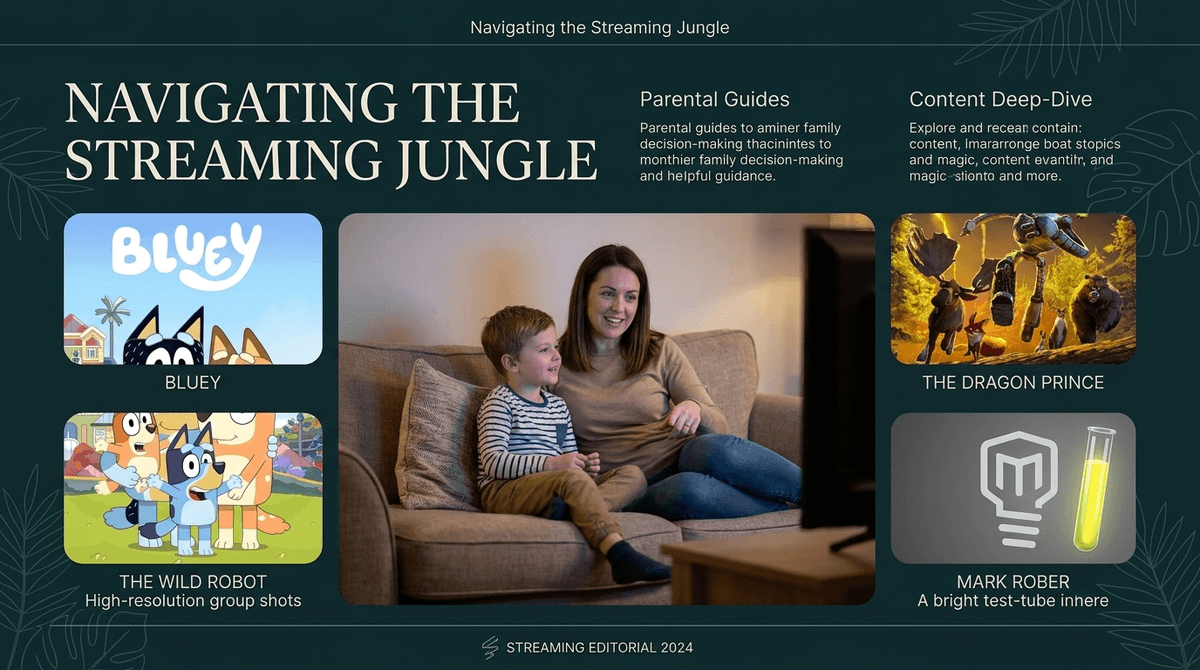
- The Gold Standard: Bluey (obviously) and Puffin Rock for the little ones.
- The "Actually Educational" Tier: Emily's Wonder Lab and Numberblocks.
- The "Brain Rot" Warning: CoComelon (sensory overload) and the darker corners of YouTube like Skibidi Toilet.
- Pro-Tip: Don't trust the "Kids" profile to do all the work. You need to lock down Netflix profile transfers and use PIN codes for adult profiles.
The TV-Y rating is basically the "thoughts and prayers" of the digital world. It’s a nice gesture, but it doesn't actually do much to protect your kid from content that turns their brain into mush or introduces them to themes they aren't ready for.
In 2026, the "streaming jungle" isn't just about what's on the screen; it's about the algorithm designed to keep your child’s eyes glued to the glass for as long as humanly possible. Whether it’s Netflix, Disney+, or the wild west of YouTube, the goal of the platform is engagement, not your child’s development.
The current rating system was designed for broadcast television in the 90s. It doesn't account for the high-frequency editing of "brain rot" content or the weird, uncanny valley AI-generated videos that plague YouTube Kids. A show can be "TV-Y" and still be incredibly overstimulating, leading to those legendary post-screen time meltdowns we all love so much.
Research shows that by age 8, about 65% of kids have their own tablet or smartphone, and they are spending an average of 4-6 hours a day on entertainment media. Most of that is streaming. If we aren't curate-heavy, the algorithm will eventually serve them something "Ohio" (that’s kid-speak for weird/cringe) or worse.
Ages 3-6: High Quality, Low Stimulation
At this age, you want "slow" media. Fast cuts and loud, repetitive music (looking at you, CoComelon) can actually trigger a stress response in younger kids.
- It’s the GOAT for a reason. It models imaginative play and emotional intelligence without being preachy. It’s one of the few shows parents actually enjoy watching.
- Gentle, sweet, and focuses on friendship. It’s the antithesis of the loud, bright garbage usually marketed to this age group.
- Celebrities reading high-quality picture books. It’s basically a digital library that feels like a treat.
Ages 7-10: Curiosity and Adventure
This is where they start wanting "cool" stuff. They might start asking about Skibidi Toilet because they heard about it at school. Redirect that energy toward content with actual substance.
- An absolute masterpiece about technology, nature, and kindness. If they loved the movie, get them The Wild Robot by Peter Brown to read afterward.
- It’s harmless, weirdly addictive, and great for family co-viewing. It’s the "junk food" of streaming that won't actually rot their teeth.
- The gold standard of YouTube. Science, engineering, and humor. It’s the best way to prove that YouTube isn't all bad.
Ages 11+: Nuance and Reality
Middle schoolers are looking for identity. They’re moving away from "kids" shows and into the "Young Adult" or "General Audience" territory.
- Deep lore, complex characters, and themes of war and peace that are handled with incredible care.
- Narrated by Barack Obama, it’s stunning and educational. Great for winding down before bed.
- If you’re okay with some mild language and "fantasy" afterlife themes, this is a brilliant way to talk to tweens about ethics and what it means to be a good person.
Check out our guide on the best movies for family movie night
Most parents set up a "Kids" profile and call it a day. That’s a mistake. Here is the No-BS way to actually secure your streaming apps:
- Netflix: The Maturity Rating Lock. You can go into the "Account" settings on a web browser and set a hard limit for each profile (e.g., "Only TV-Y7 and below"). This is much more effective than just relying on the "Kids" interface.
- Disney+: The "Junior Mode" vs. Content Ratings. Disney+ recently added more "adult" content (thanks, Marvel and Star Wars). Ensure your kid’s profile is set to the correct age rating, or they’ll be one click away from Deadpool.
- YouTube: The "Approved Content Only" Setting. On YouTube Kids, you can toggle a setting that allows your child to only watch channels you have hand-picked. This is the only way to avoid the weird AI-generated "Elsagate" style videos.
You’ve probably heard your kids use words like "Skibidi," "Rizz," or "Sigma." This is the language of the modern streaming era, largely born from TikTok and YouTube Shorts.
While most of it is just harmless (if annoying) slang, the concern is the format. Short-form, high-intensity video is designed to dopamine-loop the brain. If you notice your kid is increasingly irritable, has a shorter attention span, or struggles to engage with "slower" activities like reading a Percy Jackson book, it might be time to audit their streaming habits.
Learn more about the impact of short-form video on the developing brain
Instead of being the "Screen Police," try to be the "Media Critic."
- Ask: "Why do you think the person made this video?"
- Ask: "How do you feel after watching 30 minutes of this vs. watching a movie?"
- Be Honest: "I noticed that when you watch Roblox YouTubers, you tend to be really grumpy afterward. Let's find something else that doesn't make you feel like that."
Streaming isn't the enemy; the unmanaged algorithm is. Your job isn't to block everything—it’s to curate a digital environment that reflects your family’s values.
If a show is "TV-Y" but makes your kid act like a feral animal, turn it off. If a show is rated for older kids but sparks a great conversation about friendship or science, lean in. You know your kid better than a Netflix engineer does.
- Audit the Profiles: Spend 10 minutes tonight checking the maturity settings on every app your kid uses.
- The 1-for-1 Rule: For every 30 minutes of "junk food" streaming, encourage 30 minutes of something "WISE" (educational, creative, or physical).
- Co-Watch: Sit down and watch a full episode of whatever they are currently obsessed with. You might find it’s not as bad as you thought—or you might find it’s even worse. Either way, you’ll have the data.
Check out our guide on how to handle "Brain Rot" content
See if specific YouTube channels are safe