

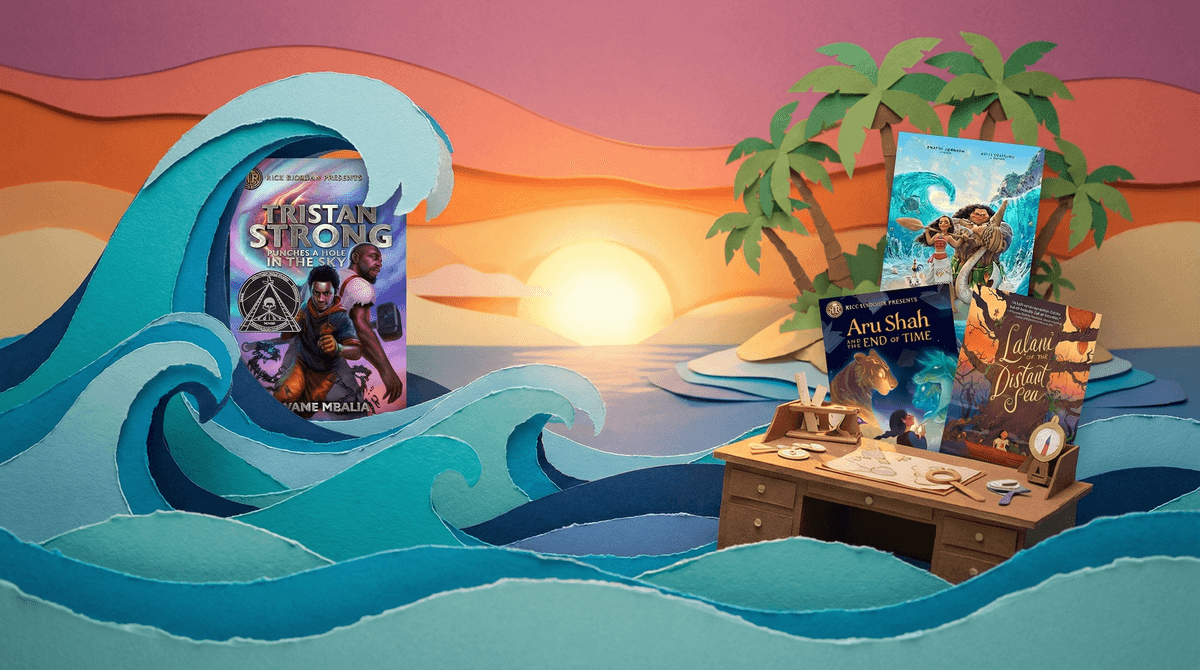
If your kid has watched Moana approximately 847 times and can recite "How Far I'll Go" in their sleep, you're probably looking for books that capture that same energy: brave girls, epic journeys, cultural richness, and the kind of adventure that makes you want to stand on your couch and declare yourself a wayfinder.
The good news? There's a whole world of middle-grade adventure books featuring courageous heroines who set sail (literally or metaphorically), discover their heritage, and save the day without waiting for permission. These aren't passive princess stories—these are tales of kids who grab the oar and steer their own destiny.
They see themselves as the hero. Moana resonated because she wasn't a sidekick or a love interest—she was THE protagonist with agency, flaws, and a mission. Books in this vein put kids (especially girls) front and center in the action.
The stakes feel real. Whether it's saving an island, protecting family, or discovering hidden powers, these stories give kids characters who face genuine challenges and grow through them. No training montage required—just courage and determination.
Culture and identity matter. Moana's Polynesian heritage wasn't window dressing; it was central to the story. The best adventure books for this age group weave cultural identity, mythology, and tradition into the narrative in ways that feel authentic and empowering.
There's humor and heart. Let's be real—if it's all earnest questing with no laughs, kids will bounce. The books that work best balance adventure with genuine emotion and enough levity to keep pages turning.
Aru Shah and the End of Time by Roshani Chokshi (Ages 8-12)
This is Percy Jackson meets Hindu mythology, and it absolutely slaps. Aru is a 12-year-old who accidentally awakens an ancient demon and has to embark on a quest through the Otherworld to save her mother and stop the end of time. The cultural richness here is chef's kiss—Hindu gods, reincarnated heroes, and mythology that feels both ancient and immediate. Aru is funny, flawed, and fiercely loyal. If your kid loved Moana's determination and the way she navigated both her heritage and her destiny, this series (it's five books!) will hit perfectly.
The Girl Who Drank the Moon by Kelly Barnhill (Ages 9-12)
This Newbery Medal winner is lyrical, magical, and features a girl named Luna who was accidentally fed moonlight as a baby and now has wild magic she can't quite control. There's a witch, a tiny dragon, a swamp monster with a poetic soul, and a quest to understand the truth about Luna's origins. It's less about ocean voyages and more about discovering your power and challenging the stories you've been told. The writing is gorgeous, the adventure is real, and Luna's journey to understand herself mirrors Moana's own path.
Echo by Pam Muñoz Ryan (Ages 10+)
Okay, this one's a bit different—it's not a single-heroine adventure, but three interconnected stories spanning decades, all tied together by a magical harmonica. The protagonists face Nazi Germany, Depression-era America, and other historical challenges with music as their guide. It's ambitious, beautifully written, and captures that sense of destiny and heritage that made Moana so compelling. Fair warning: it's longer and more complex, so better for strong readers or as a read-aloud.
Tristan accidentally punches a hole into the world of African American folktales and has to team up with legendary figures like John Henry and Brer Rabbit to save both worlds. The cultural mythology here is rich and specific—West African gods, enslaved ancestors' stories, and the power of narrative itself. Tristan is dealing with grief, guilt, and the weight of expectations, which gives the adventure real emotional stakes. If your kid loved how Moana honored her ancestors, this book does something similar with African and African American storytelling traditions.
The Wild Robot by Peter Brown (Ages 8-12)
A robot washes up on a remote island and has to learn to survive in the wilderness, eventually becoming a parent to an orphaned gosling. It's not mythology-based, but it absolutely captures that "stranger in a strange land learning to belong" energy that Moana has. Roz (the robot) is resourceful, brave, and learns to navigate a world she wasn't built for. The themes of adaptation, found family, and environmental harmony will resonate with Moana fans. Plus, there's a movie adaptation that just came out, so double win.
Lalani of the Distant Sea by Erin Entrada Kelly (Ages 8-12)
This is basically "what if Moana but make it a book?" Lalani lives on an island where girls aren't supposed to have adventures, but when her mother falls ill, she sets sail on a forbidden journey to find a legendary mountain and save her village. The world-building is lush, the stakes are high, and Lalani's courage in the face of impossible odds is pure Moana energy. If you want the closest spiritual successor to the movie, this is it.
Savvy by Ingrid Law (Ages 8-12)
When kids in Mibs' family turn thirteen, they get a "savvy"—a magical power unique to them. Mibs is convinced her savvy will help save her father, who's in a coma after an accident, so she embarks on a wild bus journey to find him. It's a road trip adventure with heart, humor, and the kind of family loyalty that drives Moana's journey. The American setting is different, but the themes of discovering your power and using it to help the people you love are spot-on.
Reading levels vary. These books range from accessible chapter books to more complex middle-grade novels. Aru Shah and The Wild Robot are great for confident 8-year-olds; Echo might be better for 10+ or as a family read-aloud.
Cultural authenticity matters. These books are written by authors with genuine connections to the cultures they're representing—Roshani Chokshi is Indian-American, Kwame Mbalia is Black, Pam Muñoz Ryan draws from Mexican-American heritage. That's not just nice; it's essential for the kind of authentic storytelling that made Moana resonate.
Some themes are heavy. Tristan Strong deals with grief and the legacy of slavery. Echo includes Nazi Germany and historical trauma. These aren't gratuitous, but they're real. If your kid is sensitive to darker themes, preview first or read together.
They're series starters (mostly). Aru Shah, Tristan Strong, and The Wild Robot all have sequels. If your kid gets hooked, you've got built-in next reads. You're welcome.
If Moana taught us anything, it's that kids are hungry for stories where they're the hero, where their culture matters, and where courage looks like taking the first step even when you're terrified. These books deliver that in spades—with mythology, magic, and the kind of adventure that makes you want to grab an oar (or a book) and set sail.
Start with Lalani of the Distant Sea if you want the closest match to Moana's ocean voyage. Go with Aru Shah if your kid loves mythology and humor. Pick The Wild Robot if they're into survival stories with heart.
And when they finish? They'll probably want to watch Moana again. But at least now they'll have a stack of books to tide them over until the next viewing.