Mister Rogers' Neighborhood is the best children's television ever made. Your kid might not be able to watch it. | Screenwise

A parent’s playbook

Mister Rogers' Neighborhood is the best children's television ever made. Your kid might not be able to watch it.

Best for ages 3–8, introduced deliberately. Watch one episode together, go slow, and let the silence do its work.

WISE 68

The bottom line

The most wholesome show ever made, and also possibly the hardest thing to convince a modern kid to actually sit through.

Here's the truth: Mister Rogers' Neighborhood is objectively one of the most developmentally perfect, emotionally intelligent, safe pieces of children's media ever created.

Fred Rogers was a singular talent who genuinely revolutionized how we talk to kids about feelings, community, and self-worth.

And it's also nearly impossible to get a modern kid to watch it.

The pacing is so deliberate, so slow, so counter to everything children are now accustomed to, that it feels like watching paint dry.

The production values scream 1970s PBS.

The format is repetitive to the point of hypnotic.

Even parents who loved it as kids often find it hard to sit through now.

This is a show that's more valuable as a cultural touchstone and a reminder of what children's media *could* be than as actual entertainment for 2025.

If you want to try it, go in with zero expectations that your kid will love it.

Use it as a deliberate 'slow media' experiment, or cherry-pick specific episodes about topics you're dealing with (there are episodes about everything from haircuts to divorce).

The content deserves a 95+ WISE score.

The watchability in 2025 is closer to 40.

Hence the compromise score that reflects both the excellence and the reality.

Wholesome

100/100

The gold standard of wholesome children's television. Fred Rogers modeled kindness, emotional intelligence, and gentle communication in every episode. Deliberately slow-paced to counter chaotic children's programming, with consistent themes of self-worth, community, and emotional regulation.

Imaginative

75/100

The Neighborhood of Make-Believe segments encouraged imaginative play and storytelling. Rogers invited children to use their creativity and explore feelings through puppetry and fantasy. However, the show's format was repetitive and structured rather than wildly inventive, focusing more on emotional exploration than creative problem-solving.

Safe

100/100

Intentionally designed as the safest possible content for young children. No violence, no commercials, no manipulation, no scary content. Rogers famously testified before Congress about protecting children from harmful media. Every element was carefully considered for developmental appropriateness.

Enriching

95/100

Groundbreaking in addressing children's emotional development, fears, and social skills. Tackled topics like death, divorce, disability, and racism with age-appropriate honesty. Built vocabulary, explored how things are made, and consistently reinforced self-worth. The deliberate pacing itself was enriching, teaching patience and attention.

What the critics say


Is Mr. Rogers' Neighborhood right for your kid specifically?


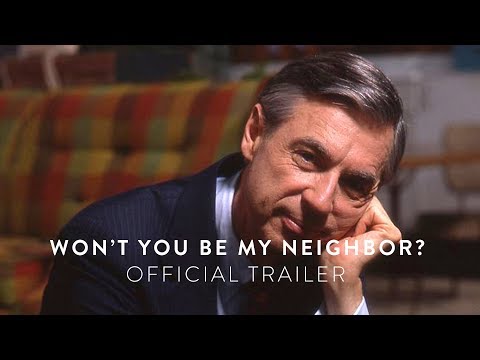
Mister Rogers' Neighborhood is the show that every piece of children's media gets measured against and almost nothing else reaches. Fred Rogers put on his cardigan, changed into his sneakers, and spent thirty years telling children — slowly, directly, without blinking — that they were worthy of love exactly as they were. No villain of the week. No laugh track. No algorithm optimizing for retention. Just a man and a trolley and a genuine belief that the feelings children have are worth taking seriously.

The Neighborhood of Make-Believe sequences — Lady Elaine, Daniel Tiger, King Friday, the whole papier-mâché kingdom — weren't there to entertain. They were there to externalize the feelings a young child couldn't yet name. When Daniel Tiger was afraid of the drain in the bathtub, Fred wasn't being precious. He was doing something most children's media still doesn't do: meeting a child where they actually live emotionally.

We score children's media on four dimensions — Wholesome, Imaginative, Safe, and Enriching — and Mister Rogers' Neighborhood scores 100, 75, 100, and 95. The 100s are real: this is the safest, most intentionally kind piece of children's media ever broadcast. The 75 on Imagination reflects the truth that the show was more emotionally exploratory than inventively wild. The overall score of 68 accounts for something the subscores can't fully capture: the collision between a show designed for 1968 and a child raised on YouTube in 2025.

This is a show built for ages 3–8, and for that range it remains — in terms of emotional intelligence — unmatched. The episodes on death, divorce, disability, and fear are still the clearest, most honest treatments those topics have ever gotten in children's media. The vocabulary-building, the how-things-are-made segments, the quiet modeling of curiosity — none of it has aged. The pacing has.

The honest pitch is this: don't put it on and walk away. Sit down and watch it with your kid. The show was always a relationship — between Fred and the child watching — and in 2025, that relationship may need you in the room to bridge the gap. Parents who do that often find something unexpected: the show is actually for them too. The silences that feel slow to a child feel like relief to an adult who hasn't had thirty seconds of quiet all day.

The real risk isn't the content. It's expecting a screen-saturated kid to meet Fred Rogers halfway.

The most common parent experience with Mister Rogers' Neighborhood in 2025 goes like this: you introduce it with genuine nostalgia and hope, your kid watches for four minutes, asks to turn it off, and you feel a small complicated sadness. That's not your kid failing the show. That's the show running at a frequency modern children's media has trained young brains to find uncomfortable. The pacing — the long pauses, the direct address, the unhurried transitions — isn't a bug. It was Fred's explicit counter-programming against chaotic children's television. But when your child's baseline is YouTube autoplay, that deliberate slowness registers as boredom. Starting with the expectation that your kid will love it the way you did (or the way the cultural mythology says you should) sets everyone up for disappointment. Start instead with one episode, watched together, with no other screen competing for attention. Some kids meet it immediately. Most need a few tries.

The other thing worth knowing: some episodes go places parents aren't always ready for. The famous 1981 death-of-a-fish episode. The divorce episodes. The episode where a character has a stroke. The disability representation episodes, which are genuinely ahead of their time but may open conversations you want to be prepared for. None of this is harmful — in fact it's the reason the show still matters — but it's worth previewing episodes if your child is particularly anxious or in the middle of a relevant family situation. The PBS Kids website has episode guides organized by topic that make this easy.

One more thing: the show exists in two distinct eras — the original 1968–2001 run, and Daniel Tiger's Neighborhood, the 2012 animated spinoff that explicitly carries the Rogers curriculum forward at a pace modern kids can actually process. If your 4-year-old won't sit through the original, Daniel Tiger is not a consolation prize. It was designed with Rogers' own production team and carries the same emotional intelligence into a format built for how children watch television now. Starting there and working backward to the original is a completely legitimate path.


Where to start.

"Wondering and Asking Questions" (Season 27, Episode 3)

**The best single episode for a first watch.** This one captures the show's full range: Fred's direct address to the camera, a real-world segment (visiting a place that makes something), and a Neighborhood of Make-Believe sequence that unpacks a feeling children recognize. It's available free on PBS Kids and is a clean, self-contained entry point. Good for ages 4 and up — younger kids may connect more to the Make-Believe segment than the live-action portions.

The Death of a Goldfish (Season 13, 1981)

**The episode to watch when you're dealing with loss — a pet, a grandparent, anything.** Fred addresses death with a directness that still startles adults who haven't seen it. He doesn't euphemize. He doesn't rush past the feeling. He sits with it. If your family is in the middle of grief, or if your child has started asking about death the way children do at around age 4–5, this episode is worth finding. Prepare to answer questions immediately after.

The Neighborhood of Make-Believe: Daniel Tiger Episodes

**Start here for the 3–4 year old who won't sit still long enough for the full format.** The Daniel Tiger puppet segments within the original show — before the spinoff — are shorter, warmer, and more immediately accessible than the full episode format. They're also the best window into what the Make-Believe segments were actually doing emotionally. Several are available as standalone clips on the PBS Kids YouTube channel, which makes them an easy low-commitment introduction.


After you watch.

A few things worth saying when the episode ends:

  • Fred takes off his jacket and puts on his cardigan every single episode. Why do you think he always does that?
  • He says 'I like you just the way you are' — do you believe him? What do you think he means by 'just the way you are'?
  • The Neighborhood of Make-Believe has a king, but Fred isn't afraid to disagree with King Friday. What would you do if a king told you something that felt wrong?
  • Fred talks really slowly and leaves a lot of quiet space. Did that feel weird to you? Why do you think he did that?
  • If you could visit one place in the Neighborhood of Make-Believe, where would you go and what would you want to talk to Fred about?

If you like Mr. Rogers' Neighborhood

What else pairs well.

Shows, games, movies, and books with the same energy as Mr. Rogers' Neighborhood, curated by hand. WISE-rated.

Browse all rated media

If your kid has outgrown Mr. Rogers' Neighborhood

Graduate to these.

Same warmth, slightly older audience. Mix of shows, games, movies, and books for kids ready for more plot.

Browse all rated media


The extended universe.

Featured Media

What other families are actually doing.

The next time your kid says “but everyone” about a phone, a TikTok account, or a new app — here’s the actual data by grade.

What kids are watching, by grade

Sign in to personalize this guide with data from families in your school, city, and community

YouTube Access by Grade

No YouTube
Supervised
Independent

TV Access by Grade

No TV
Has TV

FAQ.

Real questions parents actually ask about Mr. Rogers' Neighborhood


Want recs for your kid specifically?

Take the 5-minute Screenwise family survey. We’ll use it to surface the shows, games, and books that actually fit your kid — not just the generic top 10.

Take the 90-second Gut Check