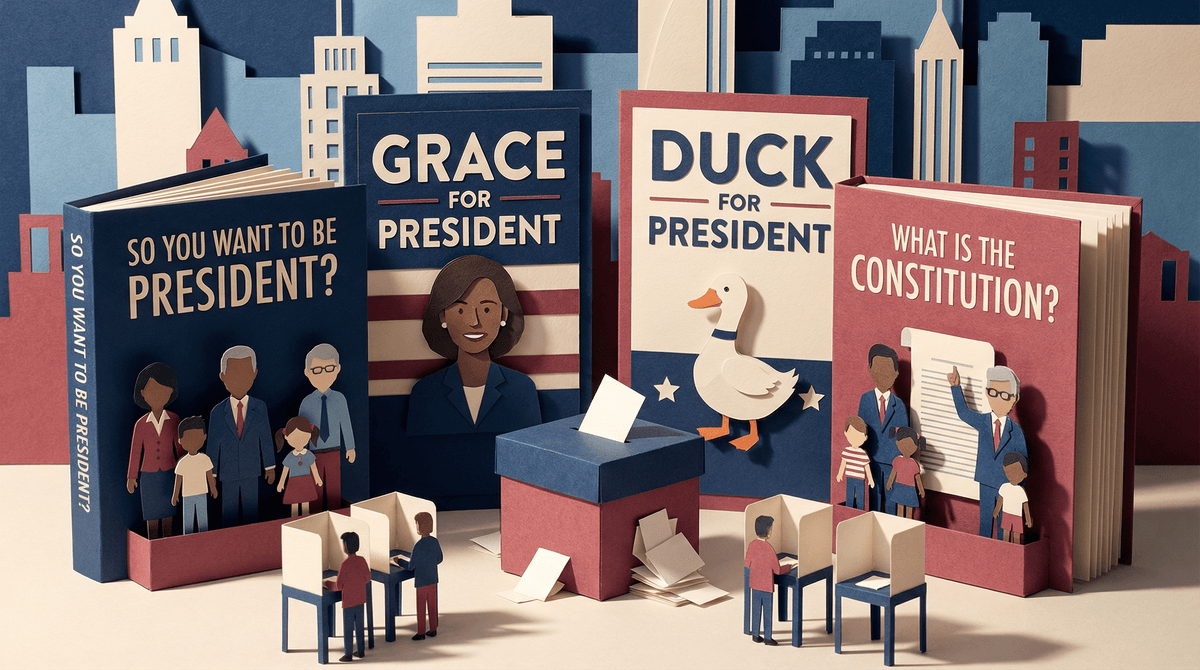
If your kid is trying to make sense of the 250th-anniversary hype we are seeing everywhere right now, this is the manual for the machinery under the hood of the United States. While the celebrations this summer focus on the fireworks and the founding, this book focuses on the plumbing. It is less about the "why" of independence and more about the "how" of actually running a country without a king.
The Who HQ Factor
You likely already recognize the branding. The What Was? series—along with its siblings Who Was? and Where Is?—has become the definitive Wikipedia for the middle-grade set. These books have a very specific utility. They are the books kids grab when they need to know enough to pass a quiz, but they are also the ones they pick up at the airport because the "big head" covers are oddly compelling.
Patricia Brennan Demuth stays true to the brand here. She doesn't try to reinvent the wheel or turn the Constitutional Convention into a high-stakes thriller. Instead, she treats the reader like a peer who is capable of understanding complex power dynamics. It works because it doesn't talk down to the audience.
Conflict Over Chronology
The real value in these pages isn't the list of dates. It is the focus on the friction. The synopsis mentions fifty-five men arguing for months, and that is where the book finds its pulse. It frames the Constitution not as a divine gift, but as a series of messy, difficult compromises between people who had fundamentally different visions for the future.
By focusing on the tensions between Northern and Southern states, or the power struggle between tiny Delaware and massive Virginia, the book gives kids a framework for why American politics still feels so loud today. It introduces James Madison and Alexander Hamilton not just as names on a monument, but as guys who were desperately trying to solve a puzzle before the whole country fell apart.
Building Civic Literacy
If you are using this to help a kid navigate the current cultural moment, it functions as a necessary foundation. You can’t really talk about modern rights or government overreach if you don't know what the supreme law of the land actually says.
If your kid is starting to ask questions about how leaders are chosen or why the news is full of political arguments, pairing this read with our guide on Election and Voting Books: Building Civic Literacy in the Age of Misinformation is a smart way to bridge the gap between 1787 and 2026. This book provides the historical skeleton, while a deeper look at modern civic literacy provides the skin and muscle. It turns a dry school subject into a tool for understanding the world they actually live in.