

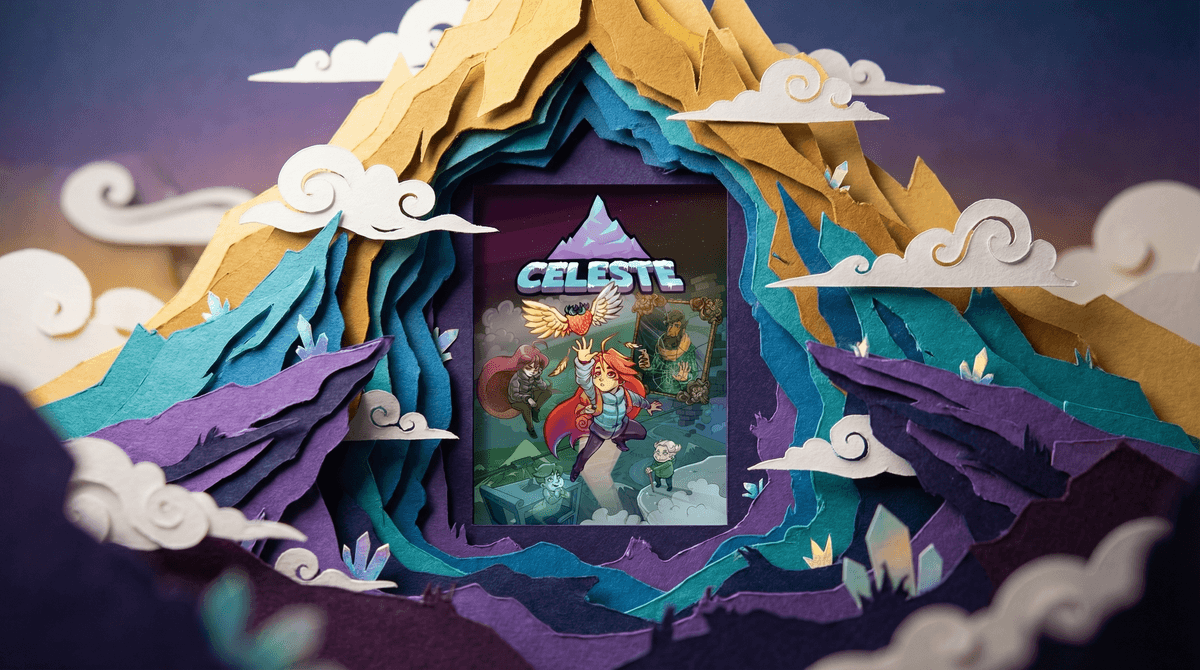
Celeste is a 2018 indie platformer that looks deceptively simple at first glance—pixel art graphics, straightforward jump-and-climb mechanics, a mountain to scale. But this game punches way above its weight class when it comes to emotional depth and mental health representation.
The story follows Madeline, a young woman climbing Celeste Mountain while battling her own anxiety and depression—literally. There's a dark mirror version of herself she has to confront, panic attacks are depicted with surprising accuracy, and the entire journey becomes a metaphor for working through mental health challenges.
It's challenging. Like, really challenging. You'll die hundreds (maybe thousands) of times. But here's the thing: the game treats failure as part of the process, not something to be ashamed of. Every death is instant respawn, no punishment, just try again. Sound familiar? It's basically exposure therapy in game form.
Most games treat mental health like a plot device or a "very special episode" moment. Celeste weaves it into every aspect of the experience—the gameplay, the story, the music, even the assist mode options.
The game doesn't shy away from showing what anxiety and depression actually feel like. Madeline has panic attacks that you experience through the controller. Her "dark side" isn't evil—it's a part of her that's scared and trying to protect her in all the wrong ways. The resolution isn't "defeat the bad thoughts"—it's learning to accept them as part of yourself.
For kids (and honestly, adults) who struggle with anxiety, perfectionism, or depression, seeing a character work through these challenges while accomplishing something genuinely difficult can be incredibly validating. The game literally says: you're going to fail a lot, and that's okay. What matters is that you keep trying.
The assist mode deserves special mention here. You can adjust game speed, add extra dashes, make yourself invincible—whatever you need to experience the story. Some gaming purists had opinions about this, but the developers were clear: this game is about accessibility and meeting players where they are. If you need help, use it. No shame.
Ages 10+ is probably the sweet spot, though it really depends on your kid.
The game is rated E10+ by the ESRB, and there's no violence, no blood, no inappropriate content. The biggest considerations are:
Difficulty level: This game is HARD. Like, Super Meat Boy hard. Kids who get frustrated easily or are perfectionists might struggle emotionally with the constant dying. That said, the assist mode can help, and the game's message about persistence might be exactly what a perfectionist kid needs to hear.
Mental health themes: The game deals explicitly with anxiety, depression, and panic attacks. For a kid who's never encountered these concepts, it might be confusing. For a kid who's experiencing these things, it could be either incredibly helpful or potentially triggering—you know your kid best here.
Reading level: There's a fair amount of dialogue and it's pretty sophisticated emotionally. Younger kids might miss some of the nuance.
Time commitment: Each chapter takes 30-60 minutes, and there are 8 main chapters plus additional content. It's not a quick play.
The mental health representation in Celeste is widely praised by therapists and mental health advocates. The game was created by developers who drew from their own experiences with anxiety and depression, and it shows. This isn't Hollywood's version of mental illness—it's nuanced and realistic.
The panic attack scene in Chapter 2 is particularly well-done and intense. Madeline's breathing becomes labored, the screen closes in, and you have to help her through a breathing exercise. For kids who experience panic attacks, this could be either really validating or uncomfortable. Worth a heads-up conversation.
The game also touches on themes of self-acceptance, identity, and found family. Madeline meets other characters on the mountain who are all dealing with their own stuff—a hotel owner running from her past, a hiker dealing with social anxiety, an Instagram influencer confronting her superficiality.
Content note: There's a brief reference to alcohol use by adult characters, and one character is implied to be trans (confirmed by the developers post-release, handled very subtly in the game itself). Nothing graphic or inappropriate, but worth mentioning.
The soundtrack by Lena Raine is genuinely phenomenal—atmospheric, emotional, and it adapts to your gameplay. Many players say the music alone helped them through tough moments.
Beyond the mental health themes, Celeste is actually teaching some valuable skills:
Persistence and growth mindset: The game literally counts your deaths and treats them as a normal part of learning. You died 847 times? Cool, you also made it to the summit.
Problem-solving: Each screen is a puzzle. You'll try different approaches, fail, adjust, try again. This is literally how learning works.
Fine motor skills and timing: The controls are tight and responsive. Kids will develop better hand-eye coordination and timing.
Optional challenge: The game has collectible strawberries and B-side levels that are even harder. Kids who want to push themselves have that option, but it's not required to experience the story.
This could be a great co-play experience, especially if your kid struggles with frustration. You can take turns on tough sections, strategize together, or just be there for moral support during the emotional moments.
It's also a fantastic conversation starter about mental health. The game gives you a framework to talk about anxiety, negative self-talk, and asking for help when you need it. Learn more about using games as conversation starters .
.
Celeste is one of those rare games that's both mechanically excellent and emotionally profound. It's challenging without being punishing, it treats mental health with respect and nuance, and it has a message that resonates well beyond gaming: you can do hard things, failure is part of growth, and you don't have to face your challenges alone.
Is it for every kid? No. Some kids will bounce off the difficulty, others might not be ready for the emotional themes. But for the right kid—especially one who's dealing with anxiety, perfectionism, or just needs to hear that struggling is okay—this game could be genuinely meaningful.
The assist mode means it's accessible to players of different skill levels, and the mental health representation is some of the best in gaming. It's also a relatively short game (8-12 hours for the main story) without any microtransactions, online components, or ongoing costs.
If you're looking for games that are more than just entertainment—games that might actually help your kid process difficult emotions or develop resilience—Celeste belongs on that very short list.
- Try it yourself first if you're unsure about the difficulty or themes
- Check out other games with positive mental health messages
- Consider playing it together, especially for the first few chapters
- Have a conversation ready about what anxiety and depression are, age-appropriately
- Remember: using assist mode isn't cheating, it's meeting your kid where they are
And hey, if your kid ends up loving it, the developers' next game Celeste 2: Lani's Trek is worth checking out too.