Our reviews and ratings are 100% unbiased. As an Amazon Associate, Screenwise earns from qualifying purchases, so if you buy a book or game through one of our links, we may earn a commission. We don't get any credit if you just Google it instead :)
Screenwise Verdict
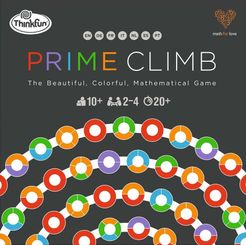
Prime Climb is that rare educational game that doesn't feel educational. The color-coding innovation is legitimately brilliant—it makes abstract mathematical concepts visual and intuitive in a way that textbooks never manage.
Parent reviews are consistently enthusiastic about how it engages both math-loving and math-reluctant kids. The strategic depth means you're not just mindlessly moving pieces—you're actually thinking about number relationships and operations in creative ways.
The 'knock back to start' mechanic adds just enough chaos to keep things exciting without making it feel unfair. Games move quickly enough to maintain engagement, and the replayability is solid.
If you're looking for screen-free math practice that doesn't feel like practice, this is it. It's not going to replace Catan for family game night forever, but it's earned its spot in the rotation.
Age Fit
Best for ages 8-14, though the official 10+ rating is conservative. Younger kids (even 7) who are comfortable with basic addition can play with the color system as training wheels. Teens might enjoy it as a quick strategic game, but it won't hold interest past middle school unless they're genuinely into math.
WISE Breakdown
Wholesome
88
Prime Climb promotes healthy competition with a 'knock back to start' mechanic that keeps things exciting without being mean-spirited. The game encourages strategic thinking and collaboration when discussing moves. Family-friendly gameplay that brings people together around math without stress or toxicity. The cooperative elements of discussing strategies and the balanced pacing (20-45 min) prevent frustration.
Imaginative
92
The color-coding system for prime numbers is genuinely brilliant—each prime under 10 gets its own color, and composite numbers show as color mixtures of their factors. This visual innovation lets kids discover mathematical relationships through pattern recognition rather than rote memorization. The open-ended strategy (choosing which operations to apply to which pawns) invites creative problem-solving. Players can approach the same roll in multiple ways, fostering mathematical flexibility and experimentation.
Safe
95
Board games don't get much safer than this. No mature themes, no problematic content, no monetization beyond the initial purchase. The 'send opponent back to start' mechanic creates just enough competitive tension to be engaging without fostering bad feelings—it's part of the strategy, not personal. The game scales well for different skill levels, so younger players won't feel humiliated. Zero concerns about privacy, ads, or manipulation.
Enriching
94
This is stealth learning at its finest. Kids are practicing all four operations, learning about prime numbers, factors, and multiples without it feeling like a worksheet. The color-coding system provides visual scaffolding that helps kids who haven't learned multiplication yet still play and learn. Parent reviews consistently note how it engages both math-loving and math-tolerant kids. The strategic depth means it's genuinely challenging for adults too. Won 2015 Mensa Recommended for good reason—it builds genuine mathematical intuition and number sense.
Parent Info
✓
Why It Might Be Great
The color system is genius—primes get their own colors, composites show as mixtures of their factors, making multiplication visible and intuitive
Kids who 'hate math' suddenly get engaged because it feels like strategy, not drill work
Actually fun for adults too—the strategic depth is real, not just 'fun for a kids' game'
Builds genuine number sense and mental math skills without the worksheet feel
Quick enough (20-45 min) to finish without losing attention, replayable enough to want another round
⚠
What to Watch For
The 'knock back to start' mechanic might frustrate very young or sensitive kids initially, though most adapt quickly
Requires comfort with basic arithmetic operations—if your kid is still struggling with single-digit addition, this might be a stretch (though the color system can help bridge that gap)
The BGG rating of 6.2 is lower than you'd expect for such a well-designed game, likely because hardcore gamers want more complexity—don't let that number fool you, parent reviews are glowing
Conversation Starters
"What patterns are you noticing in the colors? Why do you think 6 is orange and green?"
"If you roll a 7 and you're on 15, what operation gets you closest to 101?"
"What's your strategy—are you going for speed or trying to land on prime circles for cards?"
"Can you figure out why some numbers have more color sections than others?"