

Look, if you told seven-year-old me that one day kids would be begging to play math games on screens, I would've laughed while erasing my wrong long division for the hundredth time. But here we are in 2026, and math games for 2nd graders are actually... good?
We're talking about digital games specifically designed for kids around ages 7-8 who are working on skills like:
- Two-digit addition and subtraction (with and without regrouping, because yes, we're apparently calling it "regrouping" now instead of "borrowing")
- Early multiplication concepts (skip counting, equal groups)
- Place value (understanding tens and ones)
- Word problems (the eternal nemesis)
- Measurement and data (telling time, reading graphs)
- Geometry basics (shapes, patterns)
The best math games disguise practice as play. Your kid thinks they're feeding a monster or building a city, but they're actually doing 50 addition problems. It's sneaky. It's effective. And honestly? It beats flash cards.
Second grade is when math anxiety can start creeping in. Some kids are still counting on their fingers while others are mentally calculating three-digit numbers, and that gap feels huge when you're seven. Digital math games level the playing field because:
They're judgment-free. No one's watching you get it wrong except a cartoon character who just says "try again!" in a cheerful voice. Compare that to the classroom where everyone's racing to finish their worksheet first.
Instant feedback is everything. Kids this age need to know right now if they got it right, not tomorrow when the teacher grades it. Games provide that dopamine hit of success immediately, which keeps them engaged.
They adapt. Good math games adjust difficulty based on performance. Your kid who's struggling with subtraction gets more practice at their level, while your math whiz gets appropriately challenged without being bored.
They make math feel like a choice. When kids voluntarily pick a math game over Roblox (even for five minutes), that's building a positive relationship with math. That matters more than you think.
Not all math games are created equal. Some are genuinely well-designed learning tools. Others are basically digital worksheets with a thin coat of "fun" paint and way too many ads.
The standouts:
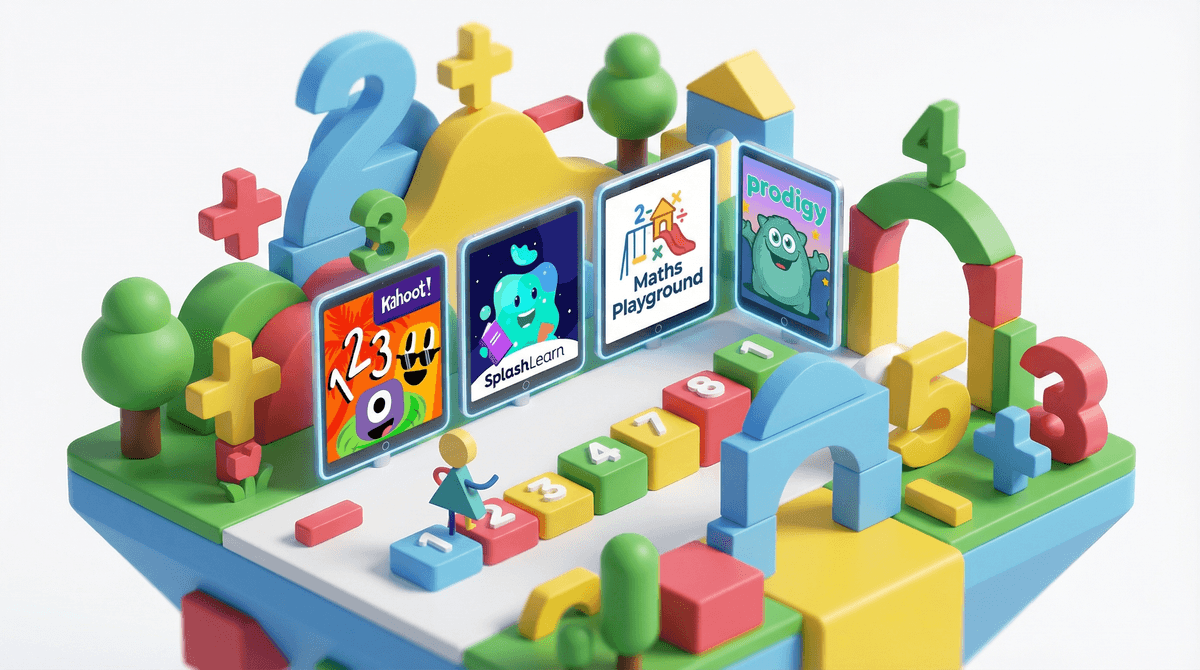
Prodigy Math is the one every second grader seems to know about. It's a fantasy RPG where kids battle monsters by solving math problems. Yes, there's a premium membership that parents find annoying, but the free version is robust. Teachers often assign it, which means your kid might actually do homework without a fight.
SplashLearn has a clean interface and solid curriculum alignment. It's less game-like than Prodigy (more structured practice), but some kids prefer that. The parent dashboard actually shows you what they're working on, which is helpful.
Math Playground offers tons of free games that target specific skills. Want to work on word problems? There's a game for that. Need multiplication practice? Different game. It's more of a game library than a single experience.
DragonBox Numbers takes a completely different approach, teaching number sense through manipulation of cute creatures called Nooms. It's brilliant for kids who learn conceptually rather than through rote practice.
The ones to skip:
Most free apps with constant ad interruptions. If your kid has to watch a 30-second ad between every problem, they're spending more time being marketed to than learning math. Hard pass.
Any game that requires payment to unlock basic 2nd grade content. Some apps gate fundamental skills behind paywalls, which is just... no.
Games with zero parent visibility. If you can't see what your kid is actually practicing or how they're progressing, what's the point?
Screen time guilt is real, but math games are actual learning. This isn't the same as watching YouTube shorts for an hour. If your kid spends 20 minutes on a quality math game, that's 20 minutes of active learning. It counts as homework time, not just "screen time."
They're a supplement, not a replacement. Digital math games are fantastic for practice and reinforcement, but they shouldn't be your kid's only exposure to math concepts. They still need to learn with manipulatives (those little blocks and counters), solve problems on paper, and talk through their thinking with actual humans.
The data can be useful or overwhelming. Many apps provide detailed progress reports. Some parents love this. Others find it anxiety-inducing to see their kid is "below grade level" in subtraction. Remember: these apps don't know your kid had the flu for a week or that they're still adjusting to a new school. The data is a tool, not a judgment.
Watch for the comparison trap. Some games show leaderboards or let kids see where friends are in the game. For competitive kids, this is motivating. For others, it's discouraging. Know your kid.
The math is often more rigorous than you remember. Second grade math has gotten more conceptual. It's not just "what's 15 + 8?" but "show three different ways to solve 15 + 8 and explain your thinking." Good math games reflect this shift. Don't panic if the methods look different from what you learned.
For 2nd graders specifically (ages 7-8):
20-30 minutes is the sweet spot. More than that and you're probably seeing diminishing returns. Their brains are tired. Their eyes need a break.
Let them choose their game (within your approved options). Autonomy matters at this age. If you've vetted three good math games, let them pick which one to use today.
Play together sometimes. Not hovering-over-their-shoulder playing, but genuine "let me try a level" engagement. You'll learn what they're working on, and they'll feel proud showing you how the game works.
Use it strategically. Car rides, waiting rooms, that weird 20 minutes before dinner when everyone's cranky—these are perfect times for a quick math game session.
Don't use it as punishment. "You got a bad grade in math so now you have to do Prodigy for an hour" creates negative associations. These games work best when they feel like a privilege, not a consequence.
Start with one game. Don't download seven math apps and overwhelm everyone. Pick one that matches your kid's learning style and stick with it for a few weeks.
Set it up right. Create the account yourself. Turn off notifications. Disable in-app purchases if possible. Check privacy settings. Five minutes of setup saves you headaches later.
Check in weekly, not daily. Look at progress reports once a week. Daily checking feels like micromanaging and stresses everyone out.
Connect it to real life. "Hey, you've been practicing two-digit addition in Prodigy. Want to help me figure out if we have enough money for ice cream?" Real-world application cements the learning.
Know when to take a break. If your kid starts dreading the math game or it's causing fights, step back. The goal is building math confidence, not creating math trauma.
Math games for 2nd graders can genuinely help build number sense, fluency, and confidence—but only if they're actually good games and used intentionally. They're not going to magically turn your kid into a math genius, but they can make daily practice feel less like pulling teeth.
The best math game is the one your kid will actually play without you nagging them. If that's Prodigy Math, great. If it's DragonBox Numbers, perfect. If it's a mix of Math Playground games depending on their mood, even better.
And if your kid still prefers paper worksheets? That's fine too. Not every kid needs a screen to learn math. The goal isn't to make them love math games—it's to help them feel capable and confident with numbers, however that happens.
Try before you buy. Most quality math apps have free trials. Let your kid test drive a few before committing to a subscription.
Ask their teacher. Many schools have site licenses for specific math programs. You might already have free access to something great.
Check what's already on your devices. If you have a tablet with educational apps, you might already have decent math games buried in there.
Consider offline alternatives too. Board games like Prime Climb and Sum Swamp build the same skills without screens. Sometimes that's the better choice.
Want to explore more options? Check out our guide to educational games for elementary schoolers or learn about screen time guidelines for 7-8 year olds.