Life in Reterra – WISE Score & Parent Review | Screenwise
Life in Reterra
Board Game2024City Building
78%
WISE Score
6.7
Board Game Geek
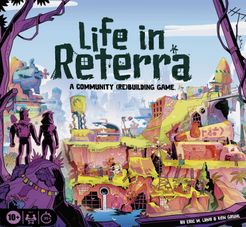
Rebuild a cheerful post-apocalypse one tile at a time in this quick, colorful gateway strategy game that's easier than Catan and prettier than Kingdomino.
Life in Reterra
Board Game
10+, 2024, City Building
78%
WISE Score
6.7
Board Game Geek
Rebuild a cheerful post-apocalypse one tile at a time in this quick, colorful gateway strategy game that's easier than Catan and prettier than Kingdomino.
Our reviews and ratings are 100% unbiased. As an Amazon Associate, Screenwise earns from qualifying purchases, so if you buy a book or game through one of our links, we may earn a commission. We don't get any credit if you just Google it instead :)
Screenwise Verdict
Life in Reterra is what happens when Hasbro decides to make a 'real' hobby game—and honestly, they nailed it. It's a perfectly pleasant tile-layer that teaches spatial thinking and light strategy without the 90-minute teach or the existential dread of heavier euros.
The post-apocalyptic theme could've gone dark, but instead it's weirdly cheerful—think Studio Ghibli's overgrown ruins rather than The Road. Kids get to build their own little communities, and the modular scoring cards mean you can dial the complexity up or down depending on who's at the table.
Is it going to blow the doors off your game group? No. But for $30 and 35 minutes, it's a solid family gateway that won't gather dust after three plays. If your kids loved Kingdomino but are ready for something with a bit more player interaction and strategic choice, this is your move.
Age Fit
Best for ages 10–16, though younger kids (8+) who are comfortable with light strategy could handle it with a little help. Adults will enjoy it as a quick, low-stress filler, but it won't replace heavier favorites for serious hobby gamers.
WISE Breakdown
Wholesome
82
Post-apocalyptic theme is handled with a hopeful, constructive spin—players rebuild communities rather than dwell on destruction. The bright, whimsical artwork keeps the mood light despite the setting. Gameplay encourages spatial planning and light strategic thinking without excessive conflict, though blocking opponents is part of the fun. No inappropriate content in artwork or mechanics.
Imaginative
75
The tile-laying mechanic invites spatial creativity as players design their own communities from scratch, choosing terrain types and building placements. Three themed building sets plus custom options add variety, and the modular scoring cards allow players to explore different strategies. That said, it's not wildly original—it's essentially a family-friendly Kingdomino variant with a fresh coat of paint. Still, the post-apocalyptic rebuilding theme is engaging enough to spark conversations about resourcefulness and adaptation.
Safe
95
Board games are inherently low-risk, and Life in Reterra has no concerning elements. The post-apocalyptic setting might unsettle very young or sensitive kids, but the execution is colorful and constructive rather than dark or scary. Player interaction includes blocking and 'junking' opponent relics, which is standard competitive fare and teaches healthy game dynamics. No gambling mechanics, mature themes in artwork, or toxic social patterns. High-quality components reduce frustration from wear and tear.
Enriching
70
Teaches spatial reasoning, forward planning, and light resource management in a 35-minute package. The adjustable complexity (basic scoring vs. advanced scoring cards) means it can grow with kids and keep them engaged longer. Encourages strategic thinking about terrain placement and building synergies. However, it's not a deep thinker—BGG weight of 1.79 puts it squarely in 'light strategy' territory. It's more about family bonding and introducing tile-laying mechanics than delivering profound cognitive challenge or thematic depth.
Parent Info
✓
Why It Might Be Great
Rules fit on one page and games wrap in 30–40 minutes—perfect for family game night without the commitment of a 2-hour epic
Bright, high-quality components and whimsical art make the post-apocalypse feel more like a hopeful renovation project than a dystopian nightmare
Adjustable complexity lets you start simple and layer in scoring cards or building powers as kids get comfortable with the mechanics
Teaches spatial reasoning and forward planning without the AP-inducing decision paralysis of heavier strategy games
At $30, it's an affordable entry point into tile-laying games, especially if your family loved Kingdomino but wants something with a bit more meat
⚠
What to Watch For
The post-apocalyptic setting might need a quick heads-up for younger or more sensitive kids—though the execution is upbeat, the premise is 'the world as we know it is an overgrown memory'
Player interaction includes blocking opponents' tiles and 'junking' their relics, which is standard competitive fare but might need a reminder that it's part of the game, not personal beef
Light strategy means experienced gamers might find it a bit thin after a few plays—it's a gateway game, not a forever favorite for hobby enthusiasts
Conversation Starters
"If you had to rebuild a community from scratch, what's the first thing you'd build? A place to grow food? Somewhere to live? Or something fun?"
"The game has you finding old 'relics' from the past—what objects from our current world do you think would be valuable in a future like this?"
"When you block another player's move, how does that feel? Is it more fun to compete directly or just focus on your own strategy?"