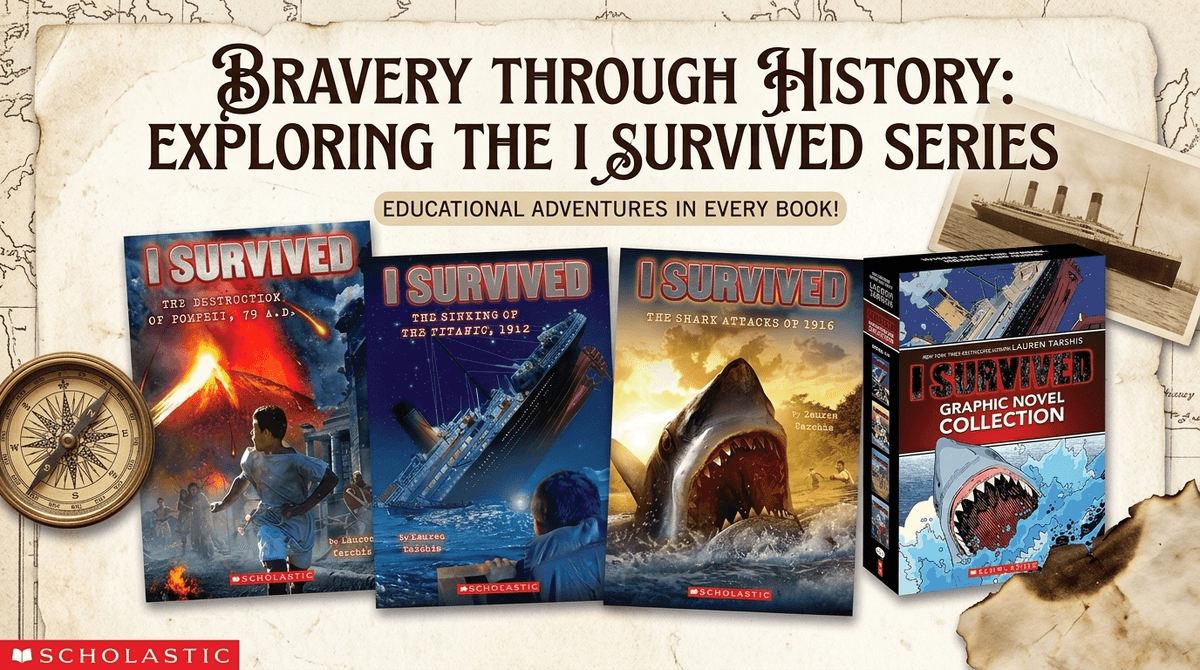
I Survived Graphic Novels

I Survived Graphic Novels

book

2021, Children's Books, Literature & Fiction

WISE
79%

WISE Score

4.8

Amazon

Historical disasters meet graphic novel action—Titanic, sharks, Nazis, and 9/11 through the eyes of kids who survived.

Amazon4.8
Common Sense Media

Where to Read

Our reviews and ratings are 100% unbiased, but as an Amazon Associate, Screenwise earns an affiliate fee if you buy a book or game by clicking one of our links. We don't get any credit if you just Google it instead :)

Screenwise Verdict

This is how you get kids to actually care about history. The I Survived series has been a phenomenon for years, and these graphic novel adaptations nail the format—fast-paced, visually compelling, and genuinely educational.

Yes, they're intense. A kid watches the Titanic sink, another faces down a shark, another hides from Nazi soldiers, another runs from the Twin Towers. But Tarshis and her adapters handle these events with appropriate sensitivity for the age group. There's peril and fear, but not gratuitous violence or trauma porn.

The real genius is sneaking vegetables into dessert—kids think they're reading action comics, but they're actually learning about the Holocaust, understanding why the Titanic disaster changed maritime law, and grappling with 9/11 in an age-appropriate way. The nonfiction sections at the back seal the deal.

If your kid is 7+ and ready for some real-world intensity, these are fantastic. If they're sensitive or young, wait a year or two. But for most middle-grade readers, especially those who claim to hate reading? This is gold.
Age Fit

Perfect for ages 7-13, especially reluctant readers who need action and visuals to stay engaged. The 7+ floor assumes kids can grasp historical context and handle disaster scenarios without nightmares. Teens might still enjoy these but will likely age out around middle school.

WISE Breakdown
Wholesome
78

These graphic novels tackle heavy historical disasters (Titanic, Holocaust, 9/11, shark attacks) with age-appropriate sensitivity. The stories model resilience, courage, and family bonds without gratuitous violence. The tone balances intensity with hope—kids face real danger but the narrative doesn't dwell on gore or trauma. Parent reviews confirm 7+ kids handle the content well when they understand historical context.

Imaginative
72

The graphic novel format brings historical events to vivid life with dynamic illustrations and engaging panel layouts. While the stories follow real historical frameworks (limiting pure imagination), they put young protagonists in compelling 'what would I do?' scenarios. The books spark curiosity about history and survival, though they're more educational adventure than open-ended creative exploration.

Safe
75

Each book deals with genuinely frightening historical disasters—sinking ships, Nazi invasion, terrorist attacks, shark attacks. The graphic format makes these more visceral than text-only versions. However, the violence is not gratuitous, there's no gore, and the stories are specifically adapted for middle-grade readers. Parent consensus is 7+ with proper context about history and geography. Younger or more sensitive kids might find the disaster scenarios too intense.

Enriching
88

Exceptional educational value. Each book includes nonfiction sections with historical facts and photos about the real events. Kids learn about pivotal moments in history (Holocaust, 9/11, Titanic, 1916 shark attacks) through emotionally engaging narratives that build empathy and historical understanding. The graphic novel format is particularly effective for reluctant readers, making history accessible and compelling. Combines entertainment with genuine learning.

Parent Info

Why It Might Be Great

  • Makes history genuinely exciting and accessible, especially for reluctant readers who'd never touch a textbook
  • Each book includes real historical facts and photos, so kids learn while being thoroughly entertained
  • Stories model courage and resilience without sugarcoating history—kids face real danger and make brave choices
  • The graphic novel format is perfectly executed with dynamic illustrations that enhance rather than distract from the story
  • Covers genuinely important historical events (Holocaust, 9/11, Titanic) that kids should know about

What to Watch For

  • These are disaster books—ships sink, sharks attack, Nazis hunt Jewish families, towers fall. The content is age-appropriate but genuinely scary
  • Best for kids who can understand these events happened in the past and not where they live (younger than 7 may struggle with this concept)
  • The Holocaust and 9/11 books deal with heavy themes of persecution and terrorism that will require parent conversations
  • Sensitive kids might find the peril too intense, even though there's no gore or graphic violence

Conversation Starters

  • "What do you think you would have done if you were on the Titanic when it started sinking?"
  • "Why do you think Max and Zena's family had to hide from the Nazis? What does it mean to be brave when you're scared?"
  • "How do you think life changed for people after 9/11? What do you remember or know about that day?"
  • "These stories are all about real events—which one surprised you the most to learn actually happened?"

Deep Dive

The "Disaster Phase" of Reading

If your kid has outgrown the low-stakes magic of Magic Tree House but isn't quite ready for a 400-page historical epic, this is the bridge. Kids often hit a certain age where they become morbidly fascinated by how things break. It is the disaster phase. They want to know exactly how the "unsinkable" ship sank or why a shark would swim up a New Jersey creek. If you are trying to turn digital distractions into a secret bridge for literacy, these graphic novels are the most effective tool in the kit. They offer the fast pacing of a video but require the cognitive heavy lifting of a book.

More Than Just a Comic

These are not just "lite" versions of the prose books. Georgia Ball’s adaptations keep the stakes high. The art from Haus Studio, Álvaro Sarraseca, and Corey Egbert captures the chaos effectively. When the water rushes into the Titanic or the smoke fills the air in Manhattan, the visuals carry the emotional weight. This is a massive win for kids who struggle with the "wall of text" in traditional novels. If you have been searching for books that keep 8-year-olds reading for joy, this set hits that middle-grade sweet spot perfectly.

Handling the Heavy Stuff

There is a distinct tonal shift between the books in this set. The Shark Attacks of 1916 feels like a classic summer adventure gone wrong. It is scary, but it is "nature" scary. The Nazi Invasion, 1944 and The Attacks of September 11, 2001 are different. They deal with human-made horrors. Seeing a Nazi soldier or the Twin Towers on a page is more immediate than reading a description of them. You might find yourself having much deeper conversations about the broader I Survived phenomenon and the actual history behind these events than you expected from a comic book.

The nonfiction section at the back of each book is the secret weapon. Most kids who claim to hate history will sit there and pore over the real photos of the Titanic’s wreckage or the maps of the New Jersey coastline. It grounds the high-octane art in reality. If your kid finishes these and wants more, they have basically been tricked into becoming a history buff. It is a great way to transition them into more complex historical narratives later on.

Ask Anything

Get a personalized guide on any topic