

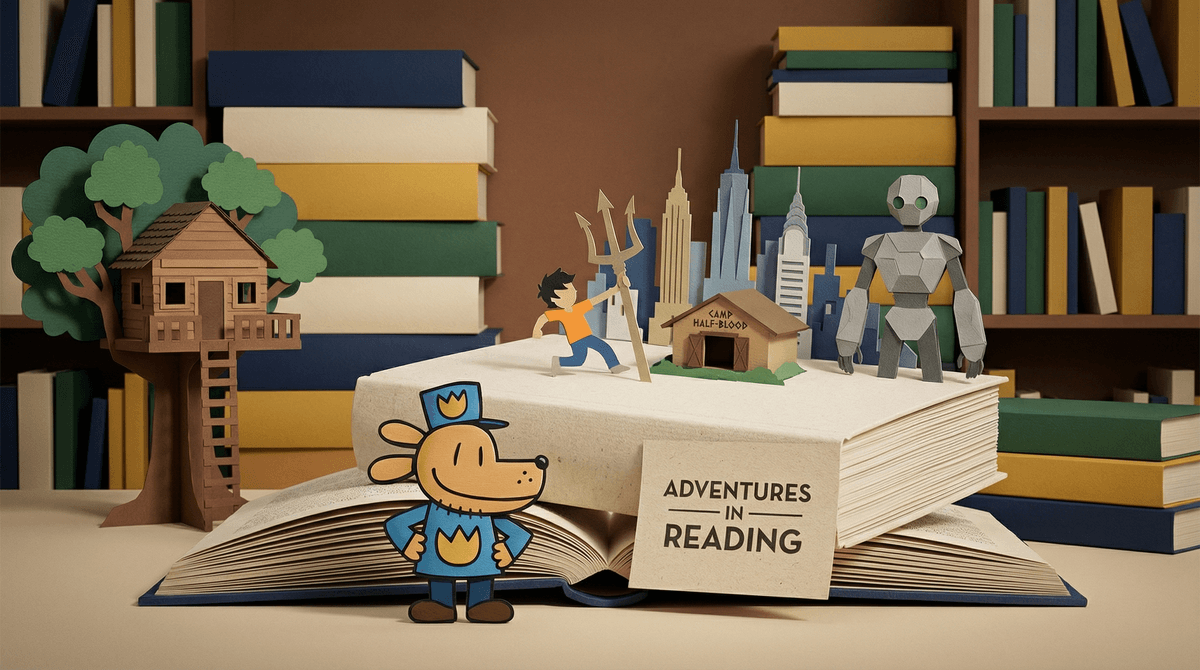
The Best Books for 3rd Graders in 2024-2025
TL;DR: Third grade is when kids transition from learning to read to reading to learn — and if we can keep them excited about books during this shift, we're golden. The sweet spot? Series that hook them with characters they love, standalone adventures that build confidence, and a mix of fantasy, humor, and real-world stories. Here are the books actually flying off shelves and getting passed around classrooms right now.
Quick picks by reading level:
- Just-right chapter books: Mercy Watson, Junie B. Jones, Ivy and Bean
- Building stamina: Magic Tree House, Diary of a Wimpy Kid, Dog Man
- Strong readers ready for more: Percy Jackson, The Wild Robot, Wonder
Third graders are all over the map. Some are still sounding out words in early chapter books, others are devouring 300-page novels. The average 8-year-old is reading at around a 2.5-3.5 grade level, but that range is massive in any given classroom.
The best books for this age:
- Hook fast — first chapter needs to grab them
- Short chapters — helps them feel accomplished and find stopping points
- Relatable characters — dealing with friendship drama, sibling stuff, school situations
- Series potential — nothing motivates a reluctant reader like knowing there are 12 more books waiting
- Illustrations matter — graphic novels and illustrated chapter books aren't "lesser," they're legitimately engaging formats
Let's address this right away: graphic novels are real reading. The comprehension skills required to follow visual narratives, interpret facial expressions, and track multiple storylines across panels? That's sophisticated literacy work.
The Captain Underpants creator struck gold again. These are genuinely funny, with flip-o-rama pages and meta-humor that works on multiple levels. Yes, there's potty humor. Yes, your kid will read 200 pages in an hour. That's a win.
Redemption arcs for villains, fast-paced action, and enough visual jokes that kids catch something new on re-reads. The movie boosted popularity, but the books have staying power.
Full-color sci-fi adventure with heart. Great for kids who love action but also want emotional depth. The friendship dynamics are genuinely well-done.
These are the books that get passed down from older siblings and dominate classroom book exchanges.
Still going strong after 30+ years. Jack and Annie travel through time, each book teaches history or science concepts without feeling educational. Perfect for kids building reading stamina — short (under 100 pages), predictable structure, satisfying endings.
The Magic Tree House Fact Trackers are great for kids who want to learn more after the fiction.
Controversial in some circles because Junie B. uses incorrect grammar and can be sassy. But she's hilarious, deals with real kid problems (losing teeth, making friends, dealing with annoying brothers), and the voice is so distinctive that kids get hooked. If you're worried about grammar, just know that most kids understand she's a character, not a role model.
Two very different girls become best friends. Short chapters, illustrations throughout, and the friendship feels authentic — they get in trouble together, have misunderstandings, work things out. Great for kids navigating their own friendship dynamics.
A pig who loves toast. That's it, that's the pitch. But DiCamillo is a master, and these early chapter books are perfect for kids transitioning from picture books. Funny, warm, with illustrations by Chris Van Dusen that add so much personality.
Something about the diary/journal format just works for this age. Maybe it's the authenticity, maybe it's the shorter text blocks, maybe it's feeling like they're reading something private.
The one that started it all. Greg Heffley is not always likable — he's often selfish and makes bad choices — but that's kind of the point. Kids recognize the social dynamics, the sibling rivalry, the desperate attempts to be cool. The stick-figure illustrations break up text perfectly for reluctant readers.
The female-focused answer to Wimpy Kid. Nikki Maxwell navigates middle school drama, mean girls, and crushes. Very popular with girls who want contemporary realistic fiction with humor.
For kids ready to dive into longer books with more complex plots.
Greek mythology meets modern-day New York. Percy is dyslexic and has ADHD — which turn out to be demigod traits. The representation matters, the humor lands, and once kids start this series, they'll tear through all five books.
Fair warning: these are 300+ pages and deal with some intense themes (absent parents, monsters trying to kill you, the fate of the world). Best for strong 3rd grade readers or as a read-aloud.
A robot washes up on an island and has to learn to survive. It's about adaptation, found family, and what it means to belong. Absolutely beautiful, with illustrations throughout. Made kids cry (in a good way). The sequel is just as strong.
Dragon tribes, prophecies, war. This series is massive (15+ books) and has a devoted fanbase. Each book follows a different dragon character, so kids get attached to the whole cast. More intense than some parents expect — there's violence, death, and complex political intrigue. But for kids who want epic fantasy, this delivers.
Books that deal with real kid stuff — friendship, family, identity, challenges.
Auggie has a facial difference and is starting school for the first time. This book sparked a whole "choose kind" movement in elementary schools. It's empathetic without being preachy, and the multiple perspectives help kids understand how different people experience the same events.
Some kids find it sad (it deals with bullying and exclusion), so know your kid's sensitivity level. But it's also ultimately hopeful and has launched great conversations about kindness and acceptance.
These are older (first published in the 1950s-80s), but Ramona's personality is timeless. She's impulsive, imaginative, and gets into trouble without meaning to. The family dynamics feel real — parents who are stressed about money, sibling rivalry that's annoying but loving.
Some cultural references are dated (no cell phones, different school culture), but many kids don't even notice.
Sometimes kids just need to laugh.
Australian import that's taken off in the U.S. Two friends live in an increasingly elaborate treehouse with ridiculous rooms (marshmallow machine! shark tank! time machine!). The illustrations are dense and hilarious, the plots are absurd, and the series keeps growing — they're up to 169 stories now.
Two pranksters meet and become rivals, then partners. The pranks are creative and mostly harmless, and the friendship that develops is genuinely sweet. Good for kids who love mischief but whose parents want them to also learn about consequences.
Biographies of historical figures, celebrities, and cultural icons. Short (100-ish pages), illustrated, and written in an engaging style. Kids can pick topics they're already interested in (Who Was Walt Disney? Who Was Frida Kahlo?) and actually learn something.
Historical disasters told through the eyes of a kid who lived through them. The Titanic, Pearl Harbor, Hurricane Katrina, 9/11. These are technically historical fiction, but kids learn real history while following an adventure story. The I Survived Graphic Novels are also excellent.
You don't need to buy every book on this list. Here's what actually works:
Library cards are magic — Let kids check out 10 books at a time, return the ones they don't like, and discover what actually holds their attention. Most libraries now have apps where kids can browse and request books themselves.
Own the series starters — If your kid loves Magic Tree House or Dog Man, having books 1-3 at home means they can re-read favorites and always have something familiar when they're between library books.
Graphic novels aren't cheating — If your kid reads 5 graphic novels in the time it takes to read one chapter book, they're still reading 5 stories, following 5 plots, and staying engaged with books. That's the goal.
Let them quit books — The "you have to finish what you started" rule kills reading joy. If they're not into it after 20 pages, return it and try something else. There are too many good books out there to force through bad fits.
Mix high and low — Some books on their shelf can be "easy" (below their reading level), some can be challenging, most should be just right. Fluency comes from reading lots of easy stuff, growth comes from occasional challenges.
You'll see Lexile scores, AR levels, and grade equivalencies on books. These can be useful for teachers, but they're not gospel.
Diary of a Wimpy Kid has a 5th grade Lexile level but is marketed to 3rd-7th graders because the content and humor hit that age range. Percy Jackson has vocabulary and themes that work for middle schoolers, but strong 3rd grade readers can handle it.
If your kid is engaged and understanding what they're reading, the level doesn't matter. If they're frustrated or bored, adjust.
The best book for your 3rd grader is the one they'll actually read. That might be Dog Man for the 47th time, or it might be Wings of Fire at 2am with a flashlight under the covers.
Third grade is when reading can either become a habit or a chore. If we can keep it feeling like entertainment rather than work, we're setting them up to be readers for life.
And honestly? In a world of YouTube shorts and TikTok and Roblox, getting an 8-year-old to voluntarily sit with a book for 30 minutes is a genuine win. Whatever gets them there — graphic novels, series about flatulent pigs, or Greek gods fighting monsters — is worth celebrating.
Next steps: Hit your library this weekend and let your kid pick 3 books from different sections. See what sticks. And if you want more personalized recommendations based on what your kid already loves, Get book recommendations for your kid — it's weirdly good at finding the next right book.