Harry Potter Series

Harry Potter Series

book

2015, Children's Books, Growing Up & Facts of Life

WISE
91%

WISE Score

4.9

Amazon

The book series that defined a generation—magical, imaginative, and progressively darker as Harry (and your kid) grows up.

Amazon4.9
Common Sense Media

Where to Read

Our reviews and ratings are 100% unbiased, but as an Amazon Associate, Screenwise earns an affiliate fee if you buy a book or game by clicking one of our links. We don't get any credit if you just Google it instead :)

Screenwise Verdict

Look, there's a reason this is the best-selling book series in history. Harry Potter is genuinely great—imaginative, engaging, and meaningful. The worldbuilding is phenomenal, the characters are beloved, and it's gotten more kids excited about reading than perhaps any other series.

The key is pacing it right. Books 1-3 are perfect for 8-10 year olds: magical, adventurous, with age-appropriate peril. But Book 4 onward? Different beast. Real deaths, torture, war, trauma. Don't rush it. Let your kid grow with Harry.

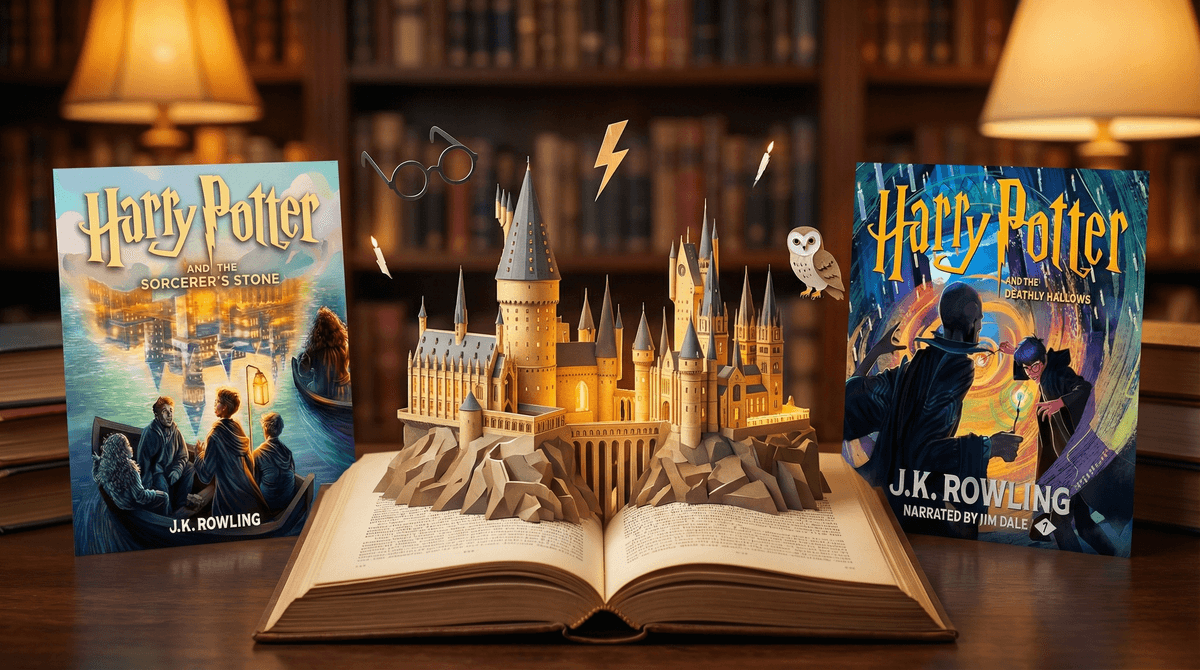
The 2015 illustrated edition is gorgeous and makes Book 1 even more accessible for visual learners. The 4.9 Amazon rating isn't hype—these books deliver. Just be the gatekeeper for the later books until your kid is ready for the darkness. This is a must-read series, but with intentional pacing.
Age Fit

Book 1 works well for confident readers aged 8-9 or as a read-aloud for younger kids (7+). The series is best experienced by letting kids grow with it—spacing out the later, darker books until they're 11-12+. The illustrated edition is particularly great for 8-10 year olds who benefit from visual support. Adults still reread and love these books, so the upper age is unlimited.

WISE Breakdown
Wholesome
78

The series models strong friendships, loyalty, and courage, with Harry, Ron, and Hermione forming a core trio that demonstrates cooperation and mutual support. However, the books progressively deal with darker themes including death, loss, and abuse (Harry's treatment by the Dursleys). The emotional tone matures significantly across the series, with later books handling grief, betrayal, and moral complexity. The first books are lighter and more age-appropriate, but the series as a whole requires emotional maturity.

Imaginative
98

This is one of the most imaginative children's book series ever written. Rowling created an entire magical world with its own rules, history, sports (Quidditch), creatures, spells, and social structures. The concept of a hidden magical society parallel to our own, accessible through Platform 9¾ and Diagon Alley, sparked countless hours of imaginative play for a generation. The series invites readers to wonder 'what if' and has inspired more fan fiction, creative writing, and imaginative engagement than almost any other children's series.

Safe
72

The first two books (especially Book 1) are quite safe for middle-grade readers with mild peril and fantasy violence. However, the series escalates significantly: Book 3 introduces Dementors (soul-sucking creatures that can be genuinely frightening), Book 4 features a graphic murder scene, and Books 5-7 include torture, war, character deaths, and increasingly dark themes. The series contains child abuse (Dursleys' treatment of Harry), some scary creatures and imagery, and themes of prejudice and genocide (pure-blood ideology). It's not unexpectedly violent for readers familiar with the series arc, but parents should be aware that what starts as a whimsical school story becomes significantly darker.

Enriching
92

The series offers substantial themes about love, sacrifice, choice, prejudice, and the nature of good and evil. It explores complex moral questions—Dumbledore's manipulations, Snape's redemption, Harry's choice to sacrifice himself. The books encourage critical thinking about authority, justice, and doing what's right versus what's easy. They've gotten millions of reluctant readers engaged with books and sparked discussions about ethics, friendship, and standing up to injustice. The vocabulary and reading complexity increase appropriately across the series, building literacy skills. The cultural literacy aspect alone—understanding countless references in modern media—adds value.

Parent Info

Why It Might Be Great

  • This is THE gateway book series that has transformed millions of reluctant readers into book lovers—the series is genuinely page-turning and hard to put down
  • Creates an incredibly rich, detailed magical world that sparks endless imaginative play, creative writing, and 'what house would I be in?' conversations
  • Models powerful themes of friendship, loyalty, standing up to bullies, and choosing what's right over what's easy
  • The 2015 Jim Kay illustrated edition is absolutely stunning with over 100 full-color illustrations—perfect for visual learners or as a special edition for dedicated fans
  • Grows with your reader: the books increase in complexity, length, and emotional depth, making them appropriate for different ages at different stages

What to Watch For

  • Don't hand an 8-year-old the entire series—Books 1-3 are fine for 8-9+, but Books 4-7 deal with murder, torture, war, and character deaths better suited for 12+
  • The Dursleys' emotional and physical abuse of Harry can be upsetting, though it's clearly framed as wrong
  • Dementors (introduced in Book 3) are genuinely frightening creatures that represent depression and despair—some kids find them very scary
  • Later books are LONG (Book 5 is 870 pages)—this is a commitment, and some kids may lose steam
  • Be ready for conversations about death, prejudice (pure-blood ideology is basically magical racism), and complex moral questions

Conversation Starters

  • "Which Hogwarts house do you think you'd be sorted into, and why? What about me?"
  • "Harry had to deal with the Dursleys being really mean to him. Have you ever felt left out or treated unfairly? What did you do?"
  • "Dumbledore says 'It is our choices that show what we truly are, far more than our abilities.' What do you think that means?"
  • "The pure-bloods think they're better than Muggle-borns. Does that remind you of anything in the real world?"
  • "If you could learn one spell from the books, which would it be and what would you use it for?"

Ask Anything

Get a personalized guide on any topic