

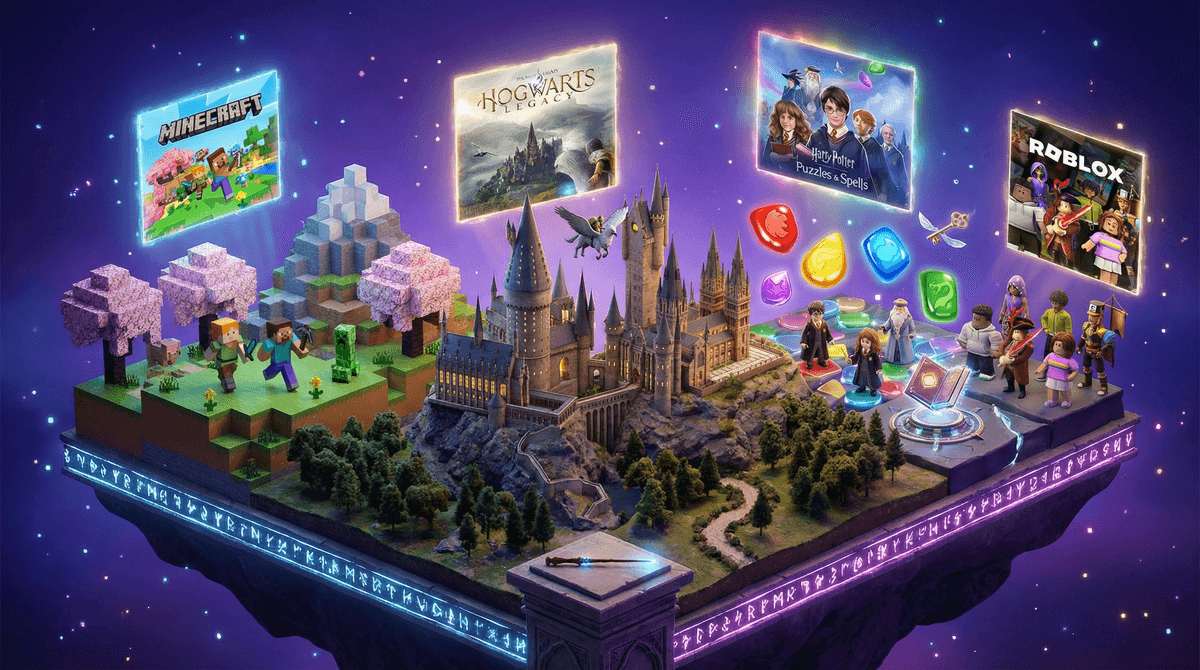
The Wizarding World didn't end with the last book or movie — it's alive and well across dozens of digital platforms. Harry Potter online games range from official mobile apps to browser-based fan games, from massive multiplayer experiences to simple puzzle games. The main players include Hogwarts Legacy (the big-budget console/PC game), Harry Potter: Magic Awakened (mobile card battler), Harry Potter: Puzzles & Spells (match-3 mobile game), and Harry Potter: Wizards Unite (which shut down in 2022, RIP).
Beyond official games, there's a whole universe of Potter-themed experiences on Roblox and Minecraft, plus browser games scattered across the internet with varying degrees of quality and safety.
Look, the Harry Potter universe is basically designed for immersive gaming. Kids get to:
- Be sorted into their house (finally settling the "Am I really a Hufflepuff?" debate)
- Cast actual spells with wand movements or button combos
- Explore Hogwarts in ways the movies never showed
- Collect and customize — robes, wands, pets, dorm rooms
- Feel part of something bigger — the fandom is multigenerational at this point
For kids who grew up with Potter-obsessed parents or older siblings, these games are their entry point into a world everyone around them keeps referencing. For kids discovering the series fresh through the movies on streaming, the games extend the experience beyond passive watching.
The Big Official Games
Hogwarts Legacy (Ages 13+, rated T for Teen) is the most substantial Potter game in years. It's a single-player RPG set in the 1800s — you're a fifth-year student with mysterious ancient magic powers. The good: gorgeous open-world exploration, deep character customization, actual consequences for choices. The concerning: combat can be intense (dark wizards, giant spiders, graphically violent duels), and there are some mature themes around oppression and rebellion. This is NOT for younger Potter fans, despite what they'll tell you.
Harry Potter: Magic Awakened (Ages 10+) is where most tweens and young teens are actually playing. It's a mobile card game with dueling, social features, and gacha mechanics (more on that nightmare in a second). The art style is adorable, the gameplay is strategic, and kids can team up with friends for cooperative battles.
Harry Potter: Puzzles & Spells (Ages 9+) is basically Candy Crush in Hogwarts robes. Match-3 puzzle game, relatively harmless, but absolutely designed to extract money through lives, boosters, and "just one more try" mechanics.
The Roblox Potter-verse
There are dozens of Harry Potter roleplay games on Roblox with names like "Hogwarts Roleplay," "Wand Wizards," and "Magic Training Obby." Quality varies WILDLY. Some are impressive fan-made recreations with classes, house points, and Quidditch. Others are barely functional cash grabs with aggressive monetization. The social aspect is the real draw — kids can attend classes with friends, explore together, and create their own Potter stories. But standard Roblox safety concerns apply: open chat, user-generated content, and the constant pressure to buy Robux for better wands/robes/pets.
Browser Games and Sketchy Territory
Search "Harry Potter games free online" and you'll find hundreds of browser games. Some are officially licensed mini-games from Warner Bros. Many are... not. These often have:
- Zero age verification
- Sketchy ads (sometimes really inappropriate ones)
- Data collection without clear privacy policies
- Malware risks if kids start downloading "game clients"
The official Harry Potter Fan Club website has some safe browser-based activities, but most of the free online games floating around are a hard pass.
Here's where Potter games get expensive fast:
Gacha mechanics in Magic Awakened mean kids are essentially gambling for rare cards. You can spend real money on "gems" to buy card packs, hoping for that legendary spell or character. It's the same addictive loop that makes games like Genshin Impact so profitable and so concerning.
Roblox Potter games push Robux purchases for everything from wands to pets to dorm decorations. Learn more about how Robux is actual real money — your kid's $50 purchase is gone in minutes on virtual broomsticks.
Puzzles & Spells uses the classic mobile game playbook: free to start, impossible to progress without either waiting forever or paying for lives and boosters.
Even Hogwarts Legacy, which costs $60-70 upfront, has cosmetic DLC and a "Deluxe Edition" with exclusive content.
Age ratings exist for a reason. Hogwarts Legacy's T rating isn't arbitrary — there's meaningful combat violence, some scary creature encounters, and themes around prejudice and revolution that younger kids won't process well.
Social features = social risks. Any Potter game with chat, multiplayer, or social elements carries the standard risks: inappropriate conversations, predatory behavior, cyberbullying. The Roblox Potter games are particularly concerning here because they attract younger players in an open chat environment.
The J.K. Rowling elephant in the room. Many families are navigating complicated feelings about supporting Potter content given Rowling's public statements on transgender issues. This is a family values conversation, but it's one kids are aware of — especially older tweens and teens who follow social media discourse. Some families have decided to engage with Potter content while donating to trans advocacy organizations. Others have moved on entirely. There's no universal right answer here, but it's worth being intentional about rather than pretending the controversy doesn't exist.
Ages 6-8: Stick to official, parent-supervised experiences. The Harry Potter Fan Club website has some cute sorting ceremonies and simple games. Physical Harry Potter Lego sets or the Harry Potter Clue board game are better bets than online games at this age.
Ages 9-11: Puzzles & Spells is fine with parental controls on in-app purchases. Supervised Roblox Potter games can work if you're monitoring chat and limiting spending. This age group is probably better served by reading the books and watching the movies than diving deep into online gaming.
Ages 12-14: Magic Awakened becomes appropriate here, but have serious conversations about gacha mechanics and spending limits BEFORE they start. Set up parental controls and require approval for purchases. Roblox Potter games are popular with this age group — regular check-ins about who they're talking to and what they're doing are essential.
Ages 15+: Hogwarts Legacy is appropriate for most teens at this point. The game is genuinely impressive and offers 50+ hours of single-player content. It's a better value than most mobile games, and the lack of social features means fewer safety concerns (though you're trading those for more intense content).
The Potter games your kid is asking about are probably different than you think. When they say "Harry Potter game," they might mean a Roblox roleplay server, not an official Warner Bros. product. Ask specifics: What platform? What do you actually DO in the game? Who made it?
"Free" games are usually more expensive than paid games. Hogwarts Legacy costs $60 once. Magic Awakened can drain hundreds if you're not careful. The psychology of free-to-play games is designed to maximize spending through tiny incremental purchases that add up fast.
Potter games won't teach your kid to read like the books will. If your kid is Potter-curious, the books (or audiobooks!) are a better starting point than games. The games assume familiarity with the world and don't build the same literacy skills or imagination.
Your kid's friends are probably playing Potter games somewhere. According to various gaming surveys, Harry Potter remains one of the most popular IP franchises for kids' gaming, especially in the 9-14 age range. If you're saying "no" to all Potter games, have a conversation about why and what alternatives you're saying "yes" to.
Harry Potter online games are a mixed bag. There are some genuinely good gaming experiences here (Hogwarts Legacy for older teens is legitimately impressive), some harmless time-wasters (Puzzles & Spells), and a whole lot of predatory monetization dressed up in Gryffindor colors.
The Roblox Potter universe is where most younger kids are actually playing, and it's the Wild West — some great fan-made experiences mixed with safety concerns and aggressive monetization. Mobile Potter games are classic free-to-play traps designed to extract money through psychological manipulation.
If your kid is Potter-obsessed, you're not going to avoid this entirely. But you can:
- Be selective about which games and platforms you allow
- Set up payment controls before they start playing
- Have ongoing conversations about spending, social interactions, and what they're experiencing
- Consider offline alternatives — the books, movies, Lego sets, and board games offer Potter magic without the digital risks
The magic of Harry Potter doesn't require an internet connection. Sometimes the best way to explore Hogwarts is still through a book on the couch, not through a game designed to extract your credit card number.
- Check what Potter games your kids are already playing (look at screen time reports and app downloads)
- Set up parental controls on gaming platforms and mobile devices
- Learn about Roblox parental controls if that's where they're playing
- Have a conversation about in-game purchases and set clear spending limits
- Explore alternatives to screen-based Potter content