

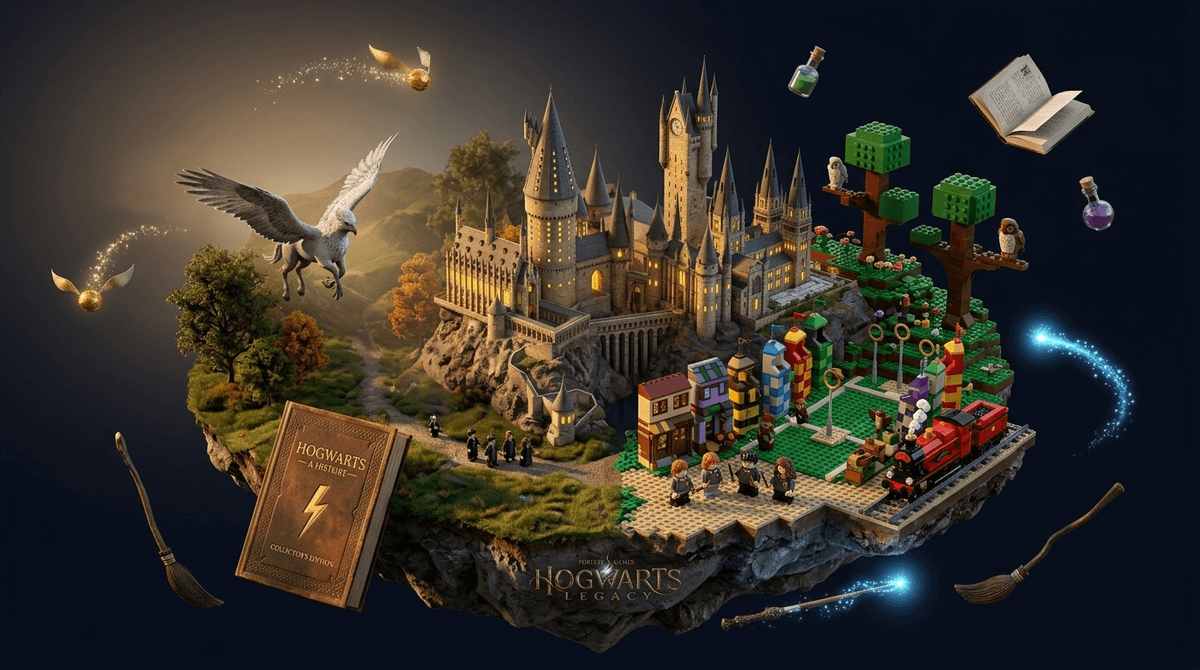
TL;DR: Hogwarts Legacy is rated T for Teen, and for once, the ESRB actually got it right. While it’s the ultimate wish-fulfillment for any fan of the Harry Potter books, it is significantly darker and more violent than the early movies. For most 11-year-olds, it’s a "yes" with a side of conversation, but if your kid is sensitive to "fantasy realism" violence or creepy-crawlies, you might want to wait.
Quick Links for the Wizarding World:
- The Game: Hogwarts Legacy
- The Books: Harry Potter and the Sorcerer's Stone
- The Movies: Harry Potter Film Series
- Alternative for Younger Kids: LEGO Harry Potter Collection
If your 11-year-old has been begging for this, it’s because Hogwarts Legacy is the first truly "next-gen" open-world game set in the Wizarding World. Unlike the older, clunkier tie-in games for the movies, this is a massive, beautiful RPG (Role-Playing Game) set in the late 1800s—long before Harry, Ron, and Hermione were even a glimmer in their parents' eyes.
Your child creates their own character, gets sorted into a house, attends classes, and explores a massive map that includes Hogwarts, Hogsmeade, and the surrounding Scottish Highlands. It’s basically "Grand Theft Auto," but with brooms instead of cars and wands instead of... well, you get it.
For an 11-year-old, this game is peak "cool." By this age, most kids have moved past Minecraft and are looking for something that feels more "grown-up" without being as chaotic as Fortnite or as toxic as some Roblox servers.
The draw is the autonomy. They aren't playing as Harry; they are the hero. They get to choose their wand, customize their "Room of Requirement," and fly a Hippogriff. It’s high-quality, immersive, and—honestly—the graphics are so good it makes the Fantastic Beasts movies look like a high school play.

The ESRB gave this a T for Teen for "Violence, Blood, Mild Language, and Use of Alcohol." Here is what that actually looks like in your living room:
1. The Violence is... surprisingly intense
In the Harry Potter movies, combat is often just flashes of light and people falling over. In Hogwarts Legacy, it’s more visceral. You can slam enemies into the ground, set them on fire (Incendio!), or turn them into explosive barrels and throw them at their friends. There isn't "gore" in the sense of limbs flying off, but the "Ancient Magic" finishers are brutal.
2. The Unforgivable Curses
This is the big ethical hurdle. The game eventually gives players the choice to learn the three Unforgivable Curses: Crucio (torture), Imperio (mind control), and Avada Kedavra (the killing curse).
Unlike many games where being "evil" has major consequences, Hogwarts Legacy doesn't really punish the player for using them. Your 11-year-old can run around the Forbidden Forest "Avada Kedavra-ing" everything in sight, and their character will still be treated like a hero in the next cutscene. If you’re trying to teach a moral compass in gaming, this "ludonarrative dissonance" (fancy gamer word for "the story doesn't match the gameplay") is a great talking point.
3. The "Creep" Factor
If your kid is terrified of spiders, be warned: this game is basically an arachnophobe’s nightmare. There are giant spiders everywhere. Luckily, the developers added an "Arachnophobia Mode" in the settings that turns the spiders into floating blobs with roller skates (I’m not joking, it’s actually hilarious). There are also Inferi (basically water-logged zombies) and some jump-scares in dark caves.
Check out our guide on how to toggle safety settings in Hogwarts Legacy
In the world of digital wellness, 11 is a "bridge" age. They are leaving the "little kid" phase but aren't quite ready for the heavy themes of The Last of Us or Elden Ring.
Is it safe for an 11-year-old? Generally, yes, provided they’ve already handled the later Harry Potter books. If they could handle the graveyard scene in Goblet of Fire, they can handle this.
However, keep in mind the Community Norms:
- Screen Time: This is a "sink" game. It’s very easy to lose four hours just "decorating the vivarium." It’s not a "quick 20-minute round" type of game.
- The "Dark" Path: Some parents find the "Dark Wizard" path a bit much for an 11-year-old. You can suggest they play as a "Good" wizard for their first run-through.
Let’s talk about the elephant in the room: J.K. Rowling. Regardless of your personal stance on her views, it’s a topic that might come up, especially if your child is online. The game itself features a trans character (Sirona Ryan) and a diverse cast, which seems like a deliberate move by the developers to distance the game from the author’s controversies.
From a "brain rot" perspective, this game is actually pretty high-quality. It requires strategy, puzzle-solving (some of the Merlin Trials are genuinely tricky), and a lot of reading. It’s not the mindless scrolling of TikTok or the gambling-adjacent mechanics of FIFA/EA Sports FC.
In-game purchases? Thankfully, they are minimal. There’s a "Dark Arts Pack" DLC, but the game isn't constantly pestering your kid to buy "Wizard Coins" or loot boxes. Once you buy the game, you own the game. That alone makes it better than 90% of what’s on the market right now.
Learn more about the difference between DLC and predatory microtransactions
If you decide to let them play, use it as a bridge to talk about digital ethics. You could ask:
- "The game lets you use the Killing Curse. Why do you think the characters in the books thought that was such a big deal, even if the game doesn't 'punish' you for it?"
- "What house did you get sorted into? Does the game's version of Slytherin feel different than the books?"
- "I noticed you've been playing for three hours straight—how does your brain feel? Maybe we should take a 'broom break' and go outside?"
Hogwarts Legacy is a spectacular, high-budget adventure that most 11-year-olds are going to find absolutely magical. The "T" rating is a fair warning that this isn't a "kiddie" game—it has teeth.
If your child is a fan of the Harry Potter books and has a decent grasp of the difference between "fantasy violence" and real-world harm, they are likely ready. Just make sure to turn on "Arachnophobia Mode" if they’re jumpy, and maybe keep the console in a common area so you can keep an eye on just how "Dark" their Dark Arts path gets.
- Check the hardware: Make sure your PC or console can actually run it—it’s a beast.
- Set the boundaries: Decide ahead of time if "Unforgivable Curses" are off-limits in your house.
- Compare notes: Read our guide on the best Harry Potter-themed board games for a screen-free family night.