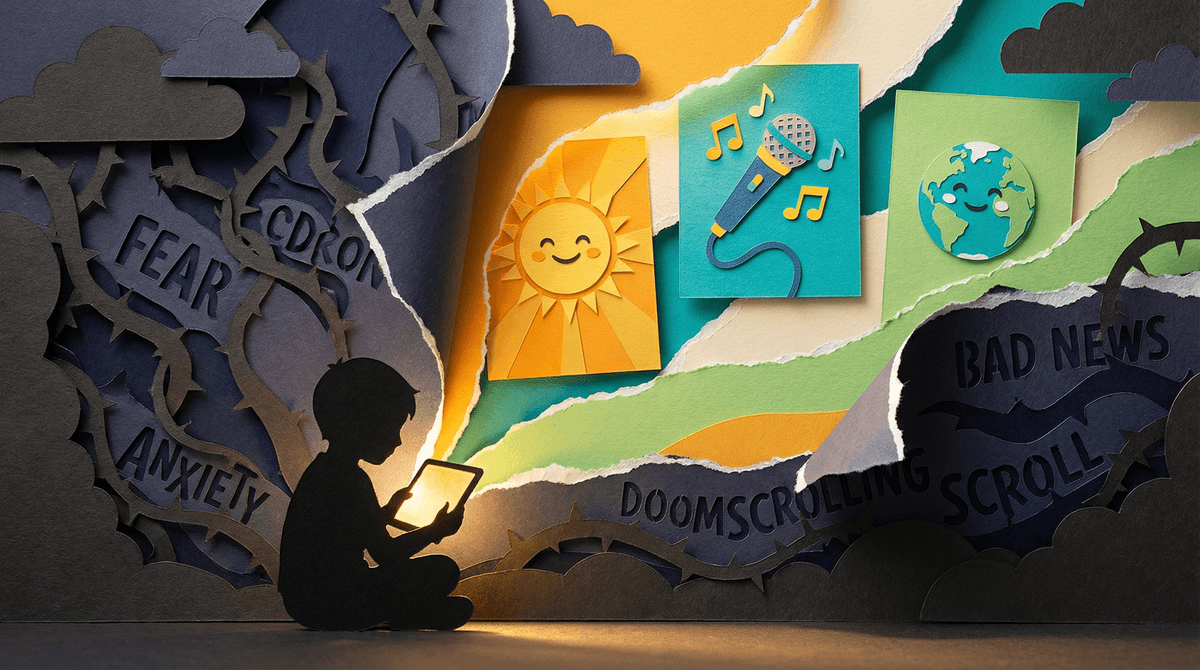
The "news" as we know it is a product designed to trigger your fight-or-flight response. For a kid just starting to engage with the wider world, that constant firehose of crisis can lead to a very specific kind of paralysis. Good News Network is the antidote. It isn't trying to pretend that problems don't exist, but it operates on the radical idea that progress is also a headline.
The "Relic" Factor
Let’s be real about the interface: it feels like a time capsule from 2015. If your kid is used to the high-gloss, gesture-controlled polish of modern social apps, they are going to notice the clunk. It’s essentially a streamlined delivery system for their website articles. There are no streaks, no flashy animations, and no dopamine-loop mechanics.
While that might make it "boring" to a kid raised on TikTok, that lack of friction is actually its secret weapon. It’s a low-pressure environment. You go in, read about a new coral reef restoration or a kid starting a food pantry, and you leave. It doesn’t try to trap you in a rabbit hole. For parents, this is the rare app where less is actually more.
Balancing the Bubble
The biggest critique of "positive news" is that it creates a skewed reality. If a kid only reads GNN, they might think climate change is solved and every illness has a miracle cure. This is where you come in. Use the app as a "palette cleanser" rather than a primary source.
If you are already intentional about raising optimistic kids in a cynical digital landscape, GNN provides the data points they need to stay resilient. It’s much easier to talk about world problems when you have a library of examples showing that people are actually fixing them.
Better Than the Alternatives
If your kid is already curious about current events, they’ve likely stumbled onto the "News" tab of various social platforms, which is a disaster zone of unsourced takes and doomscrolling. GNN is a vastly superior starting point.
- If they like The Week Junior: This is the perfect digital companion for daily updates between issues.
- If they’re prone to "eco-anxiety": The environmental section is particularly strong at focusing on solutions rather than just the melting ice caps.
- If they’re bored by traditional school papers: The human-interest stories here are short, punchy, and actually worth talking about at dinner.
It’s not a replacement for a robust media literacy education, but it is a necessary balance to a media diet that is usually 90% salt and fat. Use it to show them that "the news" is a choice, and they don't always have to choose the version that scares them.