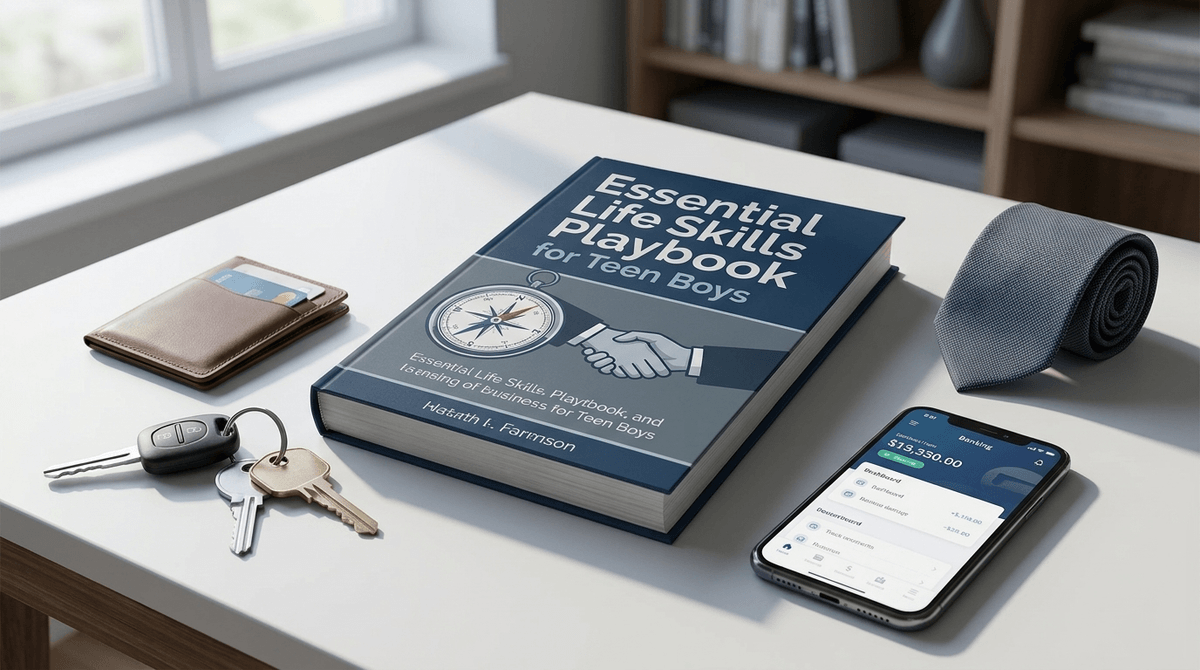
If you’ve ever watched a sixteen-year-old look at a W-4 form with the same confusion usually reserved for ancient hieroglyphics, you know why this playbook exists. By 2026, the "digital native" thing has peaked—boys are great at being online, but the friction of the physical world (taxes, car maintenance, and real-life social cues) is higher than ever.
Financial Literacy Before the First Paycheck
The standout feature here isn't the "wash your face" advice—it’s the money section. Most teens treat their first paycheck like a lottery win until they realize the government takes a cut. This book introduces the 50-30-20 rule (50% for needs, 30% for wants, 20% for savings) in a way that doesn't feel like a math lecture.
It’s the kind of practical groundwork that prevents them from opening three high-interest credit cards the second they hit campus. If you want a deeper look at how to frame these conversations, our parent's guide to the Essential Life Skills Playbook for Teen Boys breaks down the specific chapters that actually move the needle on maturity.
The "Social Presence" Pivot
There is a specific focus on moving from "behind a screen" to "social presence." It covers things that many parents assume are intuitive but often aren't for the current generation, like making eye contact or handling a respectful disagreement without a block button.
The book avoids the toxic "alpha" rhetoric found in certain corners of the internet, opting instead for confidence built on competence. It’s less about "how to be a man" in some abstract, outdated sense and more about how to be a functional, respected adult.
How to Deploy This Without the Eye-Roll
If you hand this to a teenage boy and say, "Read this so you can be better," it will end up under a pile of laundry. The better move is to treat it as a reference manual for milestones.
- Getting a first job? "Check the chapter on taxes and paychecks."
- Going on a first date? "Read the section on social cues and respect."
- Buying a first car? "Look at the maintenance checklist."
The 4.9 rating on Amazon is likely driven by parents who are tired of being the "bad guy" for pointing out that their son needs to learn how to do laundry. Let the book be the one to tell them. It’s a low-stakes way to outsource the "adulting" lectures to a third party that doesn't share a DNA profile with them.
If They Liked This, What’s Next?
If your kid actually engages with the financial or "roadmap" aspect of this, they might be ready for more specialized tools. This playbook is the broad-brush introduction. Once they’ve mastered the 50-30-20 rule here, you can move them toward specific apps or more granular guides on investing. It’s the perfect "pre-launch" gift for a high schooler who is about eighteen months away from realizing that the real world doesn't have a respawn button.