Two pediatricians who study this for a living
Moreno and Radesky are the co-medical directors of the American Academy of Pediatrics' Center of Excellence on Social Media and Youth Mental Health. Moreno is a professor of pediatrics at the University of Wisconsin-Madison, a practicing adolescent medicine doctor, and leads the Social Media and Adolescent Health Research Team. Radesky is a developmental behavioral pediatrician at the University of Michigan Medical School, where she runs a lab on family media use, digital design and tech policy, and edits the textbook Encounters with Children. Between them they see patients and run research, and the book reads like it.
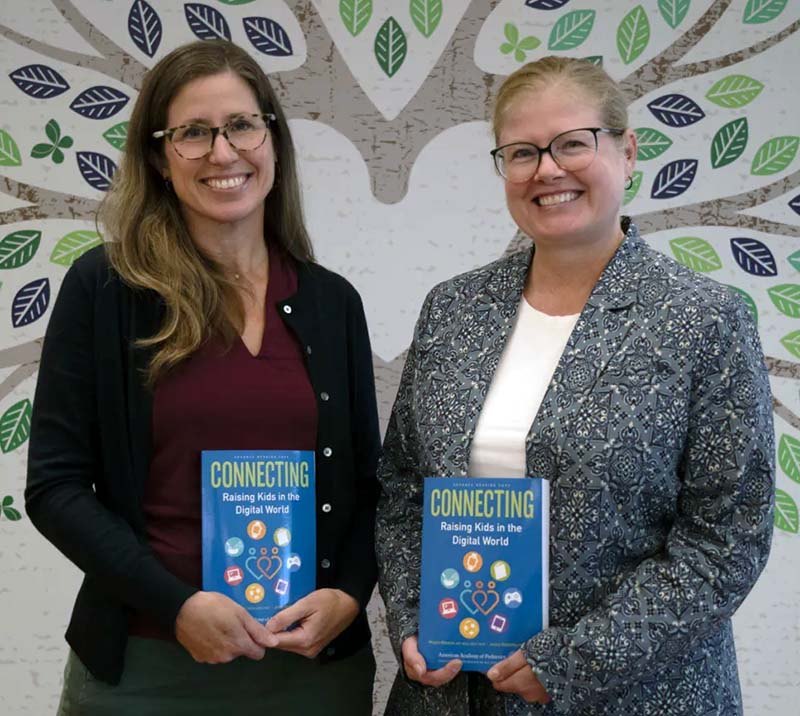 Jenny Radesky (left) and Megan Moreno. Photo from the University of Wisconsin-Madison Department of Pediatrics.
Two truths at once
The book starts from a position that is harder to hold than either extreme: technology has harmed many kids, and many kids find support and joy in it. Moreno and Radesky write from a strengths-based place, rooted in the parent-child relationship and without fear or shame. "There is more than one right way to parent around technology," Moreno says. "Our goal with this book was to provide parents with a helpful, useful, judgement-free resource they can use as their children and families grow."
As pediatricians, they focus on the health questions families bring to the doctor's office: sleep, mental health and physical activity. The book also covers devices, social media, video games and AI, and it treats parents' own struggles with their phones as part of the picture, not a side note. Each chapter ends with resources for going further.
Parents are still the first influencers
Moreno's line from the book tour is a good summary of its stance: "In a world of influencers, parents are still the first and most important influencers for kids." Kids look to parents for the conversations and the boundaries, and the authors encourage boundaries a family negotiates together. Moreno also urges parents to keep talking to other parents as kids get older, something families do a lot when kids are small and much less by middle school. For a ready-made starting point, she points families to the AAP's Family Media Plan; see how to build a family media plan.
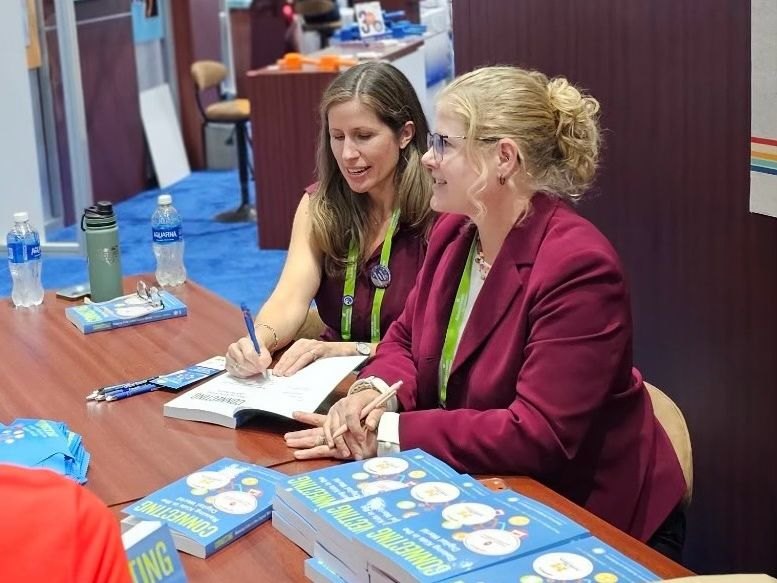 Signing copies at the 2026 AAP National Conference & Exhibition, where the authors signed about 500. Photo from the University of Wisconsin-Madison Department of Pediatrics.
What to know before you buy
Connecting comes out on October 13, 2026, so there are few reader reviews yet. Before publication, the authors consulted parents and topic experts and had colleagues review the chapters for feasibility. It covers kids from the early years through the teens, so some chapters will not apply to your family right now. And it is an AAP book: balanced and careful rather than punchy. Parents who want a short list of firm rules may prefer 10 Rules for Raising Kids in a High-Tech World and can use this one as the reference beside it.
Watch them explain it
Moreno on the AAP Family Media Plan, for her research team:
Radesky on what research shows about digital media and parent-child interactions:


